Johannesburg – The high court in Johannesburg has sentenced seven Chinese nationals to 20 years in prison for multiple counts of human trafficking and child labour.
The Gauteng South Division of the High Court of South Africa on Wednesday, 10 September 2025,sentenced the Chinese nationals and one business entity.
Evidence before the court proved that the group operated an illegal factory named Beautiful City (Pty) Ltd in Village Deep, Johannesburg.
The court heard that of the child victims, the youngest ones were trafficked into South Africa at the age of 14 years.
Workers were undocumented, forced to work seven days a week, and paid below minimum wage.
Some of the victims also suffered serious injuries whilst working in the factory.
The victims were smuggled into the country in shipping containers.
Following a tip-off, the factory was raided and authorities discovered 91 Malawian nationals, including children, living and working in inhumane conditions.
The joint inspection blitz was carried out by the Department of Employment and Labour’s Inspections, Enforcement Services (IES), together with the South African Police Service’s Directorate for Priority Crime Investigation (the HAWKS) and the Department of Home Affairs.
The accused Chinese nationals were arrested on 12 November 2019.
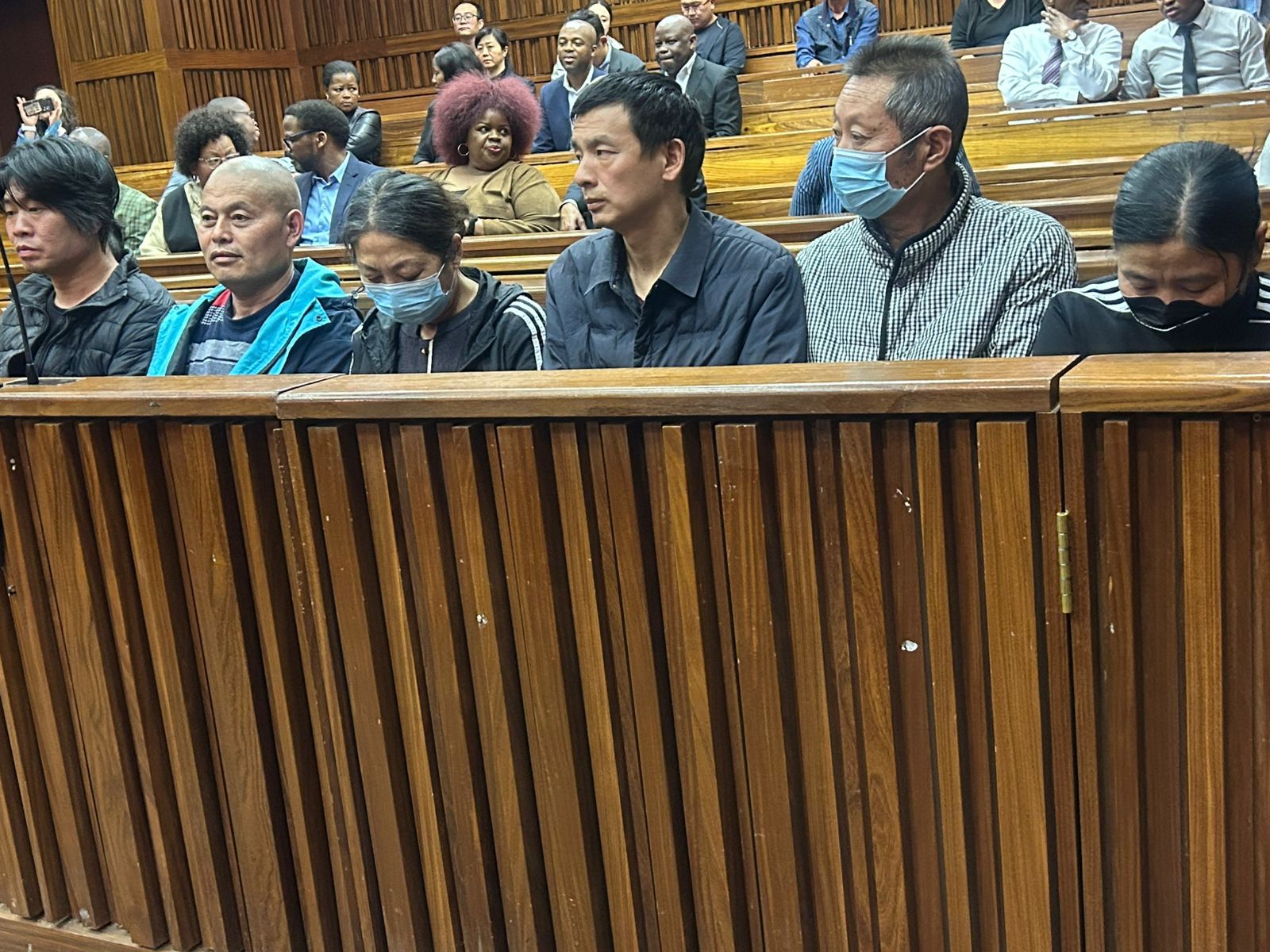
The accused were found guilty on 160 counts, which led to direct imprisonment of 20 years each, for various charges including human trafficking, child labour, and a violation of various labour laws.
Sentences of 20 years imprisonment were handed down for 11 trafficking charges, 10 years imprisonment for each perpetrator for kidnapping, five years imprisonment for each perpetrator for debt bondage, as well as a R300 000 fine for the business entity (Beautiful Life (Pty) Ltd.)
Maximum sentences were given on all the counts of labour law convictions and all the perpetrators were declared unfit to possess a firearm.
In his ruling, Judge Mhango emphasised the gravity of the offenses and said that human trafficking, kidnapping, and bonded labour were among the gravest crimes a court could deal with.
The Ministry of Justice and Constitutional Development and the Ministry of Employment and Labour have welcomed the sentences.
Employment and Labour Minister Nomakhosazana Meth, has applauded the various government departments and law enforcement agencies, led by the DEL Inspections, Enforcement Services Branch for their sterling work in this operation.
“Government collaboration has indeed delivered a positive outcome. This sends a strong message to those who think they can continue with exploitative practices and fail to comply with labour laws,” said Minister Meth.
Justice and Constitutional Development Minister Mmamoloko Kubayi echoed the sentiments, saying: “Justice has prevailed in the fight against human trafficking.
“We want to congratulate the National Prosecuting Authority and the South African Police Service for their excellent work in the relentless pursuit of justice.
“Their collaboration has once again demonstrated the power of coordinated law enforcement in dismantling human trafficking networks.”
Deputy Minister of Justice and Constitutional Development Andries Nel referred to the important work being done by the National Intersectoral Committee on Trafficking in Persons (NICTIP) in South Africa.
NICTIP plays a central role in coordinating the country’s anti-trafficking efforts, bringing together various government departments, law enforcement, civil society, and international partners to implement the Prevention and Combating of Trafficking in Persons Act, 2013.
“Trafficking in persons is a brutal form of modern-day slavery. Human beings are not commodities. Strong sentences in trafficking cases are effective in deterring perpetrators and signaling that exploitation will be met with serious consequences,” said Deputy Minister Nel.
Deputy Minister of Employment and Labour Jomo Sibiya, who was present in court for the sentencing, said: “This is a ground-breaking victory because matters that involve labour laws will now be taken seriously.
“People will know that if you disregard labour laws, you might find yourself going straight to jail because the era of impunity has ended.”
However, a clearly distraught woman, who told reporters after the sentencing that her ailing mother was one of the seven persons “unfairly” sent to jail owing to language issues and fear of the company boss.
The woman who identified herself as Nancy said her mother suffered a stroke but could not produce medical proof because they were poor and could not afford to go to the hospital.
“My mother was an administrator; she never met the Malawians,” Lamented Nancy, adding that her mother and the others were scared of the company owner and opted to remain silent about his role in the matter.
She seemed to suggest a possible appeal.