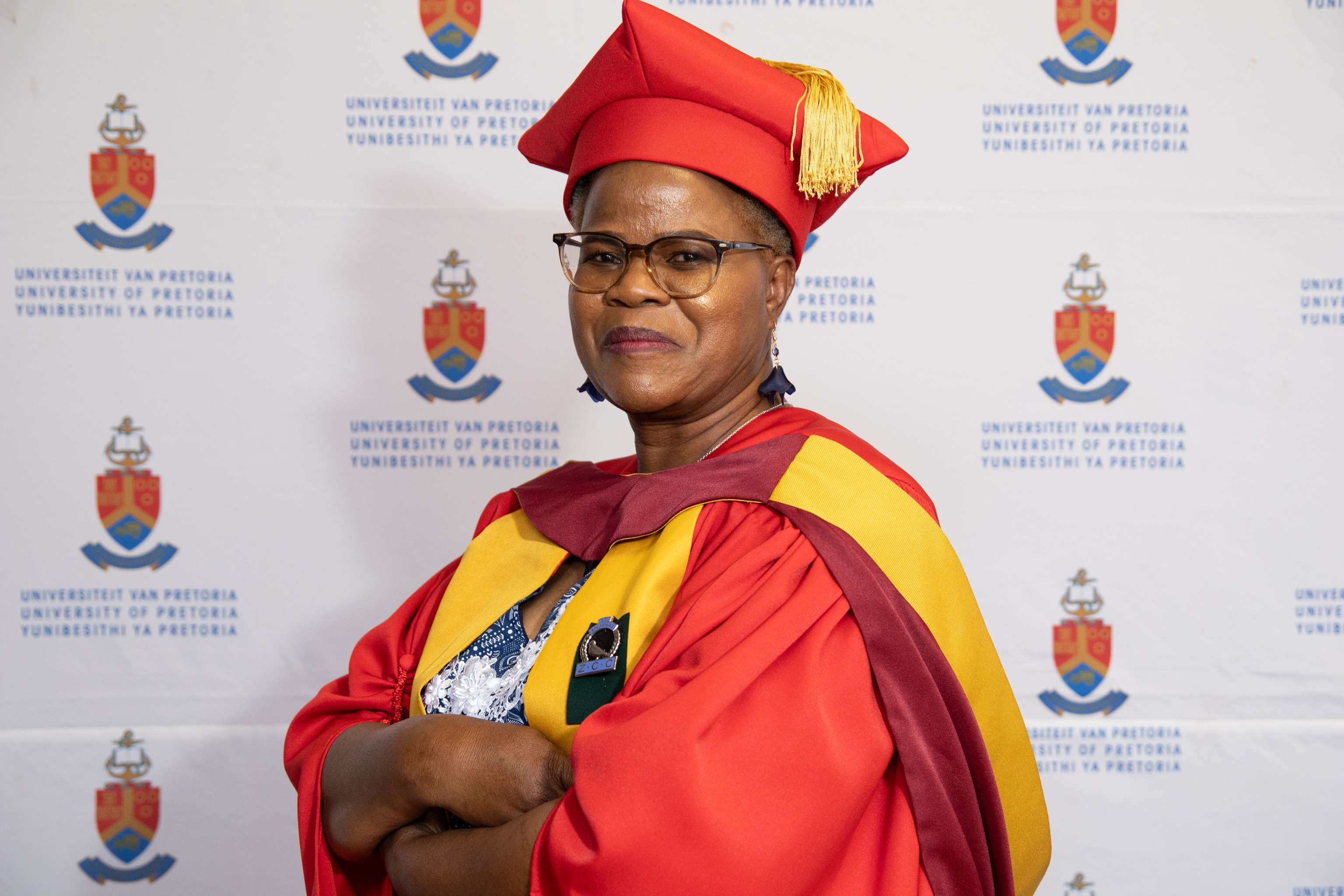
Johannesburg – Dr. Bodibadi Modungwa has earned praise from civil rights organisation AfriForum for completing her PhD in Setswana – the first thesis in this language at the University of Pretoria (UP).
AfriForum stated that undertaking advanced studies in local mother languages was critical for the country’s various language and cultural communities to be truly free and prosperous.
AfriForum said such studies also promote the development of these languages to fulfil higher language functions.
While English and Afrikaans dominate academia, Dr. Modungwa’s PhD in Setwana was a significant achievement.
Modungwa obtained her PhD earlier this month for her research on Setswana mother-language education for grade 11 and 12 learners.
She achieved the milestone after more than three decades of dedicated work in education and the promotion of mother-language education.
Dr. Modungwa sees this milestone as a confirmation of the value of her mother language and Setswana culture, while also “opening doors for further research, preservation and recognition of African languages in higher education”.
South Africa has 12 official languages: Ndebele, Pedi, Sotho, South African Sign Language, Swazi, Tsonga, Tswana, Venda, Afrikaans, Xhosa, Zulu, and English.
Barend Uys, Head of Intercultural Relations and Cooperation at AfriForum, on Thursday, 18 September 2025, congratulated Dr. Modungwa for her achievement and stated that mother language education offers diverse benefits.
“People who first master language use, reasoning ability, and the understanding of abstract concepts – such as mathematical formulas – in their own language can more easily master it in a second or third language,”’ Uys said.
“In addition, it has been proven that people who receive mother-language education at school perform better academically in the long run, are less likely to leave school before passing matric and are likely to obtain more qualifications.”
He said Dr. Modungwa has proven through her performance that Setswana has a rightful place as a language with higher linguistic functions and a language that should be further developed for the benefit of its speakers.
“To keep a language alive, it must be able to be used fearlessly – and Modungwa has achieved a historic milestone for this language at UP through her fearless and unashamed use of Setswana for her PhD studies,” Uys said.
“We hope that her work will serve as an incentive for more proud Setswana academics to help further develop this language into a dynamic and thriving scientific language that can stand its ground in the company of other languages with established and extensive higher functions.”