When the world marked United Nations Day on 24 October 2025, we entered a season dedicated to human rights, sustainable development, and shared progress.
The final months of the year — from late October through December — are deeply tied to the UN’s founding principles: advancing equality, dignity, and global cooperation.
For South Africa, these themes carry special resonance.
Among the UN’s most urgent global goals is closing the gender gap — a challenge that shapes every aspect of national life, from education and healthcare to economic opportunity and political representation.
This period invites reflection not only on international commitments but also on how they translate into everyday realities at home.
Equality is a catalyst for national progress.
Studies show that when women gain equal access to education, work, and leadership, entire economies grow stronger and more sustainable.
Over the past decade, South Africa has taken real steps toward that vision.
Drawing on a decade of World Economic Forum Global Gender Gap Reports, Briefly News explores how far the country has come — and where gaps still persist.
Strong Global Standing
As of 2025, South Africa has closed 76.7% of its overall gender gap, meaning women now enjoy roughly three-quarters of the same access as men across education, health, economic participation, and political empowerment.
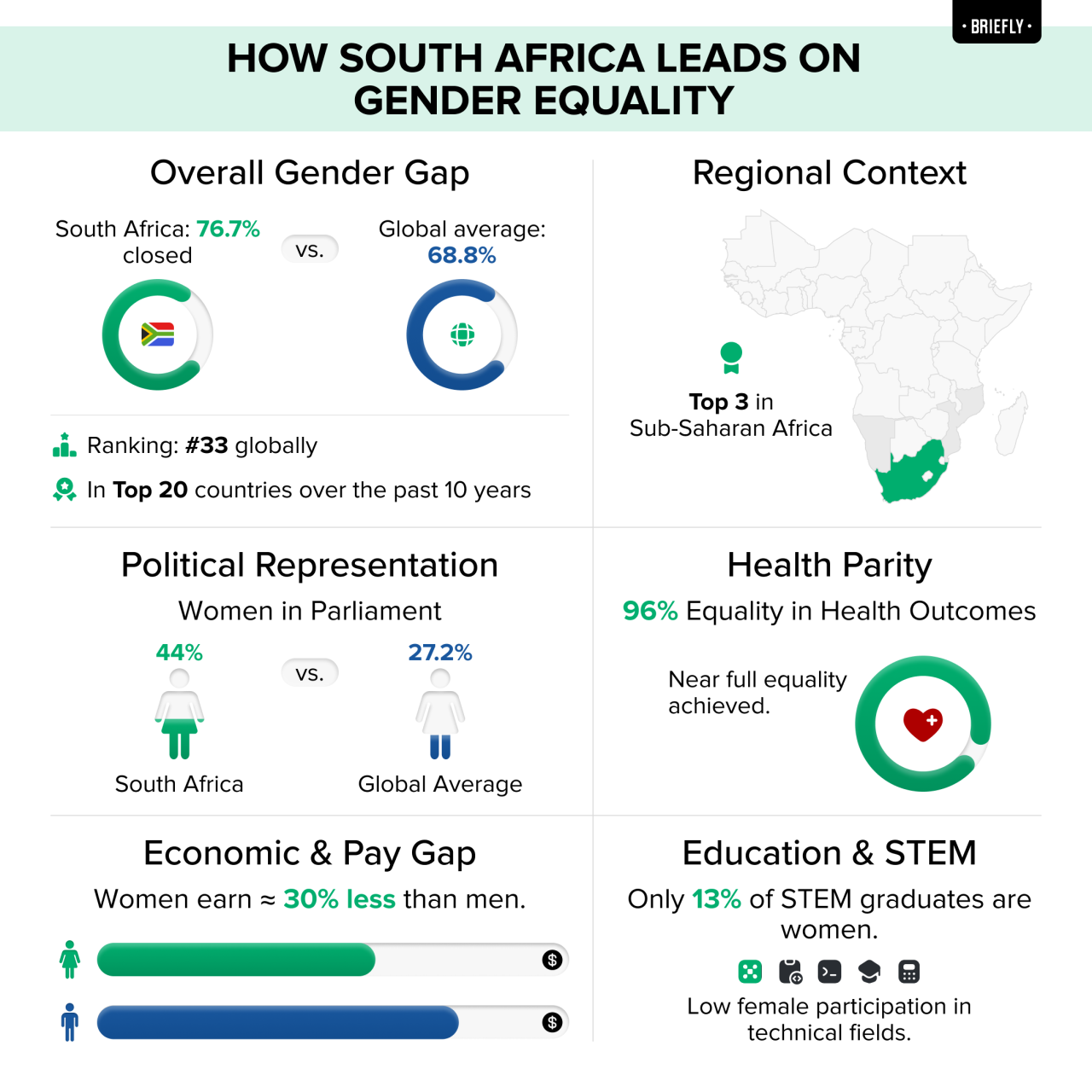
This places the country well ahead of the global average of 68.5%, proving that consistent policy focus and grassroots advocacy can yield measurable results, even in a developing economy.
However, while South Africa has regularly ranked among the world’s top 20 countries, its 2025 position dropped to 33rd place — not because of regression, but because other nations accelerated their progress.
Regional Leadership
Within Sub-Saharan Africa, South Africa remains a regional leader in advancing gender equality.
For most of the past decade, it has ranked among the top three countries in the region on the Global Gender Gap Index, maintaining scores well above the regional average of around 68%.
Its steady progress across education, health, and political representation continues to set a benchmark for neighbouring economies.
Education Parity — and the STEM Gap
Education is one of South Africa’s success stories.
Girls now perform on par with boys in primary and secondary schooling, showing what’s possible when access and policy align.
But the picture changes after graduation.
Fewer women pursue or complete tertiary education in high-demand fields, and even those who do often face barriers in STEM careers, leadership roles, and pay equity.
Rising in STEM
Women’s participation in STEM is improving — yet the field remains largely male-dominated.
Only about 13% of STEM graduates are women, highlighting that inclusion and mentorship are as crucial as access.
Political Leadership
Women now hold 44% of seats in South Africa’s National Assembly, well above the global average of 27.2%, placing the country among the world’s top performers in political representation.
This success stems from decades of advocacy and the strength of gender quota systems.
However, women remain underrepresented in executive and local government roles, where decision-making power is most concentrated.
Health Parity
In health, South Africa has achieved 96% parity, one of its biggest equality wins.
Improved maternal and reproductive healthcare has helped women live longer, healthier lives and narrowed gender disparities in wellbeing outcomes.
Entrepreneurship and Innovation
Across industries, women-led businesses are driving both economic and social change.
According to Global Entrepreneurship Monitor data, women now participate in early-stage entrepreneurship at rates close to their male counterparts.
From township startups to social enterprises, more women are moving from participation to leadership — though challenges such as limited access to finance and scaling opportunities persist.
Visible Changemakers
Beyond the numbers, South Africa’s progress is embodied in the women shaping their communities.
Briefly News’ “Women of Wonder” campaign, launched in 2022, celebrates women excelling in entrepreneurship, STEM, leadership, and community service.
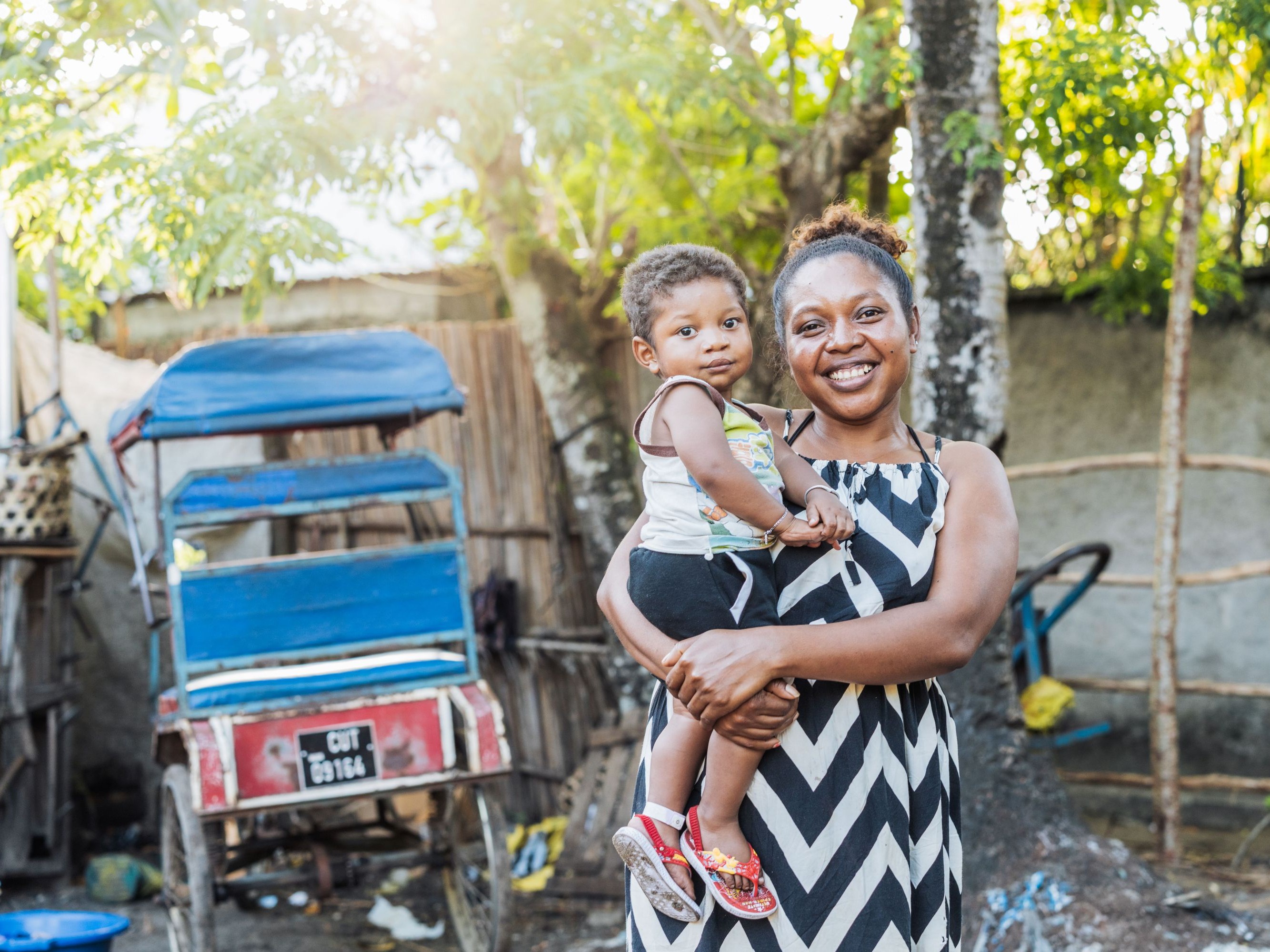
Each edition highlights new dimensions of empowerment — from women entering male-dominated fields to single mothers balancing careers and family life.
These stories give a human face to the data, reminding us that equality is built not only in institutions, but in individual lives.
Momentum for the Next Phase
While access and representation have improved, economic gaps persist.
Women in South Africa still earn around 30% less than men on average and are more likely to work in informal, unprotected roles without stable income or benefits.
These inequalities — alongside the enduring crisis of gender-based violence — reveal that progress in education and politics has not yet translated into full equality in everyday life.
Still, South African women continue to lead change across industries, communities, and governance.
From engineers to entrepreneurs, activists to artists, they are not waiting for equality — they are building it.
As South Africa enters the next decade, one truth is clear: gains have been made, gaps remain, and closing them is essential for the country’s shared future.
South Africa’s gender equality story is still being written — and its next chapter depends on turning today’s momentum into lasting change.
*The views expressed in this article are those of the author, Thembisile Tsambalikagwa, PR and Communications practitioner at Legit, a Sub-Saharan media holding. Thembisile Tsambalikagwa’s views are not necessarily those of The Bulrushes.