Pretoria – After the arrest and deportation of seven Kenyans who were caught working without prescribed permits, South Africa has said it will not negotiate its sovereignty and the implementation of the rule of law.
The Kenyans were working at a centre that processed refugee applications for white Afrikaners seeking to move to the United States.
“The recent deportation of seven Kenyan nationals by the Department of Home Affairs was conducted in strict accordance with South African immigration law,” said the Department of International Relations and Cooperation in a statement on Thursday, 18 December 2025.
“These individuals were engaged in work without the necessary work permits.
“The government will not negotiate its sovereignty and the implementation of the rule of law.”
RELATED: Afrikaner Refuge Applications: 7 Kenyans Arrested For Working In SA Without Permits – The Bulrushes
Responding to the matter, the U.S. said it condemns in the “strongest terms the South African government’s recent detention of U.S. officials performing their duties to provide humanitarian support to Afrikaners.
“Furthermore, the public release of our U.S. officials’ passport information is an unacceptable form of harassment.
“This can only be seen as an attempt to intimidate U.S. government personnel in South Africa on official business.”
The United States said it will not tolerate such behavior toward its government’s officials – or toward any of its citizens – who are legally and peacefully operating abroad.
“The public release of personal identifying information puts the official in harm’s way,” the U.S said.
“Failure by the South African Government to hold those responsible accountable will result in severe consequences.
“We call on the Government of South Africa to take immediate action to bring this situation under control and hold those responsible accountable.”
However, the SA Department of Home Affairs had made it clear that none of the U.S. citizens had been arrested in the raid on the centre.
Commenting further on the matter, the Department of International Relations and Cooperation stated that it noted the U.S. comments.
“Separately, we have noted an unsubstantiated allegation regarding the private information of U.S. officials,” the department said.
“South Africa treats all matters of data security with the utmost seriousness and operates under stringent legal and diplomatic protocols.
“We categorically reject any suggestion of state involvement in such actions.”
Department spokesperson Chrispin Phiri added: “Nonetheless, we remain committed to principled and transparent diplomacy.
“Official channels have been opened with the United States Government to seek clarity on this allegation and to reinforce that our bilateral engagements must be grounded in mutual respect and factual dialogue”.
Background
In March, the United States expelled South Africa’s ambassador, Ebrahim Rasool, after he publicly criticised President Donald Trump.
For most of 2025, US–South Africa relations have been tense.
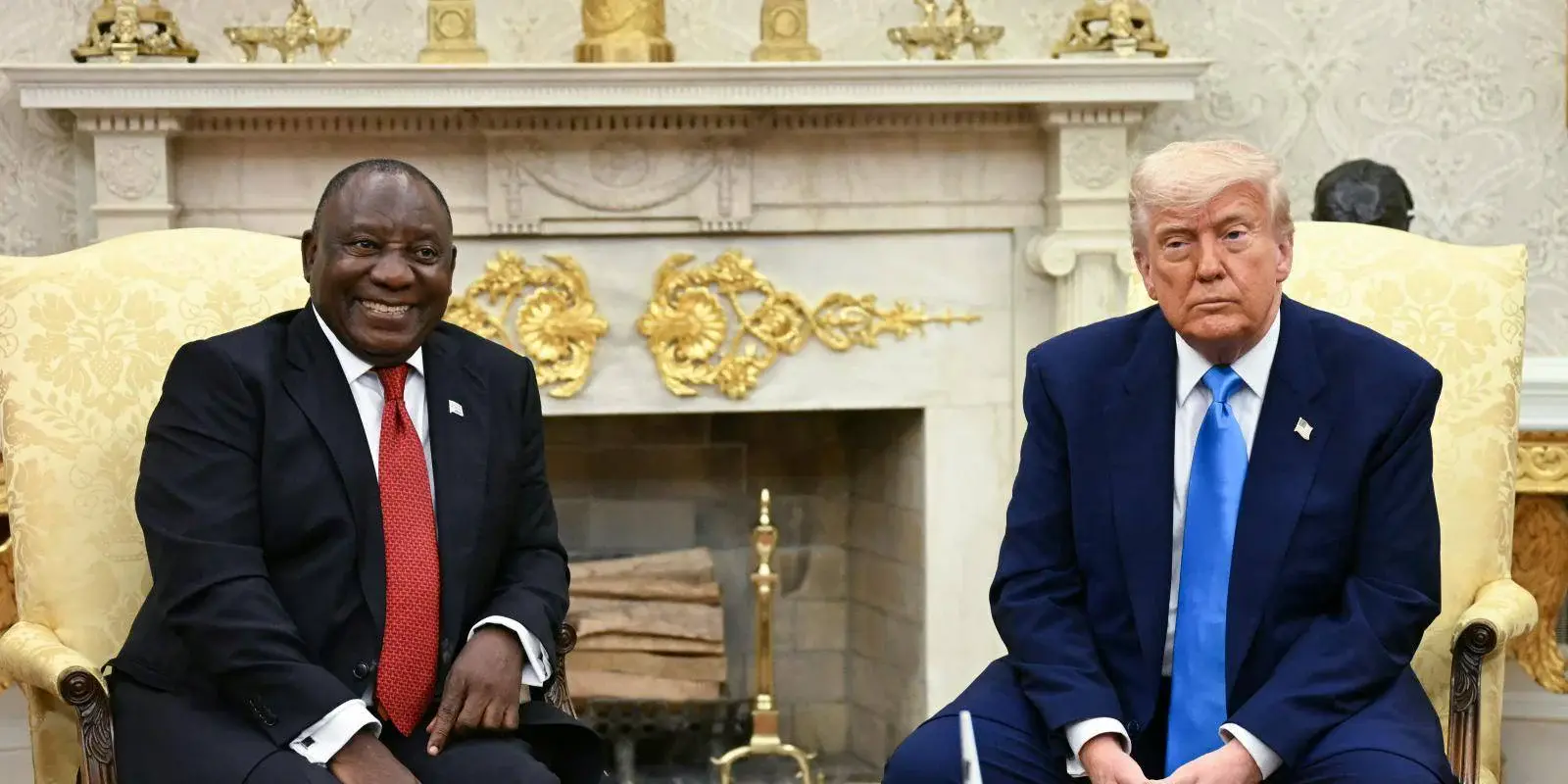
A visit to the White House by President Cyril Ramaphosa does not seem to have improved matters.
The incident involving the Kenyans is the latest rift in US-SA relations that saw the United States boycott last month’s G20 summit in Johannesburg over false claims that South Africa was engaged in land seizures and genocide against white farmers.
US–South Africa trade relations have also been rocky
The US has imposed tariffs and cut aid programs, while South Africa seeks to preserve market access.
Some analysts have pointed to South Africa’s genocide accusations against US ally, Israel, as the source of the disharmony.
South Africa filed a case at the International Court of Justice (ICJ) in December 2023, accusing Israel of committing genocide against Palestinians in Gaza.
The case argues that Israel’s military actions that have resulted in the deaths of at least 70 000 Palestinians, including women and children, violate the Genocide Convention, while Israel strongly denies the allegations.
The proceedings have drawn global attention, with multiple countries signaling support or intervention.