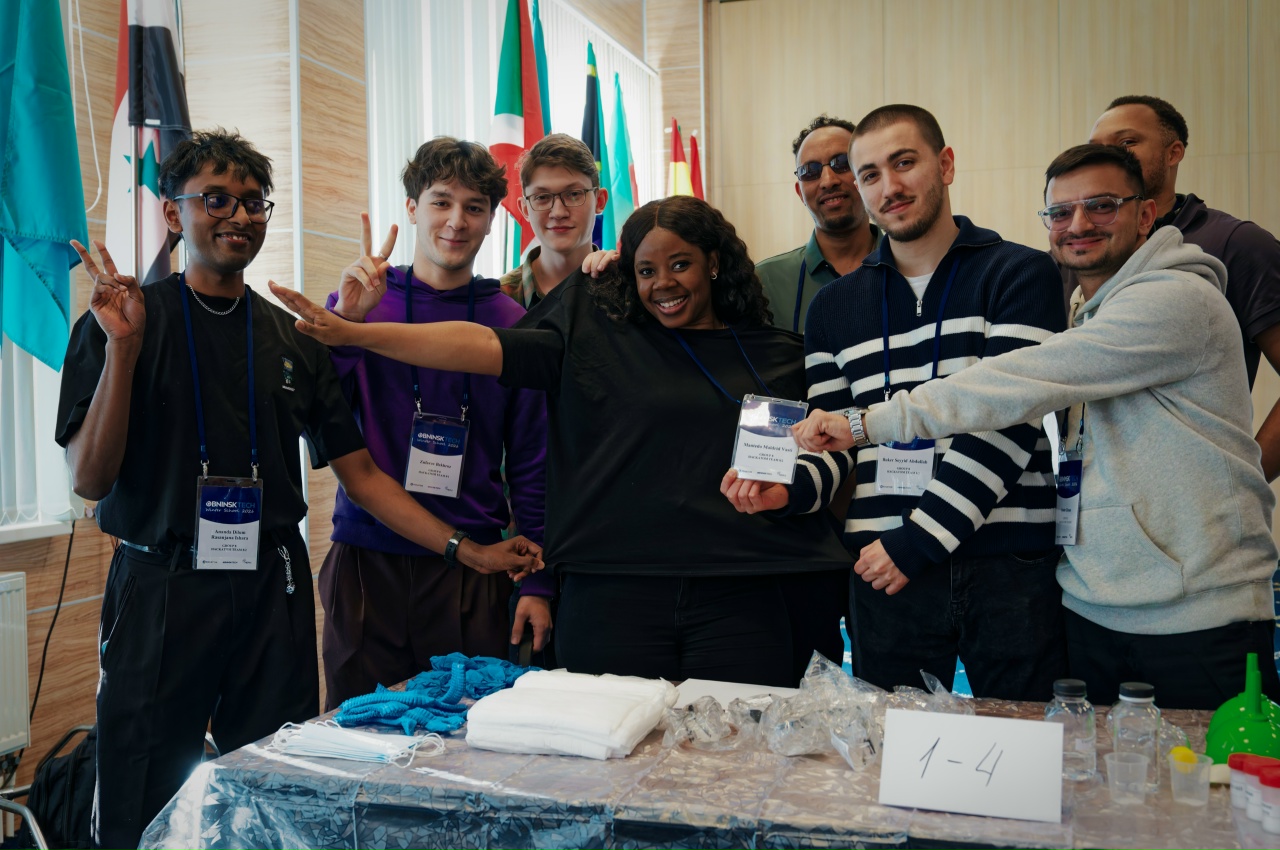
Obninsk – Students from over 20 African countries, including Ethiopia, Ghana, Rwanda, South Africa, Tanzania, and Namibia, participated in the recent International Tech School in Obninsk, Russia.
Participants studied nuclear science and technology in-depth, which included gaining hands-on experience from flagship experts in the nuclear sector.
All in all, 120+ international students from 47 countries participated in the winter school.
They attended hands-on workshops and master classes on various nuclear technology aspects delivered by experts from the MEPhI (Moscow Engineering Physics Institute).
The practical aspect covered areas such as dosimetry, nuclear power plant instrumentation and control systems, radiation monitoring, 3D modelling, electrical engineering, non-destructive testing, and materials science.
“My experience at Obninsk Technical School has been truly inspiring and meaningful to me as a physicist from Namibia with a strong interest in nuclear science,” said Mantedo Vasti Maldrid, an International Tech School participant from Namibia.
“We received so much useful and practical information, particularly in nuclear technology and engineering. Beyond academics, the atmosphere was open, professional, and innovative.
“Obninsk did not just expand my knowledge; it strengthened my commitment to contributing to the development of nuclear education and technology in Namibia.”
The student HackAtom competition was the final part of the nuclear science and technology studies at the Obninsk Technical School.
HackAtom’s aim is to see which ideas in the nuclear education field students can flesh out – and defend – within 24 hours.
Devising an MA program on nuclear waste management, setting up an advanced nuclear education campus, and launching a career portal to support employment opportunities for engineering graduates were among the top proposed concepts.
The winning team, “Prometheus,” brought together students from several universities, including MEPhI, the Nizhny Novgorod State Technical University, the University of Belgrade, and Tsinghua University.
Team members will have the opportunity to further refine their concept under the guidance of Obninsk Tech professors and then present it at the summer MEGA Council, an event attended by Rosatom’s senior management.
“As yet another annual winter school draws to a close, it is really rewarding to see motivated students and postgraduate researchers who aim to further develop their skills in the nuclear industry,” noted Tatyana Osipova, Director of the Obninsk Tech Project Office.
“Many participants study or have studied at universities in different countries and bring valuable international experience.
“Their feedback is extremely important to us, and we are pleased that they have high praise for the quality of our educational programme.”
This was the third time the Obninsk Tech Winter School was held, and the number of countries taking part has steadily grown since the school’s inception two years ago.
The school opens up career opportunities for students interested in the nuclear sector, including the uses of peaceful atom.
MEPhI and Rosatom’s Technical Academy joined forces to set up the school.