Johannesburg – South Africa already relies on nuclear science in ways that rarely make headlines.
Koeberg Nuclear Power Station keeps part of the grid stable, while SAFARI-1 research reactor and iThemba LABS research centre supply isotopes that support hospitals across the country.
These capabilities matter, and their future depends on people as much as on hardware.
A country that wants energy security, advanced medicine, and a globally competitive industry must treat Science, Technology, Engineering, and Mathematics (STEM) education and nuclear education as long-term infrastructure, beginning in school.
However, South Africa’s school system shuts many pupils out of science before they even have a chance to try.
As of October 2025, out of 6 933 public schools, 482 offer no mathematics, 859 offer no physical science, 2 622 offer no accounting, and 2 988 offer no economics.
The issue is not a lack of interest among young people but uneven access to the subjects that allow them to choose technical careers at all.
The gender gap deepens this leak in the system.
Less than 13% of South African girls choose STEM disciplines at the tertiary level, compared with 28% of boys.
Yet exposure and mentoring change outcomes.
The Dream Women in STEM Technovation Summit, co-created by the South African Institution of Civil Engineering (SAICE) and Dream Big Stay Humble, gives 100 high-school girls hands-on experience each year in coding, robotics, and AI.
Participants work with engineers from Gautrain, SAASTA, and the Engineering Council of South Africa, pitching solutions to real community problems.
SAICE’s broader STAR programme builds on this by supporting academic readiness and connecting learners to industry mentors.
University initiatives are expanding the next step in the pathway.
A MIKTA-supported seminar recently brought together female STEM graduates from South African universities, in partnership with the Department of Science, Technology, and Innovation and the Korean Cultural Centre.
Events like this strengthen research networks and help young scientists navigate international opportunities.
Institutions such as the South African Nuclear Energy Corporation (Necsa) and iThemba LABS turn academic interest into real careers.
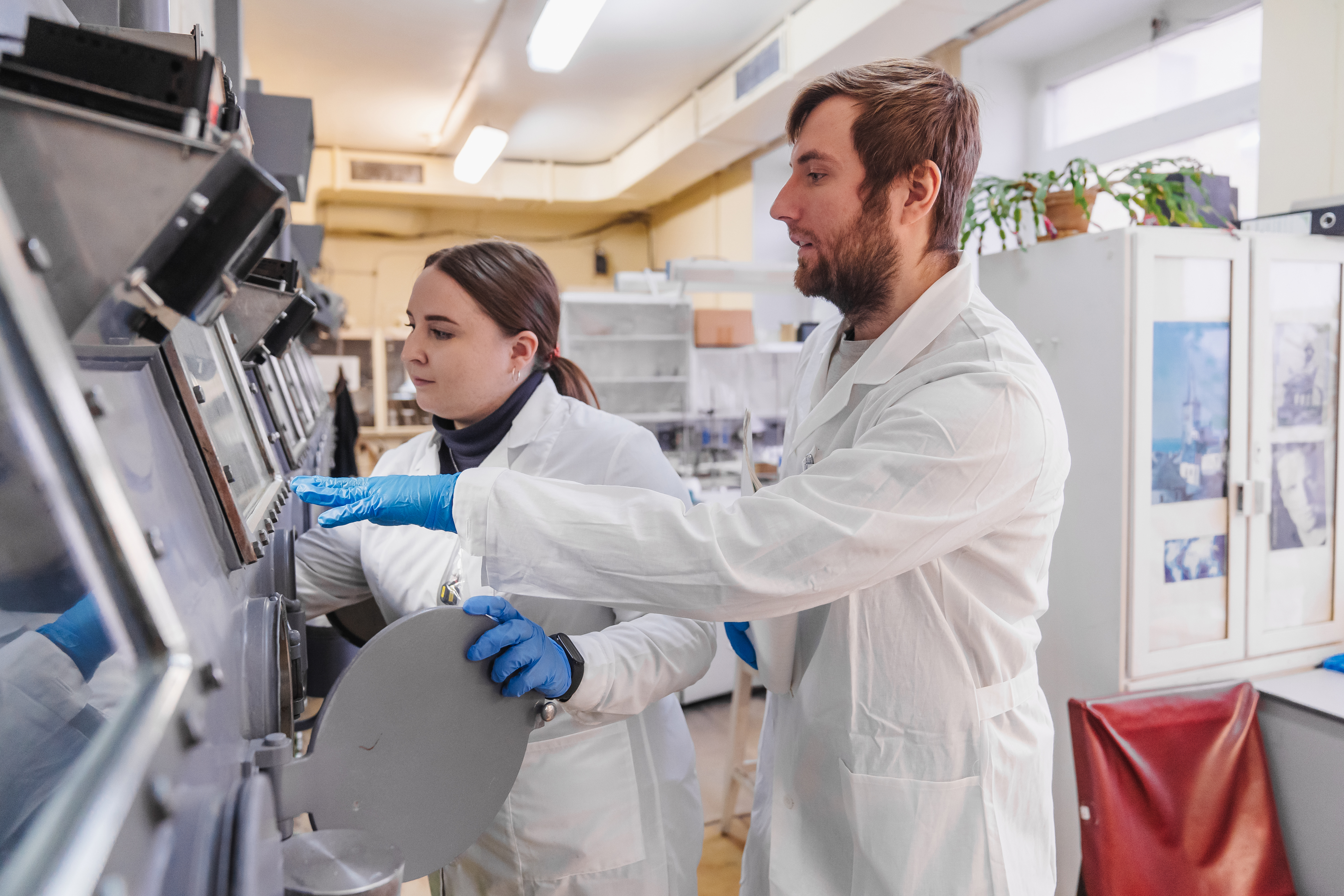
Interns and postgraduates work on radiation medicine, materials research, accelerator physics, and isotope production.
Necsa collaborates with the Universities of Pretoria and Johannesburg on joint projects and provides postgraduate grants, while iThemba LABS exposes students to cutting-edge nuclear medicine and applied physics.
South Africa’s nuclear talent is already in global demand, which is a point of pride, but also a warning.
South African engineers contributed to the construction of the UAE’s Barakah nuclear power plant, demonstrating the depth and credibility of local expertise.
However, without a robust pipeline from school through university to jobs, South Africa risks becoming a net exporter of nuclear professionals.
International partners amplify what local institutions can achieve.
Russia’s nuclear corporation Rosatom has run educational initiatives across Africa for more than a decade, offering state-sponsored scholarships since 2013 to students from South Africa and beyond.
Cooperation agreements and MoUs with African universities expand access to nuclear-related programmes, while the Eskom–Rosatom human-capital roadmap focuses on youth training, women in nuclear, and joint educational projects.
At school level, the company has funded science labs, supplied chemistry and physics equipment, trained teachers, and provided learning materials.
Its annual Atoms Empowering Africa video competition encourages pupils to explore how nuclear technologies shape life on the continent.
Beyond formal education, the company has supported community initiatives such as repairing schools, equipping computer rooms and building libraries.
These programmes help bridge gaps that often prevent talented learners from staying in school long enough to enter technical fields.
South Africa remains the only African country with an operational nuclear power plant.
Koeberg is undergoing modernisation, but future needs extend far beyond maintaining existing facilities.
The draft Integrated Resource Plan 2025 calls for more than 105 GW of new capacity by 2039, including 5.2 GW of additional nuclear power, with the possibility of rising to 10 GW.
New capacity, together with plans to replace SAFARI-1 with a modern multi-purpose reactor, will require engineers, physicists, radiation-safety specialists, and a pipeline of operators, analysts, and researchers for decades.
Without sustained investment in human capital, South Africa risks importing the skills needed for its own strategic industries.
A stronger STEM foundation, broader inclusion of girls, deeper links between universities and national laboratories, and targeted use of international partners can build the talent base required for a modern nuclear and high-tech economy.
These investments are no less important than any reactor or laboratory.
The country’s long-term energy security, medical capability, and industrial competitiveness will depend on the young people who choose to enter these fields.
Talent, in the end, is the real reactor.