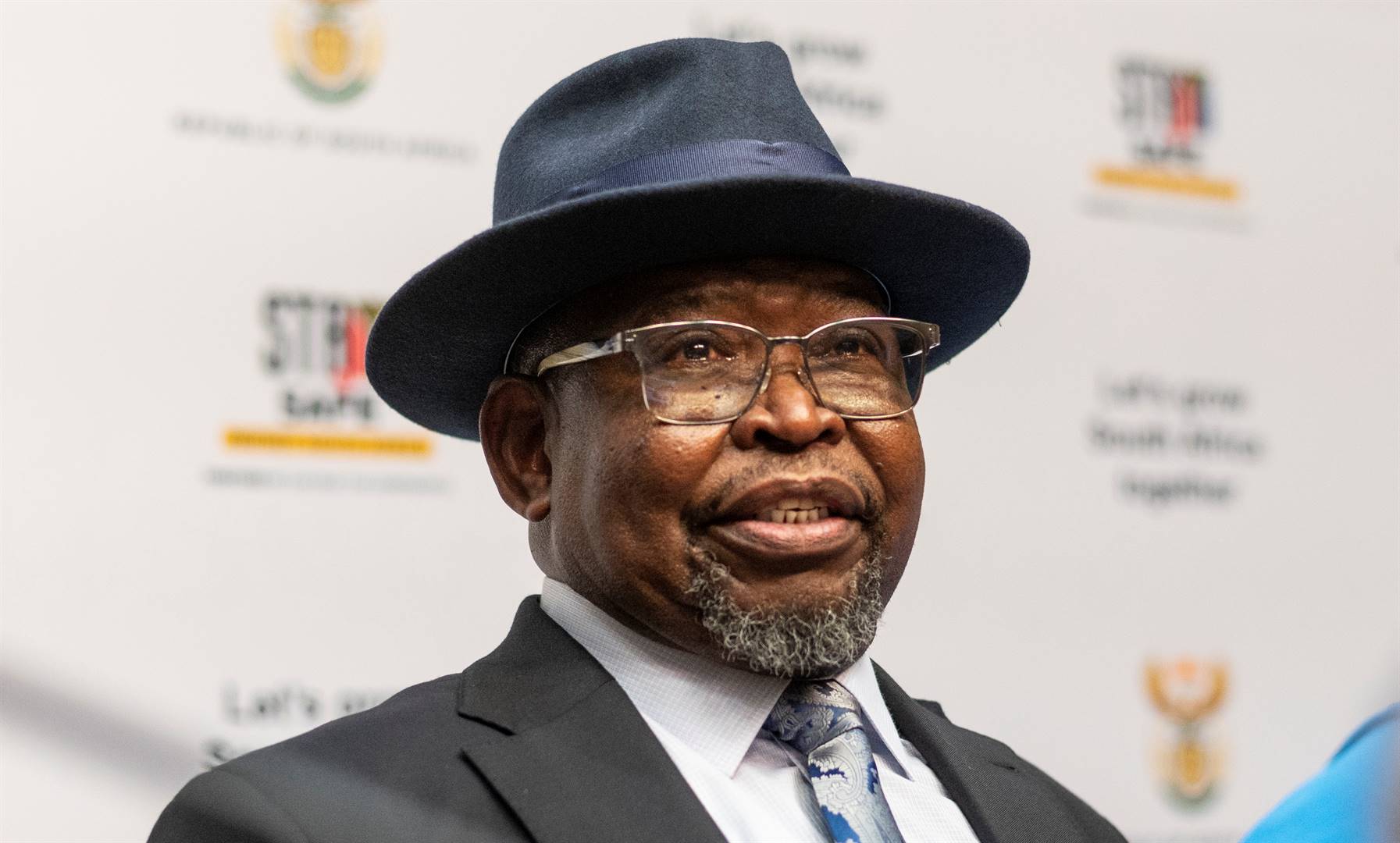
Johannesburg – Business Leadership South Africa (BLSA) has congratulated Finance Minister Enoch Godongwana on delivering a “credible and pragmatic budget” that tackles the country’s core challenges and reiterates the government’s commitment to structural reforms.
Commenting on Wednesday, 25 February 2026, BLSA said the budget marks a sharp contrast to a year ago, when a postponement signalled deep uncertainty.
BLSA said today’s budget shows a welcome move towards a “whole of government” approach to macro-fiscal policy.
“South Africa’s position has improved significantly compared with recent years, and this progress is evident in today’s Budget,” said BLSA CEO Busisiwe Mavuso.
“Minister Godongwana delivered this year’s speech with a much more supportive macroeconomic backdrop.”
BLSA said it was heartened to hear the minister say that the economy is expected to grow 1.6% this year, and while modest, this would represent tangible progress relative to South Africa’s recent performance.
Economic growth is expected to come in at 1.8% next year and 2% in 2028.
“This marks the first stretch of sustained economic growth in at least 10 years,” BLSA said.
In addition, for the first time in 17 years, debt will stabilise and is expected to fall in the coming years.
The budget deficit has narrowed markedly, and debt-service costs are also decreasing.
The consolidated budget deficit has narrowed to 4.5% in 2025/26, improving on the 4.7% projected in the 2025 Medium-Term Budget Policy Statement, and is expected to decline steadily over the next three years to 3.1% by 2028/29.
BLSA said it was pleased to see that the Treasury has proposed changes to tax thresholds and limits, and this includes an increase in the annual limit for tax-free savings from R36 000 to R46 000, and improved incentives for South Africans to save and invest by increasing retirement fund deductions.
This has the added macro benefit of increasing South Africa’s chronically low savings rate and providing a wider pool of capital to fund much-needed infrastructure investment.
Business also welcomes the announcement on moves to help small businesses with the VAT compulsory registration threshold and the annual turnover limit for the turnover tax, both being raised from R1m to R2.3m, and the voluntary VAT registration threshold from R50 000 to R120 000.
These VAT registration thresholds will become effective on 1 April, while the other thresholds will be effective from 1 March.
Turnover tax relief for micro businesses has been expanded, with the tax-free threshold nearly doubling to R600 000, up from R335 000.
Broadly, BLSA welcomes the tax relief proposed in the Budget and views this as South African’s reaping the rewards of fiscal discipline in recent years.
Putting money back in the pockets of ordinary working people and businesses will benefit the economy.
Crucially, this has not come at the expense of social spending, ensuring that the poor and indigent continue to receive critical assistance from the state.
The minister noted that the amendment of the PPP regulations has enabled greater private sector participation by streamlining procedural requirements, closing regulatory gaps, and clarifying institutional roles.
The pipeline of projects is growing.
Currently, 63 projects are at different stages of development.
Among the most advanced are the six border posts project, which will ease congestion, lift regional trade flows, and upgrade key inland border posts.
This is encouraging news.
BLSA said it has long been concerned about illicit trade, particularly in tobacco.
BLSA said it welcomes the minister’s statement that the sophisticated and organised nature of illicit operations demands an intensified effort to curb this trade, secure prosecutions, and dismantle its supply chains.
The SA Revenue Service (SARS) will also continue its joint operations with the Border Management Authority, SA Police Service, and the defence force to stop the illicit tobacco trade.
The reform of the national skills ecosystem is important for business.
The minister said that the skills development levy paid by employers to fund Sector Education and Training Authorities, or SETAs, and the National Skills Fund, has not yielded the outcomes expected.
BLSA believes that SETA reform should be carried out in consultation with business so that it may provide guidance on the skills required by the country. BLSA is ready to assist in this respect.
Given the water crisis the country – and Johannesburg in particular – has been experiencing, the minister made an important point when he said that municipalities must return to the foundational principle of fiscal integrity.
He added that this principle is consistently flouted – for instance, Johannesburg’s water revenue is R11.9bn, but only R1.3bn is allocated to Joburg Water for capital expenditure, contributing to the massive backlog of R64bn that is needed to fix water supply problems in the city.
If this practice of collecting revenue from basic services while diverting the funds to unrelated functions continues, maintenance backlogs will grow, services deteriorate, and critical infrastructure systems eventually collapse.
It is good news for both residents and for business that, to correct the trajectory, R27.7bn has been allocated over the medium term to a performance-linked reform for metro trading services in electricity, water, sanitation, and solid waste – a first towards matching revenue collection to reinvestment in the same service.
According to Minister Godongwana, the government is also reforming the municipal infrastructure grant to address persistent underspending, misuse of funds, and capacity constraints that hinder effective service delivery in non-metropolitan municipalities.
BLSA stated that, “it will be interesting to understand how the governance monitoring mechanisms of the institutions, which will be handling the grants, will function”.
The minister noted at the conclusion of his speech that SARS Commissioner Edward Kieswetter is preparing to retire at the end of April.
BLSA would like to extend its thanks to the commissioner for his leadership, dedication, and service.
“While today’s Budget Speech does not mean that the country’s economy is out of the woods, BLSA believes that it firmly signals South Africa’s ability to sustain the reform momentum needed to turn early gains into enduring progress – a momentum that will restore investor confidence and spur economic optimism,” Mavuso said.