Johannesburg – Modern Easter celebrations often involve brightly coloured chocolate eggs and sweet treats hidden around the garden for excited children to find.
But while a little indulgence is part of the fun, the amount of sugar children consume during Easter celebrations can quickly add up.
With the variety and visibility of Easter eggs at an all-time high, consumption of Easter eggs can turn into a months-long sugar rush.
“Easter is such a special time for families to spend together, and Easter eggs are a nostalgic part of that,” said Candice Sessions, Marketing Manager at Tea4Kidz.
“But children can very quickly consume far more sugar than recommended during egg hunts and celebrations, as well as in the pre- and post-Easter periods.
“By mixing in healthier options and creative alternatives, parents can keep Easter exciting while helping children avoid weeks of sugar spikes.”

Fun Easter Egg Hunt Alternatives
1. Decorate-Your-Own Ceramic Eggs
Painting ceramic eggs together can provide hours of creative family fun. If you don’t have ceramic, you can simply find some rocks to paint! These reusable eggs become keepsakes that can be displayed on the table every Easter year after year.

2. Glow-in-the-Dark Night Hunt
Turn this year’s egg hunt into an adventure by hiding glow sticks, glow-in-the-dark toys, or LED eggs around the house or garden for a magical night-time search.
3. Nature Scavenger Hunt
Encourage the little ones to explore outdoors by creating a list of items to find, such as pine cones, flowers, or rocks. This is a great way to combine playtime with nature.
4. Toy Treasure Hunt
Brightly coloured bath toys, plastic dinosaurs, farmyard animals, or rubber ducks make great hiding items – and you probably have these lying around at home. Younger children can collect them and swap them for a special treat later.
5. Reward Egg Hunt
Fill plastic eggs with pieces of paper containing fun rewards, rather than sweets. These could include ‘movie night with the family’, ‘choose the next meal’, or ‘extra playtime’, depending on children’s ages and interests!
6. Healthier Treat Options
Another way to keep Easter balanced is to include a few homemade treats made with wholesome ingredients. Laager Rooibos is a great option to include in recipes for children because it’s naturally caffeine-free and sugar-free, yet incredibly delicious.

“We have a range of great Laager Rooibos recipes that work incredibly well for Easter,” said Sessions.
“This ensures children are getting tasty treats without the excessive sugar load! We’ve shared two of our favourites for this year’s Easter celebrations.”
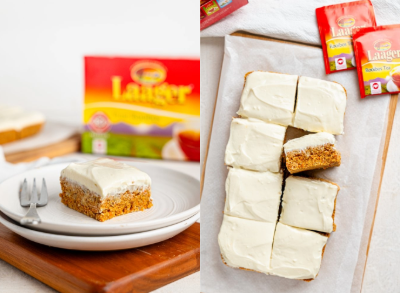
Laager No-Bake Rooibos Carrot Cake Bars
Ingredients – Cake
· 150g pitted Medjool dates
· 4 Laager Rooibos tea bags brewed in 100ml boiling water
· 150g raw carrot, peeled and roughly chopped
· 180g oat flour (blended oats)
· 1 tsp cinnamon
· ½ tsp ground ginger
· ¼ tsp ground nutmeg
· Pinch of salt
· 50g walnuts
Ingredients – Frosting
· 90g cream cheese
· 90g yoghurt
· 40g honey
Method
1. Soak the dates in boiling water for at least 30 minutes.
2. Brew the rooibos tea in 100ml boiling water and leave to infuse.
3. Blend the soaked dates, carrot, and brewed rooibos into a paste.
4. Transfer to a bowl and add oat flour, spices, and chopped walnuts.
5. Mix well and press the mixture into a lined dish. Refrigerate.
6. Whisk the cream cheese, yoghurt, and honey until smooth.
7. Spread frosting on top and refrigerate again before slicing into bars.
Laager Tea4Kidz Rooibos Date Balls
Ingredients
· 70g pitted dates
· 90g peanut butter
· 5ml cocoa powder
· 2.5ml salt
· 10ml cooled Laager Tea4Kidz Rooibos & Honeybush tea
· 2ml vanilla essence
· 125ml desiccated coconut
· 10g crushed Marie biscuits or almonds
· Extra coconut or melted chocolate (optional)
Method
1. Brew Laager Tea4Kidz Rooibos & Honeybush tea and allow to cool.
2. Blend dates, peanut butter, cocoa powder, salt, tea, and vanilla essence until smooth.
3. Fold in the desiccated coconut.
4. Add crushed biscuits or almonds.
5. Roll mixture into equal balls (Optional: roll in coconut or dip in melted chocolate)
6. Refrigerate before serving.
“The goal isn’t to remove chocolate entirely,” said Sessions.
“It’s about creating balance so that the excitement of the hunt comes from discovery and shared family moments, rather than just sweets.
“With a little creativity, families can keep the excitement of Easter alive while introducing healthier treats and meaningful activities that children will remember long after the chocolate eggs are gone.”
Frequently Asked Questions
1. What brands are part of the Joekels range?
Joekels packs, blends, and distributes several well-known beverage brands in South Africa. These include Tetley, Laager Rooibos, Tea4Kidz, Tea Time, and Society Coffee. Founded in 1994, Joekels is an award-winning South African company with Halal and Kosher accreditation as well as the globally recognised FSSC 22000 food safety certification.
2. Why is rooibos a good drink option for children?
Rooibos is naturally caffeine-free and sugar-free, making it a gentle and healthy beverage option for children. It contains antioxidants that support overall wellness and hydration, and its naturally sweet flavour means it can be enjoyed without added sugar. Rooibos can also be used in recipes, frozen treats, iced drinks, and smoothies, making it a versatile ingredient for family-friendly snacks.
3. Can children drink Laager Tea4Kidz Rooibos every day?
Yes. The Laager Tea4Kidz range is specifically developed for children and can be enjoyed daily as part of a balanced diet. It is naturally caffeine-free and sugar-free, with a variety of kid-friendly flavours. Some variants also contain added Vitamin C to support immune health (recommended for children over one year old).
The Laager range
The Laager Rooibos range is naturally caffeine-free and sugar-free, and offers a variety of flavours for the whole family, including the Tea4Kidz range, which has two added Vitamin C variants for even more health benefits. Note that variants with added Vitamin C are recommended for children over one year old.
Parents and caregivers can also access a range of healthy recipes, advice and tips via the Joekels website, www.joekels.co.za and via @Tea4Kidz on Facebook and @LaagerRooibosTea on Instagram.
Laager Tea4Kidz can be purchased from all major supermarkets, as well as online at www.joekels.co.za.
Johannesburg – As battery-powered outdoor tools continue to evolve alongside petrol equipment, buyers have more choice than ever – and for most, the price tag is usually the first place they look.
That makes sense.
The upfront cost matters.
But, according to Armand Locherenberg, Technical Support Specialist at Husqvarna South Africa, it should only be one consideration when making a decision.
The better question, he says, is: “What will the tool cost to own over time?” A question Locherenberg says more buyers should be asking.
”It is not just about what you pay on day one.
“It is also about what you spend (and save) while using the tool over months and years.
“In some cases, a battery-powered tool may have a slightly higher upfront outlay than other power tool options. But that does not always mean it costs more overall.”
And for many users, the longer-term ownership picture can be where the real value lies.
Locherenberg breaks down how battery tools deliver long-term value – and how the real savings add up:
1. More predictable running costs
Predictability matters just as much as price because it gives you more control over what you spend month to month.
Instead of dealing with changing input costs such as fluctuating fuel prices, battery tools can make day-to-day budgeting easier.
For homeowners, this helps with household planning. For professionals, it helps with quoting and managing operating costs.
2. Lower maintenance costs
Cost of ownership is not only about what keeps a tool running. It is also about time, servicing, and interruptions.
Battery tools generally have fewer moving parts and a simpler maintenance profile.
That can mean less routine maintenance and fewer trips for servicing, depending on usage and working conditions.
For many people, that translates to:
- Lower upkeep costs
- Less time lost to servicing
- Fewer disruptions when it matters most
And over time, those savings can make a meaningful difference.
3. Less downtime, more ready-to-go use
When a tool is simple to use and quick to get going, it can help reduce downtime.
Battery tools are designed for convenient operation – no fuel to mix, no pull cords, no warm-up time.
That simplicity is a practical advantage, whether you’re doing a quick trim at home or moving through a full workday schedule.
And less downtime means:
- Less time spent preparing to start
- Less disruption between tasks
- A smoother work rhythm
Storage also plays a role.
Because battery tools have fewer bulky components and a more streamlined setup, they’re lighter and easier to store, which means quick access when you need them.
For homeowners, that means less storage space is needed. For professionals, it means cleaner packing and equipment that’s ready when the workday starts.
That is a real part of ownership value, especially when time is tight.
4. Shared battery platforms / multi-tool cost savings
One of the biggest advantages of battery power is that a single battery can often be used across multiple tools, generally in the same range.
So, for example, one battery might power a trimmer, blower, and chainsaw, reducing both upfront costs and the ongoing expense of maintaining multiple chargers or fuel types.
It also simplifies tool management, making it easier to keep everything ready to go when the job calls for it.
Over time, this shared battery setup also contributes to long-term value, giving users more flexibility, convenience, and cost efficiency across their range of tools.
“The real cost of an outdoor battery-powered tool shouldn’t be judged by the shelf price alone,” Locherenberg emphasises.
“When you factor in lower running and maintenance expenses, as well as time saved through easier operation, the full ownership picture looks very different.
“So, for users seeking predictability, convenience, and long-term value, battery equipment can be a strong option when correctly matched to the job and properly cared for.
“That is why Husqvarna continues to invest in both petrol and battery innovation, giving customers reliable options across every application and the confidence to make informed choices.”
For more information on Husqvarna battery-powered outdoor tools, visit www.husqvarna.com/za or speak to your local Husqvarna dealer.
To place an advertorial or sponsored article in The Bulrushes, see the rate card below and get in touch at editor@thebulrushes.com