Johannesburg – The New South Institute (NSI) has described the signing of the Public Service Amendment Act (PSAA) 2025 as “the most significant reform to the country’s system of government in 30 years”.
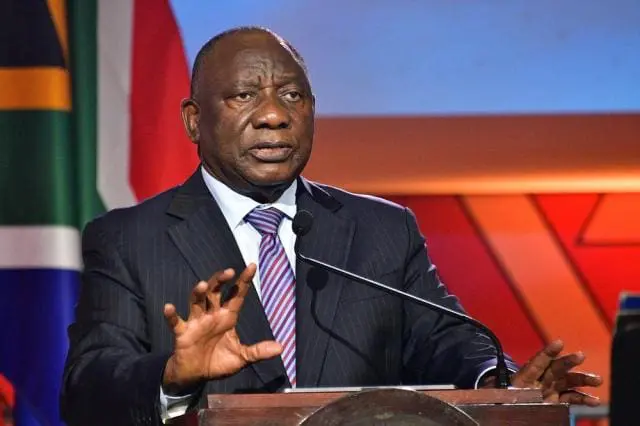
President Cyril Ramaphosa signed the PSAA into law on 26 March 2026, a move that restructures the relationship between political office and the public administration in South Africa.
“For the first time since 1994, the power to appoint senior officials and make operational decisions within government departments will rest not with the President, Cabinet Ministers, or provincial Members of Executive Councils, but with the heads of those departments themselves,” explains the NSI.
Commenting further on the significance of the PSSA, the NSI on Tuesday, 7 April 2026, stated: “This is the most significant reform to the country’s system of government in 30 years”.
The NSI, whose stated purpose is to help build capable, accountable institutions that can sustain democratic governance and deliver for citizens, has applauded the move published in the Government Gazette on 1 April 2026 (Gazette Number: 54451).
“Political interference in the day-to-day life of government departments has been one of the most persistent sources of administrative dysfunction, operational delays, and corruption in post-apartheid South Africa,” stated the NSI.
“By drawing a clear line between those who set policy and those who implement it, the PSAA creates the legal foundation for a genuinely capable, relatively autonomous public service, one that serves the Constitution and the public rather than the political interests of the moment.
“South Africa has long had the rhetoric of a developmental state. It now has the architecture to begin building one.”
The NSI revealed that it helped develop and support the arguments underpinning this reform, working with government, parliamentary structures, and civil society partners to translate evidence into policy.
The NSI said it helped build support for the Public Service Amendment Bill in the portfolio committee on Public Service and Administration, amongst political parties, Members of Parliament, Members of Provincial Legislatures, in the National Council of Provinces, and among key stakeholders, notably the Congress of South African Trade Unions (COSATU).
“This is a historic day, not for any single organisation, but for South Africa,” said Ivor Chipkin, Executive Director of the NSI.
“For thirty years, we have struggled with a public service in which political authority reached too deeply into administrative life, with damaging consequences for service delivery, accountability, and the integrity of the state.
“The Public Service Amendment Act changes that.
“The hard work of implementation now begins, and we are committed to supporting it.”