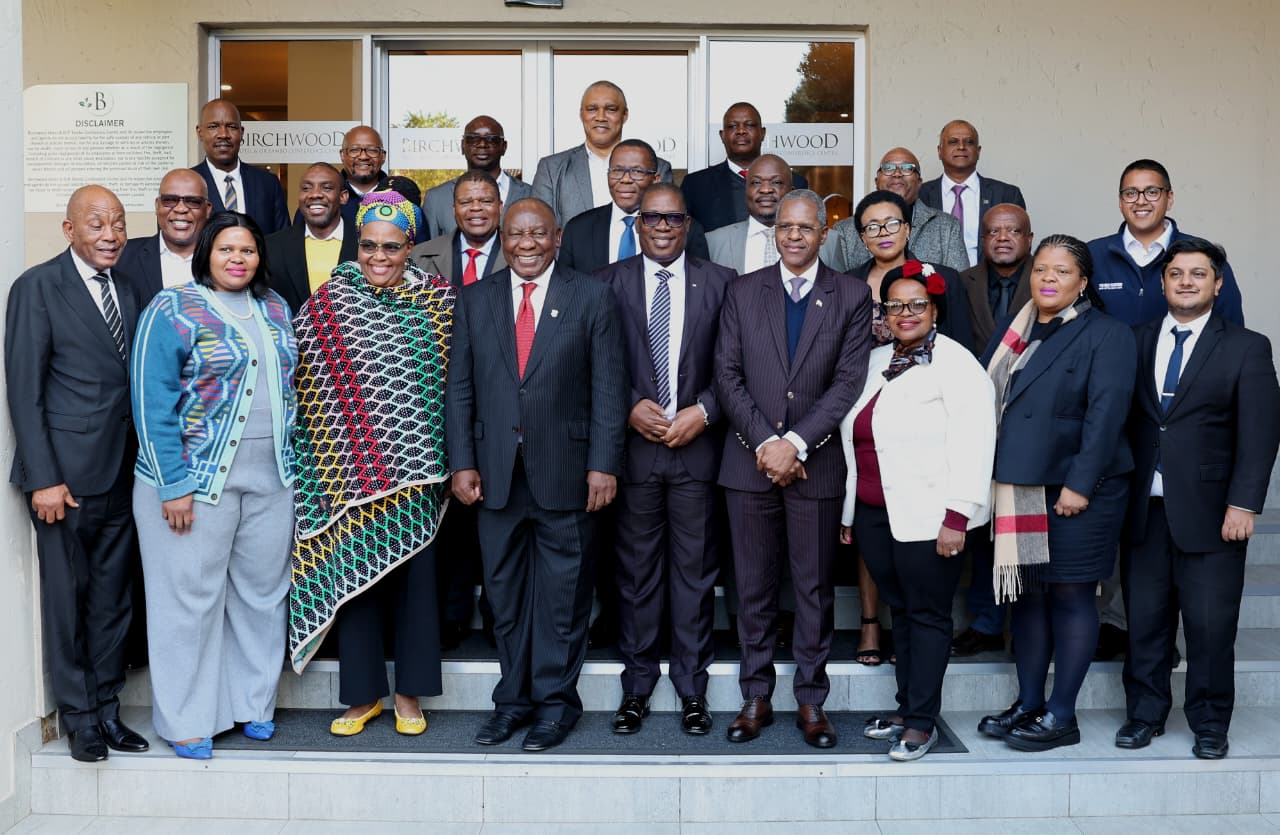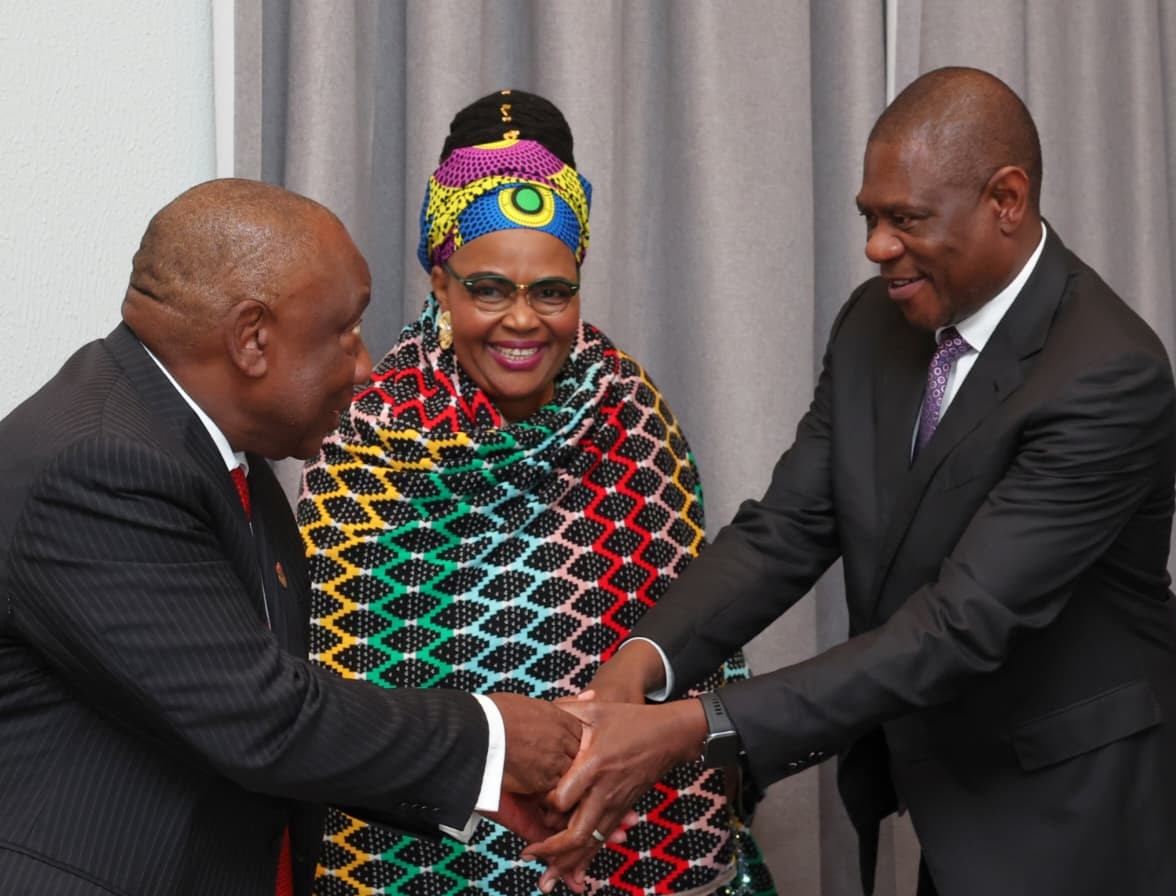
Pretoria – President Cyril Ramaphosa on Thursday, 30 April 2026, opened a landmark session of the Extended President’s Coordinating Council (PCC) at Birchwood Hotel in Ekurhuleni, bringing together national ministers, premiers, mayors, and municipal managers for the first time.
He described the gathering as a “historic get-together” aimed at strengthening cooperative governance across South Africa’s three tiers of government.
The PCC, established to align national priorities with provincial and municipal plans, is now tasked with tackling systemic weaknesses in local government.
President Ramaphosa acknowledged that many municipalities face poor financial management, weak institutional capacity, and inadequate service delivery, leaving ordinary South Africans to bear the brunt of water shortages, electricity disruptions, and crumbling infrastructure.
“Our task in this meeting is not to repeat the catalogue of shortcomings, but to focus on solutions,” Ramaphosa said, stressing that the forthcoming White Paper on Local Government will be pivotal in reimagining how municipalities function.
He called for cutting red tape, professionalising local administrations, and ensuring appointments are made on merit to restore accountability and efficiency.
A significant portion of the meeting’s agenda was dedicated to resolving the worsening water and sanitation crisis.
While access to piped water has expanded since 1996, reliability has declined, with 34% of households reporting interruptions lasting more than two days in 2024.
President Ramaphosa highlighted ageing infrastructure, illegal connections, poor maintenance, and mounting municipal debt as key drivers of the crisis.
Metropolitan municipalities are losing up to half of their purchased water before billing, while debt to water boards has tripled since 2018.
To address this, President Ramaphosa announced the establishment of a National Water Crisis Committee to oversee a coordinated government-wide response, supported by a National Water Action Plan.
President Ramaphosa outlined five guiding principles: restoring accountability, protecting financial integrity, strengthening technical expertise, enforcing consequence management, and making cooperative governance practical.
“Every institution represented here must be clear about its role, obligations, and timelines,” he said.
“The people of South Africa are entitled to know who is responsible if commitments are not met.”
President Ramaphosa urged municipalities to be at the frontline of delivery, ensuring reliable energy, water, and infrastructure to support businesses and communities.
He emphasised that reforms already underway through Operation Vulindlela and the District Development Model must now translate into tangible improvements at the local level.
“The country is looking to us to secure an uninterrupted supply of water to all citizens, businesses and institutions, now and into the future,” President Ramaphosa concluded.
“We have the means to do this. Let us demonstrate that we have the will.”