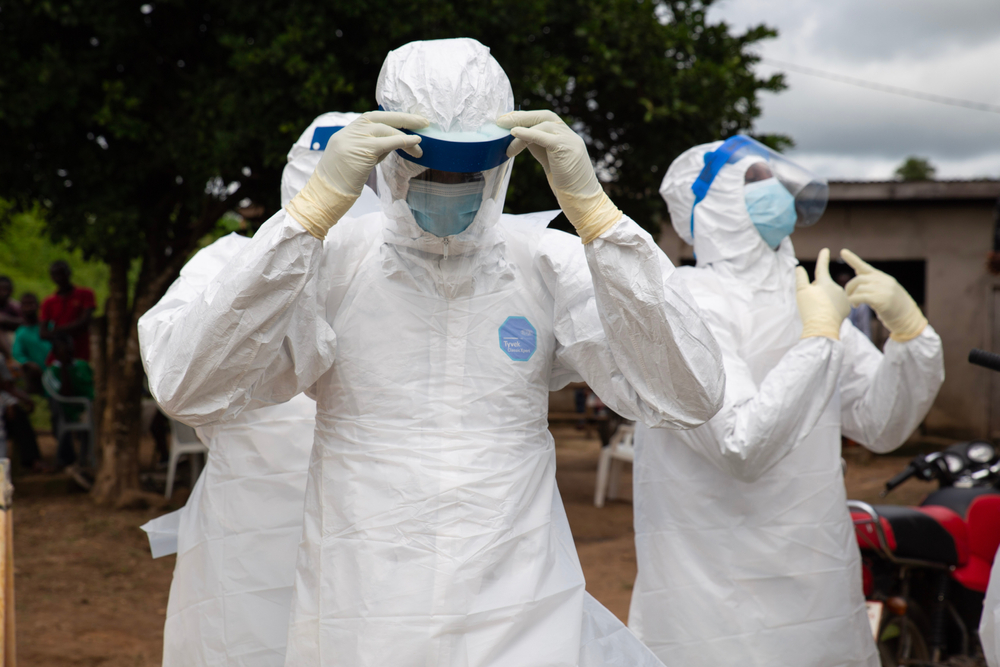
Johannesburg – In the conflict-ravaged eastern Democratic Republic of the Congo (DRC), a new Ebola outbreak has ignited alarm across the region.
Declared on May 15, 2026, by DRC health authorities, the epidemic involves the Bundibugyo virus strain in Ituri Province.
This marks the country’s 17th recorded Ebola outbreak since 1976.
The World Health Organization (WHO) quickly declared it a Public Health Emergency of International Concern (PHEIC) on 17 May 2026, citing rapid spread, cross-border risks, and the absence of a proven vaccine or specific treatment for this strain.
(Source: who.int)
As of late May 2026, health authorities report over 746 suspected cases and at least 176 deaths in the DRC, with dozens of laboratory-confirmed cases. (Source: who.int)
Two confirmed cases, including one death, have been recorded in Uganda among travelers from the DRC, with no local transmission reported there yet.
Cases have spread beyond Ituri into North Kivu and South Kivu provinces, including urban centers like Goma, a densely populated city under the control of the Rwanda-backed M23 rebel group. Suspected cases have also reached areas near Kinshasa.
(Source: reuters.com)
The epicentre lies in insecure health zones such as Bunia, Rwampara, and Mongbwalu in Ituri Province.
Decades of armed conflict, population displacement (over 900 000 internally displaced in Ituri alone), mining activity, and frequent cross-border movement with Uganda have accelerated transmission.
Symptoms include fever, body pain, weakness, vomiting, and, in severe cases, bleeding.
Many patients deteriorate rapidly. Health workers have also been infected, underscoring risks to frontline responders.
(Source: cdc.gov)
Challenges in a Rebel-Controlled Zone
The outbreak’s presence in M23-controlled territories complicates the response dramatically.
M23 rebels have acknowledged cases in areas like Kabare territory in South Kivu and Goma.
A spokesman for the group downplayed immediate fears while allowing some WHO access to treatment centers.
However, ongoing fighting between M23 and DRC forces, alongside other armed groups, restricts movement for medical teams, surveillance, and safe burials. Insecurity has already led to attacks on health facilities.
(Source: medicalxpress.com)
The DRC government, led by the Ministry of Health, has mobilised resources and cooperated with international partners.
Yet critics note that response efforts remain hampered by weak infrastructure, limited laboratory capacity (primarily in Kinshasa and Goma), and the broader security crisis.
Coordination with rebel-held areas adds layers of complexity, as trust between government forces and local communities—or armed groups—is low.
(Source: abc7ny.com)
Burning of the Temporary Treatment Centre
Tensions boiled over on May 22 in Rwampara, near the epicentre.
An angry crowd, including youths, set fire to temporary isolation tents at Rwampara General Hospital after officials prevented relatives from retrieving the body of a suspected Ebola victim for a traditional burial.
Protesters threw projectiles, torched tents used for isolation and body storage, and chaos ensued.
Some patients reportedly fled during the incident. Police intervened, and medical workers later received military protection.
(Source: bbc.com)
This attack highlights deep community resistance.
Safe burial protocols, essential to prevent transmission through bodily fluids, clash with local customs that emphasise family involvement in funerals.
Similar incidents occurred in past outbreaks, eroding trust in the response.
Myths and Misinformation
Myths and rumors have proliferated, fueling mistrust.
Communities have accused NGOs and hospitals of fabricating the outbreak for financial gain or to destabilise the region.
Other persistent beliefs include Ebola spreading through air, mosquitoes, witchcraft, or curses on the area.
Some view it as a hoax or a mystical illness best treated through prayer or traditional healers rather than medical intervention.
These misconceptions, documented in previous DRC Ebola responses, discourage people from seeking care, reporting cases, or adhering to preventive measures like hand hygiene and avoiding contact with sick individuals.
(Source: pmc.ncbi.nlm.nih.gov)
Health educators and religious leaders are working to counter these narratives through community outreach, but insecurity limits access.
International Responses: WHO and the African Union (AU)
The WHO has ramped up support, delivering over 11 tonnes of medical supplies within days and deploying experts.
Director-General Tedros Adhanom Ghebreyesus expressed deep concern over the outbreak’s “scale and speed,” upgrading the national risk level to “very high.”
The agency emphasises surveillance, contact tracing, infection prevention, and community engagement, while warning that numbers are likely underreported and the outbreak probably began in April.
(Source: afro.who.int)
The African Union (AU) and Africa Centres for Disease Control and Prevention (Africa CDC) are coordinating regional efforts.
Africa CDC has held emergency briefings with health ministers from DRC, Uganda, and South Sudan.
They stress cross-border surveillance and preparedness, especially given travel links.
The AU’s involvement aims to bolster African-led responses, including technical support and resource mobilisation amid global aid challenges.
(Source: facebook.com)
Partners like UNICEF, CDC, and MSF are aiding with supplies, child protection (as many cases affect younger adults and caregivers), and risk communication. However, broader issues such as foreign aid cuts have slowed some detection and response capacities.
Outlook and Urgent Needs
This Bundibugyo Ebola outbreak tests the limits of global health security in fragile settings.
Without a dedicated vaccine, reliance falls on classic public health tools: isolation, contact tracing, safe burials, and community trust-building.
The conflict with M23 and other groups remains the biggest barrier, turning a containable health crisis into a potential regional threat.
As cases climb and anger simmers, the DRC government, with WHO, AU, and partners, must navigate security constraints while addressing myths head-on.
Success depends on inclusive dialogue with communities and pragmatic coordination across divided territories.
For now, the situation remains fluid and precarious, with fears of further urban spread in places like Goma raising the stakes.
International vigilance is critical, even as the immediate global pandemic risk stays low due to Ebola’s transmission mode.
Disclaimer: This article was compiled using the AI tool Grok on X and may contain inaccuracies