Washington, DC. – Earlier this week on Tuesday, 30 June 2026, the US Supreme Court delivered a decisive 6-3 ruling in Trump v. Barbara, striking down President Donald Trump’s executive order aimed at restricting birthright citizenship.
The decision reaffirms a core principle of the 14th Amendment: nearly all children born on US soil are American citizens at birth, regardless of their parents’ immigration status.
(Source: nytimes.com)
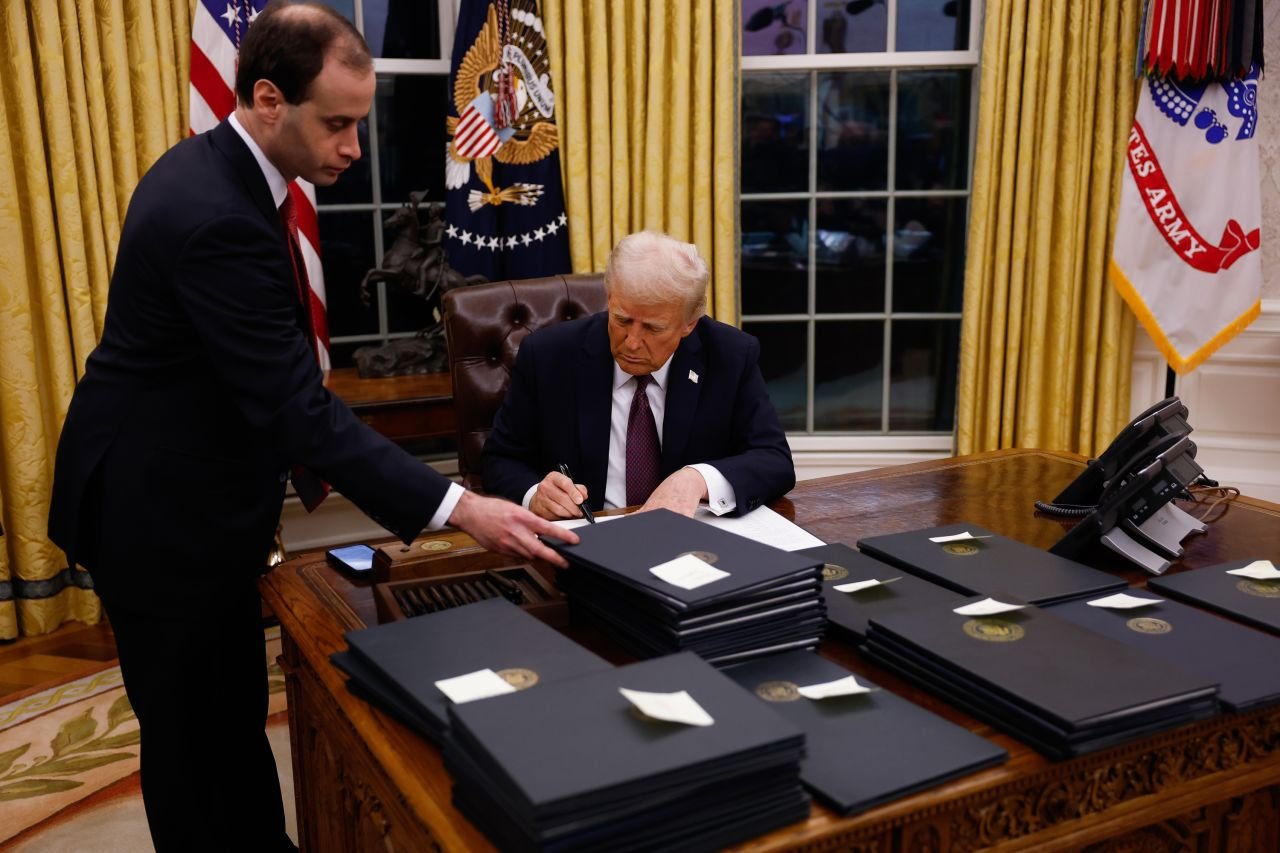
This ruling marks a significant defeat for Trump, who signed Executive Order 14160 on his first day in office in January 2025.
The order sought to deny automatic citizenship to children of undocumented immigrants and those on temporary visas, framing it as a measure against “anchor babies” and birth tourism.
Commentators across the political spectrum described the outcome as a major blow to his immigration agenda, highlighting limits on executive power to reinterpret constitutional rights.
(Source: aljazeera.com)
The Constitutional Foundation and the Court’s Reasoning
Birthright citizenship stems from the Citizenship Clause of the 14th Amendment (ratified in 1868): “All persons born or naturalised in the United States, and subject to the jurisdiction thereof, are citizens of the United States and of the State wherein they reside.”
This was intended to overturn the Dred Scott decision and guarantee citizenship to formerly enslaved people and their descendants.
(Source: scotusblog.com)
The Supreme Court’s majority opinion, written by Chief Justice John Roberts and joined by Justices Sonia Sotomayor, Elena Kagan, Amy Coney Barrett, and Ketanji Brown Jackson (with Justice Brett Kavanaugh concurring in the judgment but emphasising statutory grounds), held that children born in the U.S. to parents who are unlawfully or temporarily present are “subject to the jurisdiction” of the United States.
Roberts drew on historical precedent, including the 1898 case United States v. Wong Kim Ark, which affirmed citizenship for a child of Chinese immigrants.
(Source: scotusblog.com)
The Court rejected the administration’s narrower interpretation of “jurisdiction,” which would have excluded children of non-citizens or non-permanent residents.
Roberts emphasized that the 14th Amendment’s broad language applies to virtually everyone born on US soil, with narrow exceptions like children of foreign diplomats.
(Source: nytimes.com)
How the Justices Voted
- Majority (6-3 affirmation of lower courts): Roberts (author), Sotomayor, Kagan, Barrett, Jackson (full concurrence), and Kavanaugh (concurring in judgment, dissenting in part on constitutional grounds but agreeing the EO violated federal law).
- en.wikipedia.org
- Dissent: Justice Clarence Thomas (joined by Neil Gorsuch) argued Wong Kim Ark was limited to children of permanent residents. Justice Samuel Alito and Gorsuch wrote separate dissents; Alito would have overturned Wong Kim Ark, while Gorsuch supported limits for temporary visitors.
- scotusblog.com
This split underscores ongoing conservative debates about originalism and immigration, but the majority prioritized textual and historical fidelity to the Amendment.
(Source: cbsnews.com)
Why Commentators Call It a Defeat for Trump
Trump positioned the EO as a cornerstone of his hardline immigration policy, arguing it deterred illegal immigration and “birth tourism.”
Lower courts had uniformly blocked it, and the Supreme Court’s swift affirmation was seen as a rebuke.
(Source: aljazeera.com)
Critics from the left hailed it as a defense of American values and constitutional norms. Immigration advocates, including the ACLU, called it a “stunning loss” for Trump, who personally attended oral arguments.
Even some conservatives noted the ruling exposed limits on unilateral executive action on citizenship.
(Source: aclu-nh.org)
Supporters of Trump’s position, including some in his administration, viewed it as judicial overreach that perpetuates incentives for illegal immigration.
Trump responded on Truth Social, calling the decision “too bad” and pledging legislative or other efforts to restrict it.
(Source: bbc.com)
The ruling does not eliminate all debate—DOJ announcements post-decision signaled probes into alleged “birth tourism” fraud schemes, where some foreign nationals allegedly travel primarily to secure U.S. citizenship for children.
However, the core constitutional protection remains intact.
(Source: usatoday.com)
Implications for Ordinary Foreign Visitors Giving Birth in America
For most foreign visitors—tourists, students, or temporary workers on valid visas—the ruling changes little in practice.
Their U.S.-born children have long been recognised as citizens, eligible for passports and rights upon reaching adulthood.
The decision reinforces stability: families do not face sudden denials of citizenship documents.
(Source: cfr.org)
- Practical effects: Hospitals and vital records offices continue issuing birth certificates without immigration-status checks for parents. Children gain lifelong benefits, including potential pathways for family sponsorship later, though parents’ status remains unchanged.
- Birth tourism concerns: The ruling does not endorse deliberate schemes. Estimates suggest thousands of such births annually, often marketed online. Post-ruling, the DOJ may pursue fraud cases (e.g., visa misrepresentation), but routine tourism or short visits do not trigger automatic scrutiny.
- usatoday.com
- Broader context: About 300,000–400,000 children are born annually to non-citizen mothers in the US. The decision preserves this demographic reality while leaving room for Congress to address related immigration policies through legislation.
- x.com
Critics of broad birthright citizenship argue it strains resources or encourages circumvention; supporters see it as a bedrock of equality and integration.
Ordinary families—say, a European tourist or Indian student giving birth during a visit—face no new barriers or stigma.
The child is simply American by birth.
(Source: wbaltv.com)
Both Sides of the Argument
Pro-upholding birthright citizenship (majority view and advocates):
It embodies America’s inclusive ideal—“a nation of immigrants.”
The 14th Amendment’s text and history demand broad application.
Restricting it via EO would create stateless children, invite discrimination, and undermine the Constitution.
It has endured for over 150 years and aligns with practices in most Western democracies.
(Source: aclu.org)
Opposing broad application (Trump administration and dissenters):
The Clause was meant for those with strong ties (e.g., freed slaves), not transient visitors or undocumented immigrants.
It incentivises illegal entry and fraud like birth tourism, diluting citizenship’s value. Congress or stricter enforcement, not the courts, should define boundaries.
(Source: scotusblog.com)
The decision settles the immediate legal fight but fuels ongoing political and legislative battles.
As one analyst noted, it protects a fundamental right while spotlighting deeper immigration reform needs.
For now, the Constitution’s promise holds: birthplace on American soil confers citizenship for the vast majority.
(Source: youtube.com)
Disclaimer: This article was compiled using the AI tool Grok on X and may contain inaccuracies