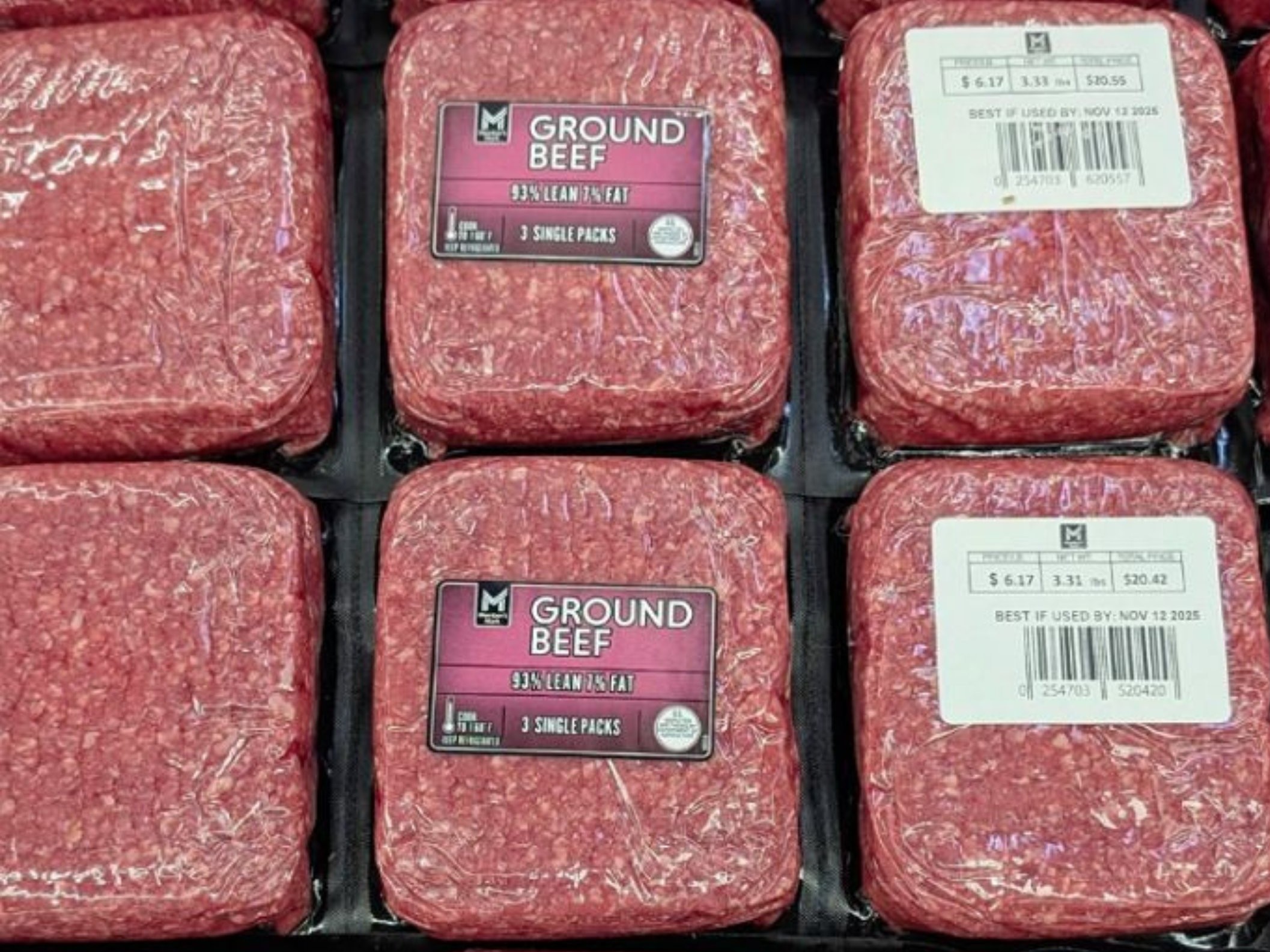
Kansas City – Ground beef, long a staple of American weeknight dinners and backyard cookouts, is approaching or hovering near $7 per pound in many markets.
Retail prices for beef and veal are forecast to rise nearly 10 percent in 2026, far outpacing overall grocery inflation.
The squeeze is hitting families as school routines resume and grilling season lingers, with some shoppers reporting they are buying less frequently or switching to chicken and pork.
(Source: rfdtv.com)
The root cause is a historically tight domestic cattle supply.
The U.S. herd stood at about 86.2 million head at the start of 2026, the smallest in 75 years.
Beef cow numbers have fallen to levels not seen in decades.
Years of drought forced ranchers to liquidate breeding stock when forage dried up.
Elevated feed, fertilizer, fuel, and interest costs compounded the pressure, making it expensive to maintain or expand herds.
Rebuilding is biologically slow: retaining a heifer today yields marketable beef years later.
Strong consumer demand for beef has persisted even as prices climbed, keeping the market tight.
Additional pressure came from the New World screwworm outbreak, which led to prolonged restrictions on live cattle imports from Mexico—a traditional source of roughly a million head annually.
Industry concentration, with four firms handling about 85 percent of processing, has also drawn scrutiny for limiting competition and transparency.
(Source: latimes.com)
Americans still consume substantial quantities of beef.
Per capita availability has hovered in the mid-to-high 50s pounds range recently, with total domestic disappearance in recent years around 28–29 billion pounds.
Domestic production is projected near 25 billion pounds in 2026, down from higher levels in prior years, leaving a sizable gap filled by imports already forecast at a record roughly 6.1 billion pounds.
(Source: newsnationnow.com)
Consumers have shown mixed responses.
Demand held firm longer than many expected, supported by preferences for protein and younger shoppers willing to pay up.
Yet signs of fatigue are emerging.
Some households report cutting the frequency of beef purchases, trading down to cheaper cuts, or substituting other proteins.
Retailers and processors have felt the pressure of high cattle costs alongside resistance to further price hikes at the meat case.
In response, the Trump administration has turned to imports.
President Trump announced that for 90 days the United States would allow up to 300 000 metric tons (roughly 661 million pounds) of lean beef trimmings suitable for ground beef to enter with no out-of-quota tariff, with a commitment that the product would be sold at 25 percent below current market prices.
The measure is framed as temporary relief while the domestic herd rebuilds.
Agriculture Secretary Brooke Rollins has defended the step, noting that Americans consume around 13 million metric tons of beef annually, of which roughly 11 million come from U.S. production, and describing the imports as filling a specific gap in ground-beef supply for families, particularly lower-income ones who rely on it.
“We’re going to see that cost of ground beef go down,” she said, while emphasising longer-term efforts to support herd expansion through measures such as more grazing access.
(Source: brownfieldagnews.com)
Trump himself presented the move as balancing consumer needs with rancher recovery: the deal would “reduce prices for Americans while giving space for our Great American Beef Herd to grow again.”
Earlier actions had already expanded access for Argentine lean trimmings.
The proposal has sharp pros and cons. Proponents argue that extra supply of lean trimmings—key for grinding—can moderate ground-beef prices relatively quickly without directly flooding the fed-cattle market that supports higher-value steaks.
With production lagging demand and the herd at multi-decade lows, temporary imports provide immediate consumer relief ahead of midterms and buy time for domestic rebuilding.
The 25 percent discount commitment, if passed through, could deliver noticeable savings at the grocery store.
Officials note the volume is limited in duration and targeted.
Critics, especially cattle producers and their associations, contend the imports undercut the very price signals needed for herd recovery.
High cattle prices are finally giving ranchers incentive and cash flow to retain heifers after years of drought and high costs.
Flooding the market with discounted foreign product risks depressing domestic cattle values, discouraging expansion, and prolonging the shortage.
“You don’t put America first by putting U.S. cattle producers last,” said Justin Tupper, president of the United States Cattlemen’s Association.
Colin Woodall, CEO of the National Cattlemen’s Beef Association, stated that while producers share the goal of affordable groceries, “flooding the market with government-subsidised, below-market beef is not the way to rebuild the American cattle herd.”
Ranchers also raise concerns about food safety oversight, lack of mandatory country-of-origin labeling that would allow consumers to distinguish products, and the timing overlapping with calf marketing seasons.
Economists such as Derrell Peel of Oklahoma State University have cautioned that even reopening Mexican cattle trade or adding imports is unlikely to produce rapid, measurable retail relief given the scale of the domestic shortfall and biological lags.
(Source: latimes.com)
Quantitatively, the proposed 661 million pounds represents a meaningful short-term boost relative to quarterly import forecasts but a modest fraction of annual disappearance—on the order of 2 percent of total yearly supply.
Analysts note it is unlikely by itself to fully offset the multi-year production shortfall or restore prices to earlier levels.
Meaningful, sustained relief ultimately depends on expanding the U.S. cow herd, which will take years even under favorable conditions of improved forage, lower input costs, and confident producers.
For now, families continue navigating higher prices at the meat counter while policymakers weigh short-term import relief against the longer project of restoring domestic capacity.
The tension highlights a classic agricultural dilemma: consumers want affordable protein today, while producers need durable incentives to ensure supply tomorrow.
Disclaimer: This article was compiled using the AI tool Grok on X and may contain inaccuracies