Vienna – The 70th session of the General Conference of the International Atomic Energy Agency (IAEA) is taking place in Vienna from 14 to 18 September 2026.
For African countries considering nuclear power as part of their future energy mix, discussions at the conference were particularly relevant.
More countries across the continent are exploring nuclear energy to meet rising electricity demand, strengthen energy security and reduce emissions.
However, nuclear safety, reliable infrastructure, resilient supply chains and international oversight will be essential to the successful development of their nuclear programmes.
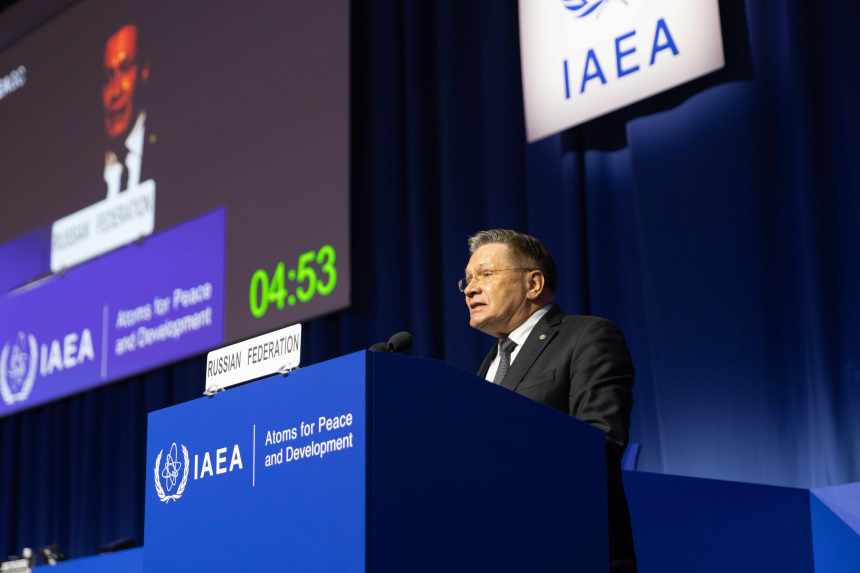
In that regard, Rosatom Director General Alexey Likhachev took part in the plenary session.
He highlighted the importance of ensuring that nuclear facilities have reliable access to the resources and infrastructure required to maintain safe operation, particularly in situations where normal supply and operating conditions are disrupted.
“Today, the world is experiencing a renaissance in nuclear energy while at the same time facing unprecedented threats to nuclear facilities,” Likhachev noted, stressing that in this context, the role of the IAEA was more important than ever.
“Tripling nuclear capacity by mid-century is no longer merely a topic for expert debate, but a practical response to growing electricity demand, climate challenges and the need to ensure energy sovereignty.
“On the one hand, we are seeing genuine growth in interest in nuclear energy and making plans to expand nuclear capacity.”
Likhachev added: “We can state that the overwhelming majority of countries have recognised that nuclear energy is indispensable and in demand.
“On the other hand, we are living in a world where nuclear facilities are being attacked almost on a daily basis, creating risks to their safety. What was previously unthinkable has become a reality.”
On the sidelines of the General Conference, Rosatom Director General also met with IAEA Director General Rafael Grossi to discuss the situation at the Zaporozhskaya Nuclear Power Plant.
“We greatly value the fact that IAEA staff are present at the Zaporozhskaya Nuclear Power Plant, putting their lives at risk,” said Likhachev.
This week will see the 35th rotation of IAEA observers.
“We recognise the personal commitment and courage of the Agency’s Director General Rafael Grossi,” said Likhachev.
“At the same time, we believe that, given the dramatic situation, the Agency, as the specialised international organisation, should not limit itself to documenting attacks, but should also provide an objective assessment of what is happening.”
Rafael Grossi, in his turn, has confirmed that he personally and the IAEA Secretariat remain committed to working together with Russia to ensure the safety of the ZNPP and is ready to continue the dialogue on these issues.
The continued presence of IAEA personnel at the plant was discussed as an important element of international monitoring and confidence-building in nuclear safety.