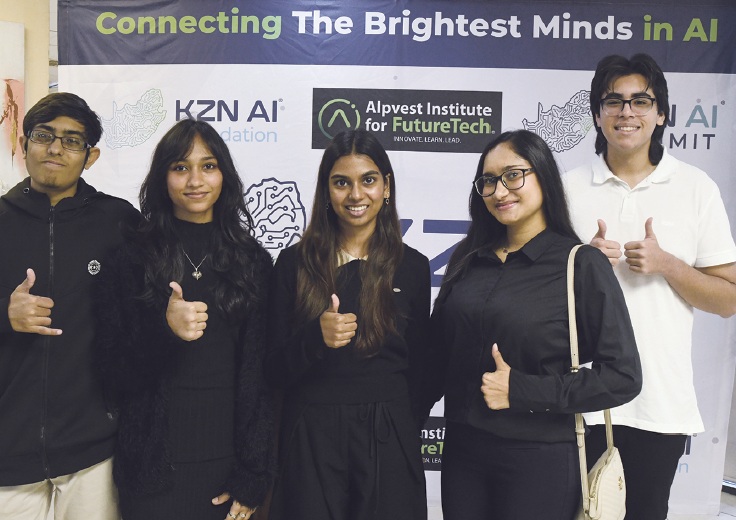
Durban – Industry leaders, academics, technology specialists, and entrepreneurs converged at Alpvest Conference Centre at the Royal Palm Hotel in Umhlanga for the KwaZulu-Natal (KZN) Artificial Intelligence (AI) Summit.
The summit unpacked the future of AI across the province, country, and continent.
Organised by the KZN AI Foundation NPC, with Alpvest Institute for FutureTech (AIFT) as event host and anchor sponsor, the summit on Thursday, 22 October 2026, centred on the theme Connecting the Brightest Minds of AI in KZN.
Across four thematic blocks, speakers explored AI regulations and opportunities.
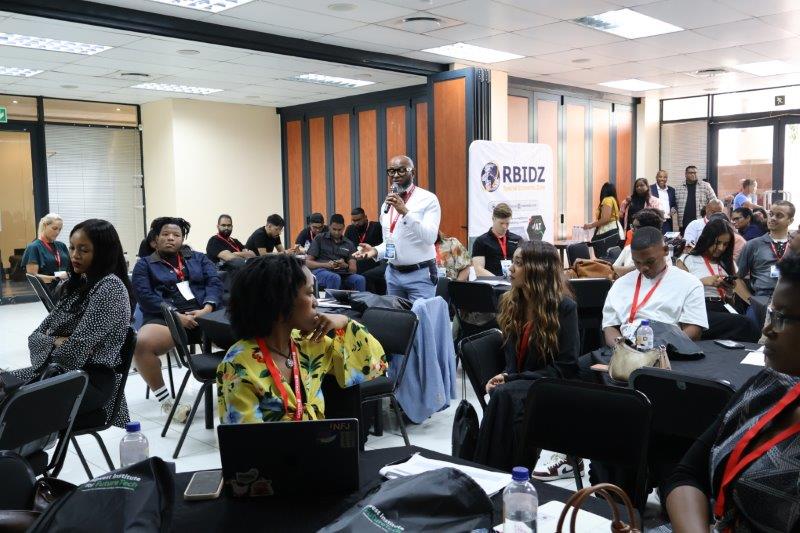
“AI’s potential is real, but so are the risks. That’s why responsible development – governance and human oversight – was central to this programme,” said Jay Ramrundlall, Group CEO of AIFT and author of The Human Advantage: Judgement, Responsibility and Leadership in the Age of Artificial Intelligence.
“Events like this exist precisely so that opportunities and legitimate concerns are discussed openly by the people building and using AI.
“We need to move beyond the extremes of hype and fear and have practical conversations about what guardrails are needed and who is accountable for the decisions made.”
Impactful programme assesses AI’s impact across the economy
The programme brought perspectives from government, academia, business, and the technology sector, with keynote presentations, panel discussions, live demonstrations, and networking opportunities that encouraged collaboration and practical thinking about AI adoption.
Block 1: Policy, governance, and sovereign AI
The opening block looked into the capabilities and safeguards needed to develop and adopt AI responsibly.
Discussions covered foundational digital capabilities, data sovereignty, cybersecurity, and ethical AI, highlighting the importance of human oversight as the technology advances.
Professor Louis Fourie, AIFT Senate Chairperson, facilitated the block, which also included a panel discussion featuring Andiswa Khumalo of the State Information Technology Agency (SITA).
Speakers included:
- Zamokwakhe Dlamini, Deputy Director of Foundational Digital Capabilities Research at the Department of Science and Innovation
- Chris Ainslie, General Manager at First Core.AI
- Mathakha Ramabulana of Destiny Global Technology
- Prof Job Dubihlela, Head of Postgraduate Studies at the University of KwaZulu-Natal Business School
Block 2: Smart mobility, infrastructure, and industrial AI
The second block explored opportunities around AI data centres in KZN, digital twins, geospatial intelligence and the digital infrastructure needed to connect government, industry and AI startups.
Prof Mugisha Stephen Akandwanaho, Professor of AI at North-West University, and AIFT Chief Strategy Officer Elisha Ramnundall were facilitators.
Speakers included:
- Martin Stevens, Lead Trainer, HP South Africa
- Matthew Strydom, Drones and GIS Specialist at Geo-Afrika Technologies
- Wandile Zulu, Senior Specialist: Key Account Manager at Cassava – Liquid Intelligent Technologies.
Block 3: Enterprise AI, health, and creative industries
Attention shifted to how organisations can move from AI experimentation to practical implementation.
Discussions considered AI-ready business strategies, workforce automation, and the use of generative AI in health professions education.
Dr. Ashna Sivai, AIFT Dean of the Faculty of Commerce and Digital Technology, moderated the block, which was led by speakers:
- Senzosenkosi Ngidi, Executive Delivery at TechnoLibra Solutions
- Deneshin Pillay, Head of Operations at BET Software Group
- Prof Ray Maharaj, Head of Obstetrics and Gynaecology at the University of the Free State’s Health Sciences faculty.
Block 4: Youth, women, startups, and the AI ecosystem
The final thematic block focused on increasing participation in the AI economy by supporting the next generation of innovators.
Discussions explored ICT startup development, opportunities for AI businesses linked to special economic zones, and ways to equip young people and women with the skills to participate in emerging technology industries.
The panel included representatives from ScienceCEO Academy and Canva Africa, with speakers:
- Sam Gangiah of the South African AI Association
- Winile Dlamini, Senior ICT Manager at the Richards Bay Industrial Development Zone
- Nandisa Ngubelanga, CEO and AI Engineer at InnoHance Digital.
The programme also featured live demonstrations and an AI startup showcase, including applied AI projects, autonomous enterprise agents and smart education solutions.
The day concluded with reports and recommendations from the thematic groups, followed by a closing keynote from Dr Vusi Mvelase, Strategic AI Advisor, AI Author and Researcher, on the future of AI over the next decade.
Keeping people at the centre of AI
“The value of a summit like this lies in creating connections between the people who understand the technology, those responsible for its governance, and those who can apply it to real-world challenges,” noted Ramrundlall.
“We need to keep building the skills and developing responsible practices that allow AI to serve society. We believe this summit is just the starting point for what we do next.”
What is the Alpvest Institute for FutureTech (AIFT)?
The Alpvest Institute for FutureTech (AIFT) is a higher education institution focused on preparing students and professionals for a technology-driven future. Founded in Tongaat in 1990 as PC Training & Business College, AIFT has evolved its educational focus to include artificial intelligence (AI), future technologies, business and emerging ICT fields.
What courses and qualifications is AIFT developing?
AIFT has developed a portfolio of 22 higher education qualifications spanning artificial intelligence, future technologies, business and emerging ICT fields. These include proposed qualifications such as a BCom in AI and a BSc in FutureTech, alongside programmes covering areas such as robotics, data science, management and entrepreneurship.
How is AIFT contributing to South Africa’s AI?
AIFT is instructing the next generation in artificial intelligence, future technologies, business and emerging ICT fields centred around responsible practices.
As host and anchor sponsor of the KZN AI Summit 2026, the institute supported discussions on AI governance, industrial applications, enterprise adoption, healthcare, innovation and opportunities for young people, women and startups.
Its focus includes connecting technology education with practical applications and the needs of employers and entrepreneurs.
Keep updated on AIFT news and events:
Website: www.aift.co.za
Instagram: @alpvest_institute
Facebook: Alpvest Institute for Future Tech
YouTube: @Alpvest
TikTok: @alpvest_institute
LinkedIn: Alpvest Institute for FutureTech