
Every year, Youth Day asks South Africa to remember the courage of young people who stood against a system designed to limit their future.
The young people of 1976 were not only protesting a language policy.
They were rejecting an education system that prepared black children for a life of restricted opportunity.
Nearly five decades later, the laws have changed. The language has changed.
The promises have changed. But for too many young South Africans, the outcome remains painfully familiar: they are still being educated into exclusion.
The crisis is not only unemployment. It is the collapse of the bridge between learning and earning.
According to Stats SA’s latest Quarterly Labour Force Survey, South Africa’s youth unemployment rate for those aged 15 to 34 stands at 45.8%.
Among young people aged 15 to 24, it is 60.9%.
These figures are often repeated, and perhaps that is part of the problem. They have become so familiar that they risk losing their shock.
Behind the percentages are young people who have done what they were told to do.
They finished school. Some completed learnerships, short courses, diplomas, or degrees.
They applied for jobs. They rewrote CVs.
They attended interviews. They waited.
And still, too often, they remained outside the economy.
In South Africa, unemployment has begun to collapse the ladder of opportunity.
Entry-level jobs are no longer reserved for young people entering the workforce for the first time.
They are contested by graduates, retrenched workers, experienced adults, and first-time job seekers, all competing for the same narrow openings.
When everyone is forced to take whatever work they can find, the labour market becomes distorted.
Young people lose the chance to start. Experienced workers move backwards.
Employers raise the bar for junior positions. And the normal pathway from learning to first work, to growth begins to disappear.
We see this in job adverts that describe a role as “entry-level” but still require two years of experience.
We see it when young graduates are offered unpaid internships they cannot afford to take.
We see it when employers say they cannot find work-ready candidates, while young people say they cannot become work-ready because nobody will give them their first opportunity.
This is the cruel contradiction at the centre of youth unemployment: young people are told they lack experience, but experience is treated as a reward rather than a starting point.
Training alone will not solve this.
South Africa has invested heavily in skills development, and rightly so.
But skills without access to employers can become another waiting room.
A certificate matters only if it helps a young person move closer to work.
A programme matters only if it is connected to demand in the economy.
A learnership matters only if it gives a young person more than temporary activity.
At ORT SA, we have seen how different the outcome can be when training is designed as a bridge, not an event.
One example is Sandile Mgobhozi, who completed ORT SA’s Big Data programme.
The programme was not built around theory alone.
It was designed to equip young people with digital and analytical skills that employers actually need.
Sandile has since secured a permanent position at Cape Union Mart.
His story is important not because it is exceptional, but because it shows what should be normal.
When a young person receives relevant training, workplace exposure, mentorship, and a credible link to industry, employment becomes possible. Not guaranteed, but possible.
That is already more than millions of young people are currently offered.
South Africa does not need another layer of well-intentioned programmes that keep young people busy without moving them forward.
We need practical bridges into real work.
First, employers must rethink entry-level hiring. If a role is truly junior, it should not require years of experience.
Companies can assess attitude, learning ability, communication, reliability, and problem-solving without excluding young people before they begin. Work-readiness is developed through work, not before it.
Second, training providers and NGOs must build programmes with employers from the start.
The question should not be, “What course can we offer?” It should be, “Where is there demand, what skills are missing, and what support will help young people survive the transition into work?”
Third, small and medium businesses need to be part of the solution.
Large corporates cannot absorb all young job seekers.
SMEs are often closer to communities and can offer meaningful first-work opportunities, but they need support to host, mentor, and retain young people.
This could include wage support, practical HR guidance, and simpler access to youth employment incentives.
Finally, we need to restore the idea of progression.
A first job does not need to be perfect.
But it must be a beginning. It must give a young person a reference, a routine, a skill, a network, and proof that they can contribute.
The young people of 1976 fought against a system that told them their futures had already been decided.
Today’s young people face a different system, but too many are receiving a similar message: there is no space for you yet.
In 1976, young people demanded the right to learn. In 2026, their children and grandchildren are still fighting for the right to earn.
June 16 cannot only be a day of remembrance.
It must be a measure of whether we are building the systems that build the bridge from education to economic life.
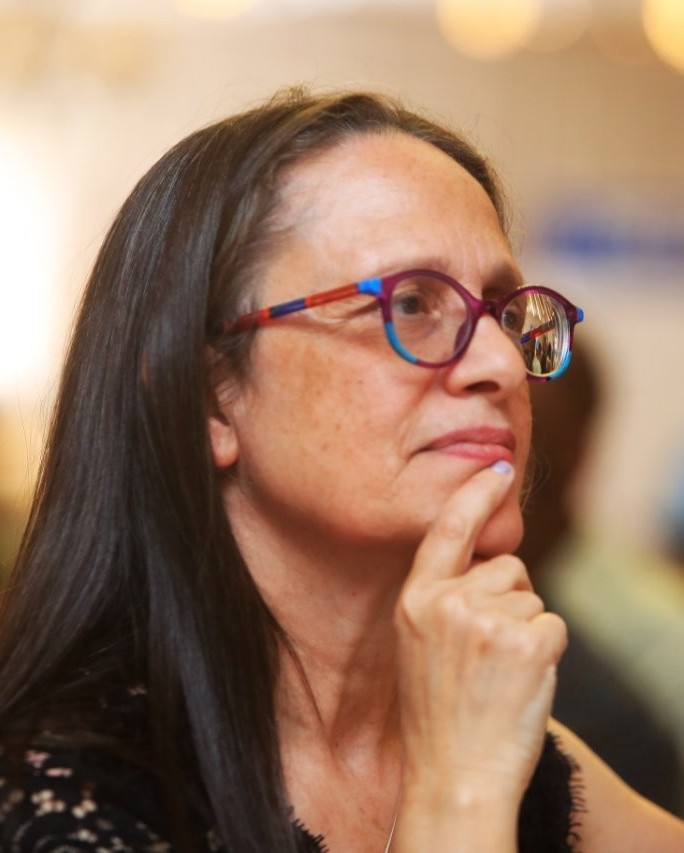
*The author of this article is Ariellah Rosenberg, the CEO of ORT SA. The views expressed by Ariellah Rosenberg are not necessarily those of The Bulrushes