


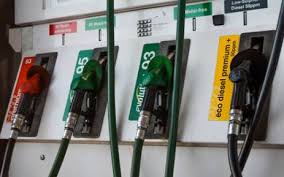
Cape Town – Finance Minister Enoch Godongwana has announced a cut to the fuel levy of R1.50 per litre on petrol and R3 on diesel from 4 November to 1 December.
After that, the cut falls to R1 and R1.50, respectively, until 5 January 2027.
He announced the move during his Medium-Term Budget Policy Statement (MTBPS) on Wednesday, 21 October 2026.
Reactions have varied from relief to outright criticism.
The GOOD Party said the fuel relief was “welcome, but too light and too short”.
“The geopolitical pressure on oil prices will not end in January, and neither will the knock-on costs of food, goods and public transport. Nine weeks of shrinking relief is not a policy that’s going to address our cost-of-living crisis,” GOOD Secretary General, Brett Herron, said.
“There was also no proposed review of the General Fuel Levy, which still works as a general tax rather than serving any clear purpose.
“Instead, motorists and commuters will be back to full levy rates in the new year.”
The Good Party also took a swipe at Minister Godongwana for not mentioning the mooted Social Relief of Distress (SRD) grant.
“Not a single word,” lamented Herron.
“The speech did not mention the SRD grant at all.”
The SRD Grant is a government financial support program that provides R370 per month to unemployed adults aged 18–59 who have no income and meet SASSA’s means‑test requirements.
Stats SA’s 2026 food poverty line is R868 per person per month, and its lower-bound poverty line is R1 457.
“The SRD grant covers less than 43% of the cost of a minimum diet, and about a quarter of the lower-bound line,” Herron said.
“More than 8 million unemployed adults still receive R370 a month, an amount frozen since April 2024. That is less than R13 a day.”
On the R10 billion set aside for fuel relief, Mayibuye said, while acknowledging this intervention, “petrol relief initially delivers only half of the reduction of at least R3 per litre that we demanded.”
Mayibuye added: “The diesel reduction meets our demand only during its initial phase.
“Households already struggling with October’s costs must wait until November for assistance.”
Mayibuye said the decisive test of the MTBPS is whether it reduces hardship and expands people’s capacity to live with dignity.
Mayibuye said it will support measures that meet that test and challenge those that leave communities waiting while the cost of survival continues to rise.
While praising several key allocations and policy steps, RISE Mzansi stressed that temporary measures were insufficient to address South Africa’s cost-of-living crisis and structural economic challenges.
The Democratic Alliance (DA), the second largest party in the Government of National Unity, did not specifically comment on the fuel levy cuts but said it has fought for reforms that lower government debt, get value for taxpayer money and reduce the deficit, proposing a fiscal responsibility bill.
“The DA therefore supports the steps taken by National Treasury in the MTBPS, particularly the commitment to a fiscal anchor, the ongoing growth of the primary surplus and debt stabilising for the first time in nearly two decades,” MP Kingsley Wakelin, DA Spokesperson on Finance, said.
“These are important steps towards restoring confidence in South Africa’s public finances after the fiscal deterioration from 2008 to 2024.”
The Motor Industry Staff Association (MISA) said it welcomes the fuel levy relief and celebrates this intervention as an important victory for workers, their families and the power of organised labour.
“Our members told us they were being forced to choose between getting to work and putting food on the table,” Martlé Keyter, Chief Executive Officer: Operations at MISA, said.
“MISA amplified that message directly to decision-makers and refused to let workers’ voices be ignored.
“This announcement demonstrates the influence of organised labour and the importance of unions that fight relentlessly for their members.
“While we welcome the government’s response, we also recognise that many workers remain under severe financial pressure.”
Commenting on the fuel levy cuts, the General Industries Workers Union of South Africa (GIWUSA) said: “This is a drop in the ocean.
“It does nothing about the structural power of fuel monopolies and cartels, food price inflation, or the taxi fare cycle— ‘fuel up, fare up; fuel down, fare stays up’.”
GIWUSA said Finance Minister Godongwana offers no mandatory price controls on basic food items, no nationalisation of the fuel and food industries, and no legally enforced mechanism to cap taxi fares tied to actual fuel costs.
AfriForum said it welcomes the temporary reduction in fuel levies.
However, AfriForum emphasised that this reduction “must be accompanied by more fundamental reforms regarding how the government utilises tax revenue”.



