London – Around the world, menstruation is a normal biological part of a female’s body – a transition between girlhood to womanhood.
According to UN Women, menstruation is the “bleeding that occurs as part of women’s cycles during their reproductive years and three to five days in the average time women menstruate in a monthly cycle”.
However, this is still a taboo and a significant barrier in so many parts of the world, especially when it comes to sports, which is unfortunately an extra thing for women to have to deal with.
Today, the number of females competing in sports has risen considerably and at such high levels.
However, physical performance changes over the course of the menstrual cycle.
According to research published in 2021 on the “Impact of Menstrual Cycle Phase on Athletes’ Performance”, it is as a consequence of “altered muscle activation, substrate metabolism, thermoregulation and body composition” which impacts how much power the body can give while exercising.
Yet, in 2016, during the Olympics, Chinese swimmer, Fu Yuanhui spoke about not being able to perform well because she was on her period.
Even though she said this was not an excuse, it was something that she felt impacted her performance and made her feel tired.
British sprinter Dina Asher-Smith has also called for more research to be done on menstruation and the impact it has on performance, which sparked a conversation.
It is not just the impact of performance but also the fear and anxiety that comes about from menstruation and obviously potentially leaking through.
According to Wimbledon, players who menstruate are now allowed to wear “solid, mid/dark coloured undershorts provided they are no longer than their shorts or skirt”.
This decision came about after The Dress Code campaign, which gathered a lot of support.
“When I heard this, I was really happy because last year I went on the pill to stop myself bleeding because I knew we had to wear white under-shorts, and I didn’t want to face any embarrassment,” Heather Watson told Sky News.
This is also a very big deal as there has been a strict dress code since 1877 that players have had to follow.
Nonetheless, there is still little we know about the impact of menstruation on athletes.
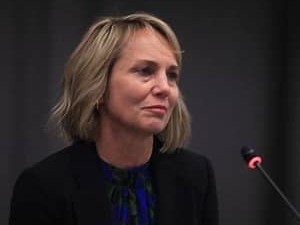
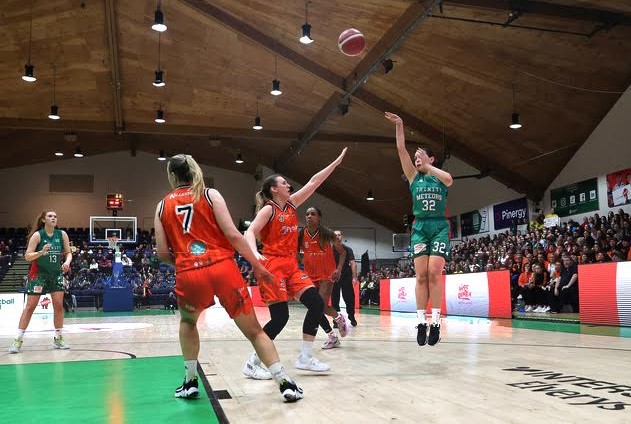
The Bulrushes spoke to Rebecca O’Keeffe, a basketball player in the top Irish Super League and a human rights activist.
Rebecca said: “I’ve always had really bad PMS and other menstrual issues which caused (and still cause) quite a bit of disruption to my training.”
She also added that there was no education around periods or the symptoms that came with it, so, “there definitely wasn’t a connection made between adapting training to my cycle.”
We asked Rebecca if she ever considered alternatives and she said: “I went on the pill when I was 15-years old and would have stayed on it for over ten years.”
“I suppose back then it was seen as a way to reduce my bad symptoms while allowing me to train and perform, but this can actually mask a lot of underlying issues or lead to new ones.”
Rebecca has ways to ease the pain, as she tells us, “now that I’m much more self-educated on it, I have explored options other than the pill and I’ve also been incorporating a more holistic approach by paying attention to sleep, nutrition, hydration and tracking.”
She is also all about opening up the conversation among teammates and coaching staff and creating that healthy, supportive environment.
However, there are athletes who are not as comfortable as Rebecca talking about it because “if you were on your period the mentality was ‘just get on with it’, which I think is rooted in gender norms and societal perceptions that see menstruation as shameful or a weakness, but it’s the lack of research, education and knowledge.”
On how we can make this topic less of a taboo, Rebecca said, “representation matters and it’s encouraging to see athletes speaking openly and honestly on the topic, advocating for greater awareness and understanding.”
Finally, we spoke about the change she wants to see, and she said, “we still need more research and more data on menstruation.
Lack of data or inconclusive evidence means long-term health is at risk, so we must consider performance and health in tandem.”
Education on what the menstrual cycle is and how to manage the symptoms is a good start so that everyone has tools to understand their own body.
“We need to emphasise that periods are a sign of a functioning, healthy body,” said Rebbeca.