Cape Town – The Makhanda High Court has slammed the government for the “dereliction of its constitutional duties” in quelling the violence directed at long-distance coach company Intercape.
In a scathing judgment handed down on Tuesday 22 August, Judge John Smith said: “It boggles the mind why it is so difficult for a law enforcement agent to appreciate that when armed assailants take potshots at moving buses, deleterious consequences inevitably ensue, and sooner than later people will suffer serious injuries and, heaven forbid, may lose their lives.”
The court made final an earlier order in terms of which, the respondents, including the National Minister of Transport, the Eastern Cape Transport MEC, and the SA Police Service (SAPS), must:
- develop a revised comprehensive plan on the steps they intend to take to ensure that reasonable and effective measures are put in place to provide for the safety and security of long-distance bus drivers and passengers in the Eastern Cape
- pending the development of the revised action plan, ensure that:
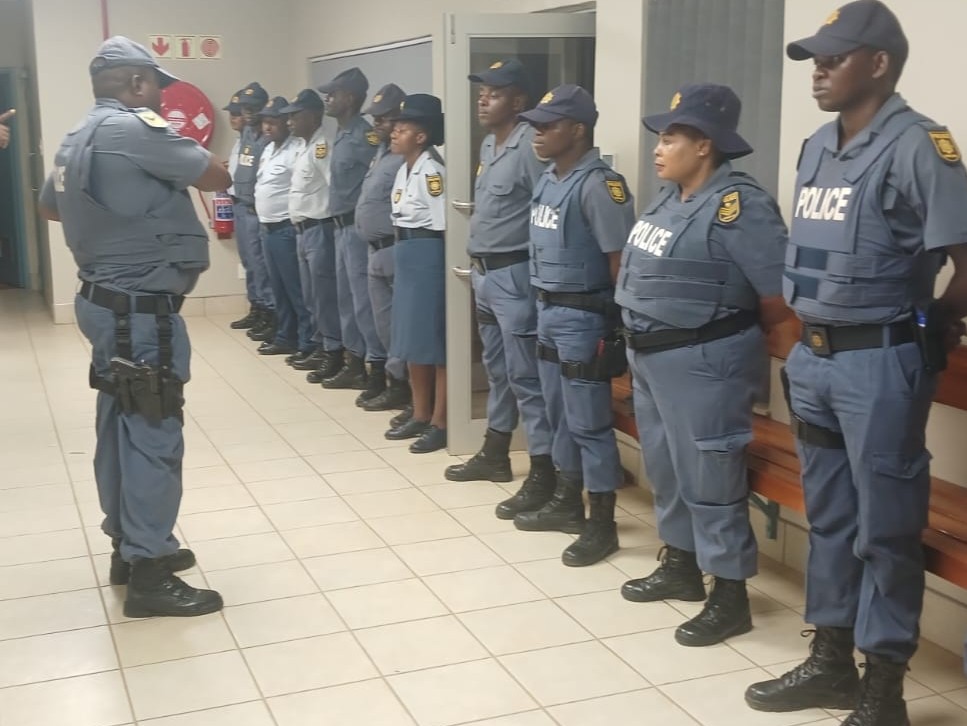
- a visible law enforcement presence is maintained at every loading point in Hotspot Towns and Areas at each of the times at which the applicant’s buses are scheduled to stop at those loading points in order to maintain the safety and security of long-distance bus drivers and passengers; and
- law enforcement escorts are provided to the applicant’s buses along the Hotspot Routes, and any other routes, as and when requested by the applicant on account of legitimate concern over a risk of intimidation or violence”.
Intercape operations have run a gauntlet of concerted attacks, with a number of incidents in which coaches were shot at or stoned in and around the so-called “hotspot” towns of Cofimvaba, Butterworth, Engcobo, Tsomo, and Idutywa in the Eastern Cape.
In June, the high court issued an order compelling the respondents to develop a comprehensive plan to provide for the safety and security of Intercape’s drivers and passengers in the Eastern Cape.
At the time, the court said there was a duty on the state to act so that the “lives of [Intercape] drivers and passengers are not left in the balance”.
On Tuesday, Judge Smith slammed the Transport Minister, MEC for Transport, and the police, stating, “that the action plan and its implementation have been woefully inadequate to ensure the safety and security of long-distance bus drivers and passengers”.
This had been “irrefutably demonstrated by the relentless continuation of serious and violent attacks on Intercape’s buses after its implementation,” the Judge added.
The judgment read: “Between January and May 2023, Intercape has lodged at least 30 criminal complaints relating to violence and intimidation against its drivers and passengers.
These incidents include the stoning of buses, prevention of bus drivers from loading and off-loading passengers, intimidation of drivers and passengers, buses being shot at, and a passenger struck by a bullet.
The incidents were all marked by brazenness and impunity on the part of the perpetrators, who were apparently emboldened by the lack of visible policing.
Intercape had previously warned authorities that the plan as submitted by the State lacked sufficient detail and was inadequate.
Judge Smith said the vagueness of the action plan sent the “unfortunate message to perpetrators of the unlawful acts that the authorities do not intend to use their extensive statutory powers to quell the violence”.
Judge Smith added: “For this reason, it might be better to have no action plan at all.”
He added that perhaps his earlier directive to the Minister and MEC to develop a revised comprehensive plan on the steps to ensure that reasonable and effective measures were put in place to provide for the safety and security of long-distance bus drivers and passengers in the Eastern Cape had not been properly understood.
“Well, I am determined to make sure that I am not misunderstood again,” Judge Smith said.
“The interim order that I granted on 14 June 2023, and which I intend to confirm, is more unequivocal and requires the MEC and the Minister to specify, in measurable terms, inter alia:
- the date from which and the frequency with which the measures will be implemented
- the functionaries, governmental agencies, or departments that will be responsible for their implementation
- the planned key interventions in respect of ‘no-go zones’
- the exercise of statutory powers
- the appointment of a task team to oversee and monitor the implementation of the action plan
Judge Smith also shot down the State’s arguments that Intercape was seeking special treatment from the police.
“The insinuation that Intercape is seeking preferential treatment primarily to protect its commercial interests has been a constant refrain in this and the main application,” he said.
“This unfounded assertation is both wrong and unfortunate. It has regrettably also been used by the SAPS as an excuse for not performing their constitutional duties.”
Labeling it “demonstrably wrong and dangerous”, Judge Smith said: “These proceedings have, from the start, been focused on the safety and security of long-distance bus drivers and passengers in the Eastern Cape.
“While the prospect of financial losses must remain a worrying issue for Intercape, from the court’s point of view, it has always been the real and present danger to passengers and bus drivers that informed both the urgency with which the matter was heard and form of the orders issued.”
Judge Smith granted the mandatory interdict against the SAPS and further ordered that all the other measures envisaged in terms of the revised action plan be actioned to ensure the safety and security of long-distance bus drivers and passengers in the province.
There have been over 170 cases opened with police, including 135 in the Eastern Cape alone, and not a single arrest to date, despite overwhelming evidence of criminality.
Commenting on the latest court judgment, Intercape CEO Johann Ferreira said: “We warned government that the action plan they submitted was wholly inadequate but they knew better.
“Now it has been found by the court to not be fit for purpose.
“All this time and energy wasted when all we have ever asked is for transport authorities and the police to do their jobs. Nothing more.”
Ferreira added: “It simply does not get more damning than this when a High Court Justice points a finger at a Minister and MEC for the dereliction of their constitutional duties.
He said when you are appointed as a member of the executive of government you take an oath of office in which you swear that you “will be faithful to the Republic of South Africa and will obey, respect and uphold the Constitution and all other law of the Republic”.
Ferreira said the Minister, MEC, and SA police, had failed time and again to fulfill their constitutional and statutory obligations to protect the citizens of the country.
“Such delinquent behaviour should not be tolerated by citizens of South Africa and also not by the President of our country,” Ferreira said.