In the turbulent era leading up to the independence of many African nations, a stark divide emerged, pitting the fervently pan-Africanist Casablanca bloc against the conservative Monrovia bloc, which leaned towards Western alliances.
However, the formation of the Economic Community of West African States (ECOWAS) in 1975 marked a significant stride towards unity in the West African region.
With 15 member countries, ECOWAS sought to address a spectrum of crucial issues including citizenship, governance, security, economic integration, environmental concerns, natural resource management, development, higher education, and employment.
Yet, this collective vision recently suffered a severe setback.
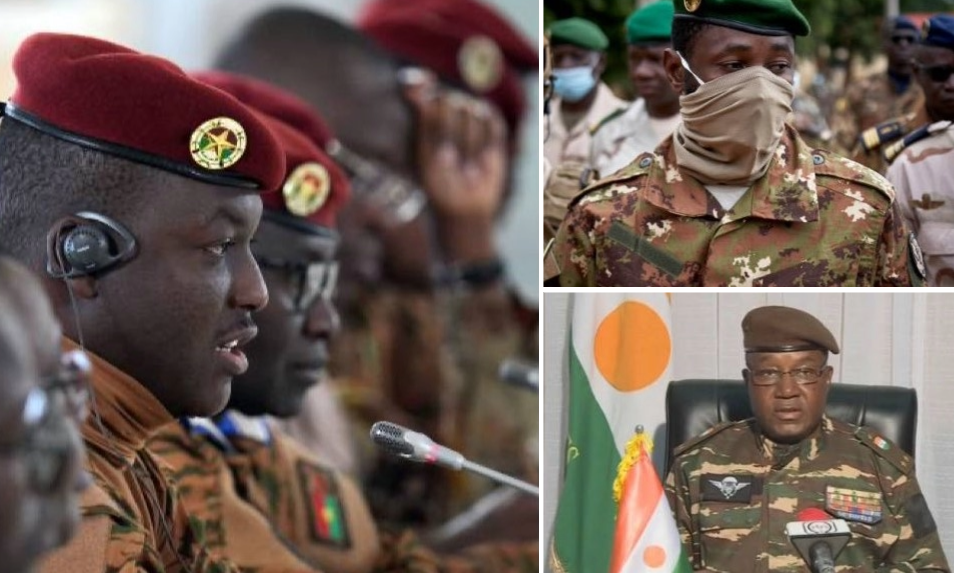
On January 25th, Burkina Faso, Mali, and Niger stunned the international community by announcing their immediate withdrawal from the 15-member bloc, asserting their decision as an exercise of sovereign rights.
This move, while not entirely unexpected, marked the culmination of diplomatic tensions between the Sahelian nations and ECOWAS.
These tensions were exacerbated by a series of coups across the region, witnessed in Chad, Mali, Guinea, Burkina Faso, and Niger since 2020.
The departure of these Sahelian nations from ECOWAS underscores the complexities and challenges facing regional integration efforts in Africa, particularly amidst the backdrop of political instability and shifting geopolitical dynamics.
It prompts reflection on the future trajectory of regional cooperation and the delicate balance between national sovereignty and collective aspirations for progress and unity.
In response to the withdrawal of Mali, Burkina Faso, and Niger from ECOWAS, the regional organisation swiftly enacted a series of sanctions targeting Mali and Niger.
Additionally, ECOWAS issued a stern ultimatum to Niger, threatening military intervention if ousted President Mohammed Bazoum was not reinstated within a week.
However, the military rulers in these nations remained steadfast in their determination to cling to power, rejecting diplomatic efforts urging them to transition back to civilian rule.
Faced with the looming threat of ECOWAS intervention in Niger, the three countries banded together to form the “Alliance of Sahelian States,” a collective defense coalition aimed at safeguarding their military regimes.
This move harkened back to the spirit of solidarity seen during the anti-apartheid struggle in South Africa and echoed the mutual defense clause reminiscent of Article 5 of the North Atlantic Treaty Organization (NATO).
For Mali, Burkina Faso, and Niger, their departure from ECOWAS represents a departure from the founding principles of Pan-Africanism that initially shaped the organization.
They argue that ECOWAS has failed to effectively address the pervasive insecurity in the region, particularly the jihadist insurgency that threatens their stability, alongside Nigeria.
Furthermore, the military juntas accuse ECOWAS of being swayed by foreign powers, namely the West, and straying from the ideals of its founding fathers and the broader Pan-African movement.
The recent actions of the military juntas have, whether deliberate or not, plunged the region into a stark political and ideological divide reminiscent of the pre-independence era.
With the subregion now split into two opposing power blocs, each with hostile ideologies and foreign backers on opposite sides of the geopolitical spectrum, the stage is set for a complex and potentially volatile dynamic.
Following these developments, Niger’s Prime Minister Ali Lamine Zeine embarked on a diplomatic mission to Moscow, Tehran, and Istanbul to explore avenues for military support.
In parallel, Chad’s President Mahamat Idriss Déby made a significant visit to Moscow, coinciding with the dramatic arrival of 1 000 Russian troops in Bamako and the deployment of the first 100 Russian troops in Ouagadougou on January 25th.
Meanwhile, US Secretary of State Antony Blinken wasted no time in late January, prioritising visits to key Atlantic coast partners including Nigeria and Cote d’Ivoire.
These diplomatic maneuvers underscore a clear trend of heightened geopolitical competition and influence in the region.
While Blinken emphasized democratic values, human rights, and the promise of free enterprise during his engagements, Iranian President Ebrahim Raisi highlighted a shared struggle against Western imperialism and domination.
He spoke of a common bond between Niger and Iran, both grappling with the harsh impacts of Western sanctions.
These developments paint a vivid picture of a region caught in the crosshairs of competing global powers, where geopolitical interests intersect with regional dynamics in complex and often unpredictable ways.
Amidst the tumult of a widespread cost of living crisis and simmering discontent in struggling economies, the echoes of France’s historical exploitation of its former colonies reverberate across Francophone West Africa.
Meanwhile, the lingering aftermath of the Covid-19 pandemic continues to afflict both urban and rural communities, particularly the most vulnerable.
In the midst of these challenges, the rallying cries for sovereignty, pan-Africanism, and defiance against Western influence find fertile ground among vast swathes of the Francophone West African populace, especially the youth.
In Burkina Faso, this sentiment gains further momentum with the emergence of the charismatic 35-year-old Captain Ibrahim Traoré, drawing parallels to the revered revolutionary figure Captain Thomas Sankara.
However, amidst the allure of such fervent rhetoric, it’s essential not to blindly accept the self-serving narratives of uniformed coup leaders who have disrupted constitutional order in their countries.
Instead, there’s a pressing need to uphold the principles of liberal representative democracy and resist the temptation to compromise on governance standards.
This includes rejecting any form of extra-constitutional rule, particularly when orchestrated by military factions.
Nigeria President Bola Tinubu, the current Chairman of the regional bloc, has taken a proactive stance in advocating for the restoration of democracy in the affected countries.
He emphasises ECOWAS’s commitment to preventing the spread of military takeovers in the sub-region.
However, formidable challenges lie ahead.
The legitimacy of ECOWAS is intricately tied to the authority of the Council of Heads of State, leaving the organisation’s president and executives subject to the whims and preferences of the heads of state committee.
This structural limitation underscores the uphill battle faced in ensuring democratic governance and stability in the region.
Furthermore, it appears that diplomatic capabilities within the community have significantly diminished.
Recent reconciliation efforts led by Togo last November, as well as initiatives by Nigerian Islamic leaders, have failed to yield substantial results or present viable solutions in a timely manner.
Moreover, the evolving landscape of Africa’s geopolitical dynamics introduces new players with ambitious agendas.
The rising influence of China, Russia, the Emirates, and Turkey brings with it implications of self-interest that may not align with the region’s stability and development goals.
Ultimately, there is growing concern among Euro-American observers that a destabilized ECOWAS could have catastrophic consequences for the broader African region.
The potential repercussions include the unchecked proliferation of coups, influxes of mercenaries from Russia, insurgent groups gaining ground, and the rise of new populist movements fueled by disinformation campaigns and anti-democratic sentiments.
These threats pose significant challenges to the progress of democratic governance and overall stability in the region.
*The writer of this article is Kevin Mofokeng, a developmental writer and digital PR strategist based in Gaborone, Botswana. The views expressed by Kevin Mofokeng are not necessarily those of The Bulrushes