Algiers – The deepening of the bilateral relationship between South Africa and Algeria serves African economic integration, shared prosperity, stability, and peace, said visiting President Cyril Ramaphosa.
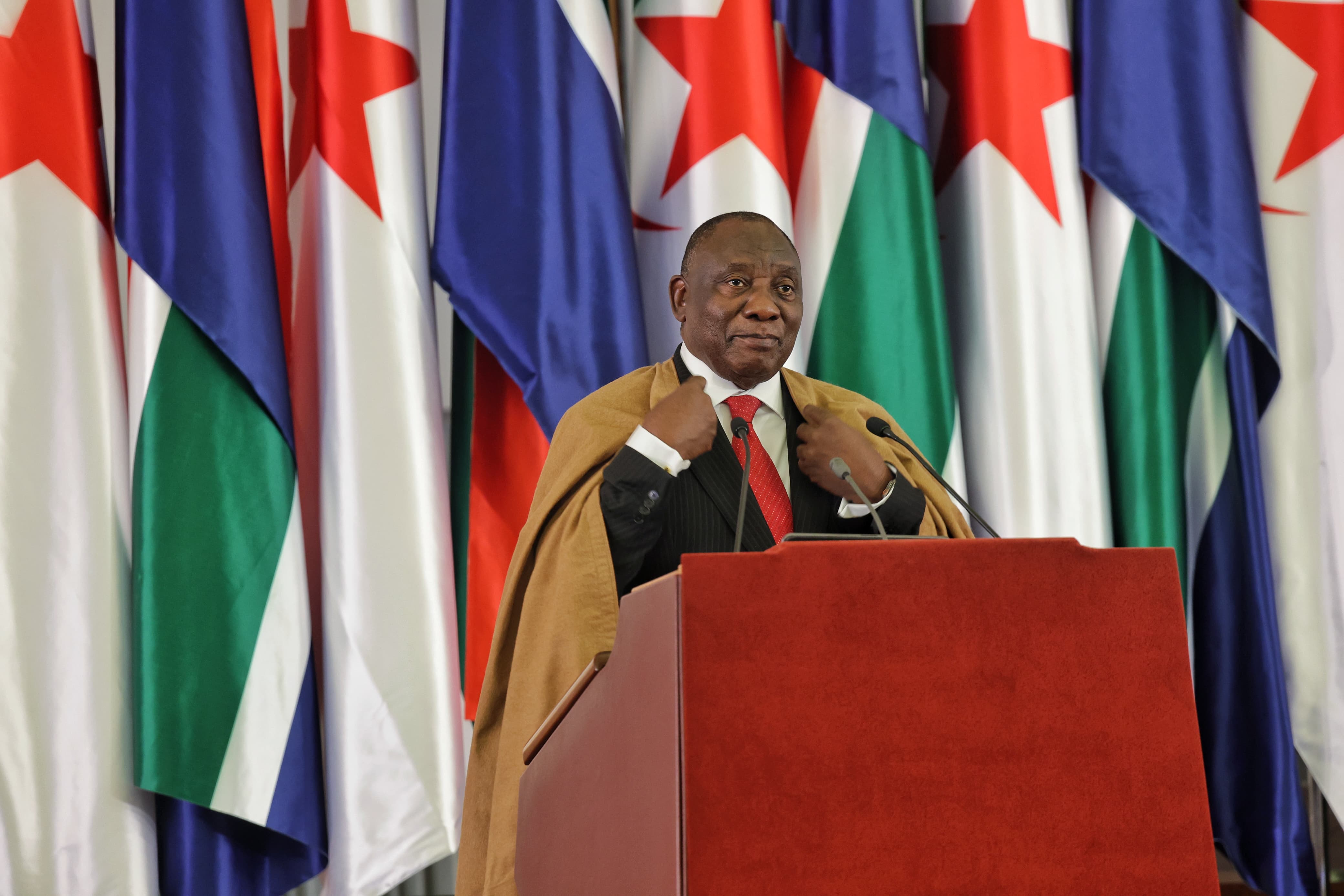
Speaking at the South Africa-Algeria Bi-National Commission in Algiers, Algeria, on Friday 6 December 2024, President Ramaphosa said: “We share a common conviction that deepening our bilateral relationship should serve the cause of African economic integration, shared prosperity, stability, and peace”.
He added: “It is of paramount importance that we strengthen the capacity of the African Union and that we operationalise AU instruments such as the African Court of Justice, the African Court on Human and People’s Rights, and the AU financial institutions”.
President Ramaphosa said it was a privilege to address this 7th Session of the Bi-National Commission between South Africa and the People’s Democratic Republic of Algeria.

He said South Africa commends Algeria for holding successful Presidential elections on the 7th of September 2024 in which Abdelmadjid Tebboune was re-elected president.
“We congratulate you on your re-election,” President Ramaphosa said.

He said the warm welcome extended to the SA delegation affirms the deep and lasting fraternal bonds between “our two countries that were forged in the trenches of struggle”.
This year marks 30 years since the achievement of democracy in South Africa.
“It is an occasion to pay tribute to the many countries that supported our struggle for freedom from the bondage of apartheid,” President Ramaphosa said.
“The People’s Democratic Republic of Algeria was foremost among those countries.
“We owe the people of Algeria a great debt.
“We may have achieved our liberation, but the task of development continues.”
The Bi-National Commission between South Africa and Algeria is an opportunity to engage on the issues affecting both countries and the continent.
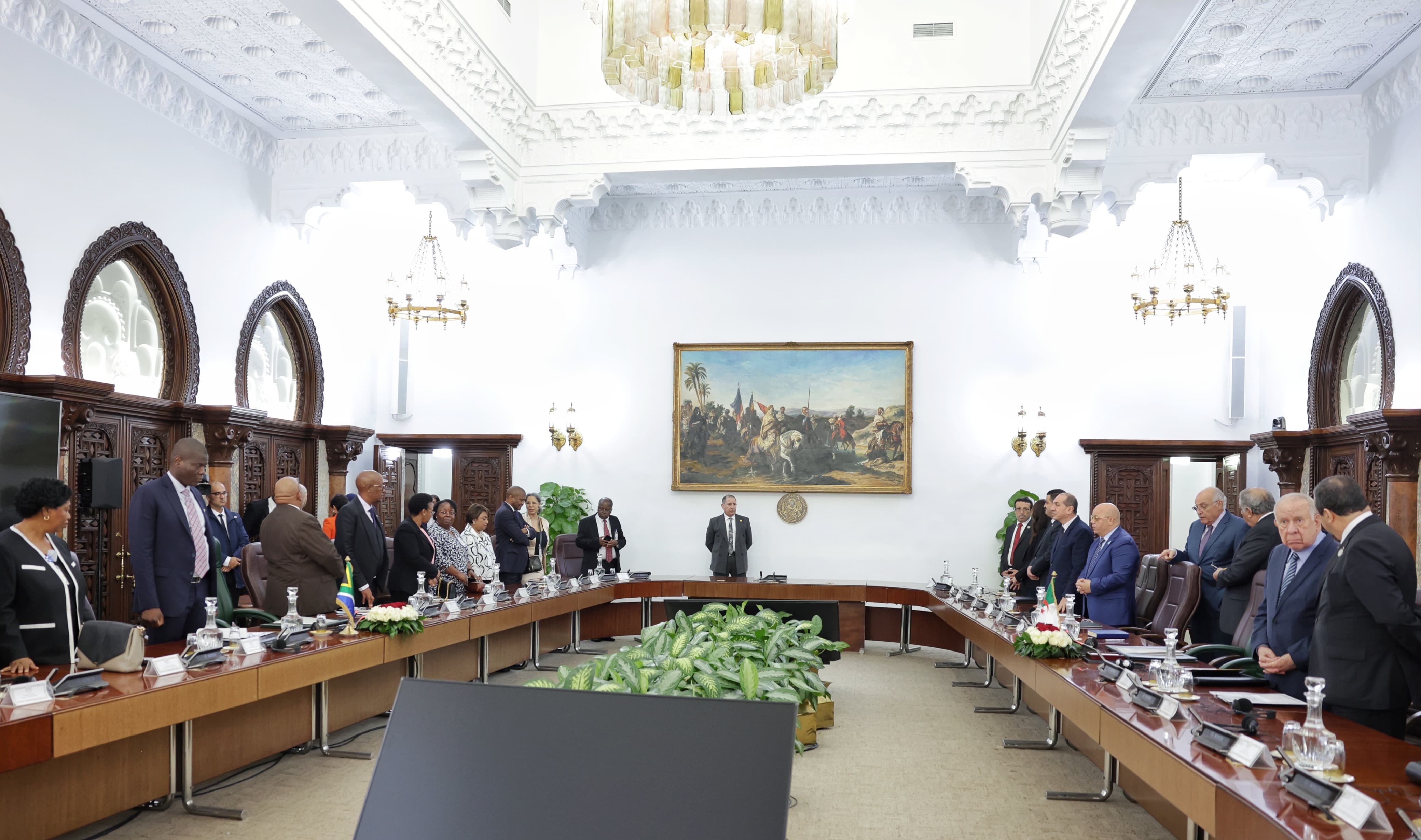
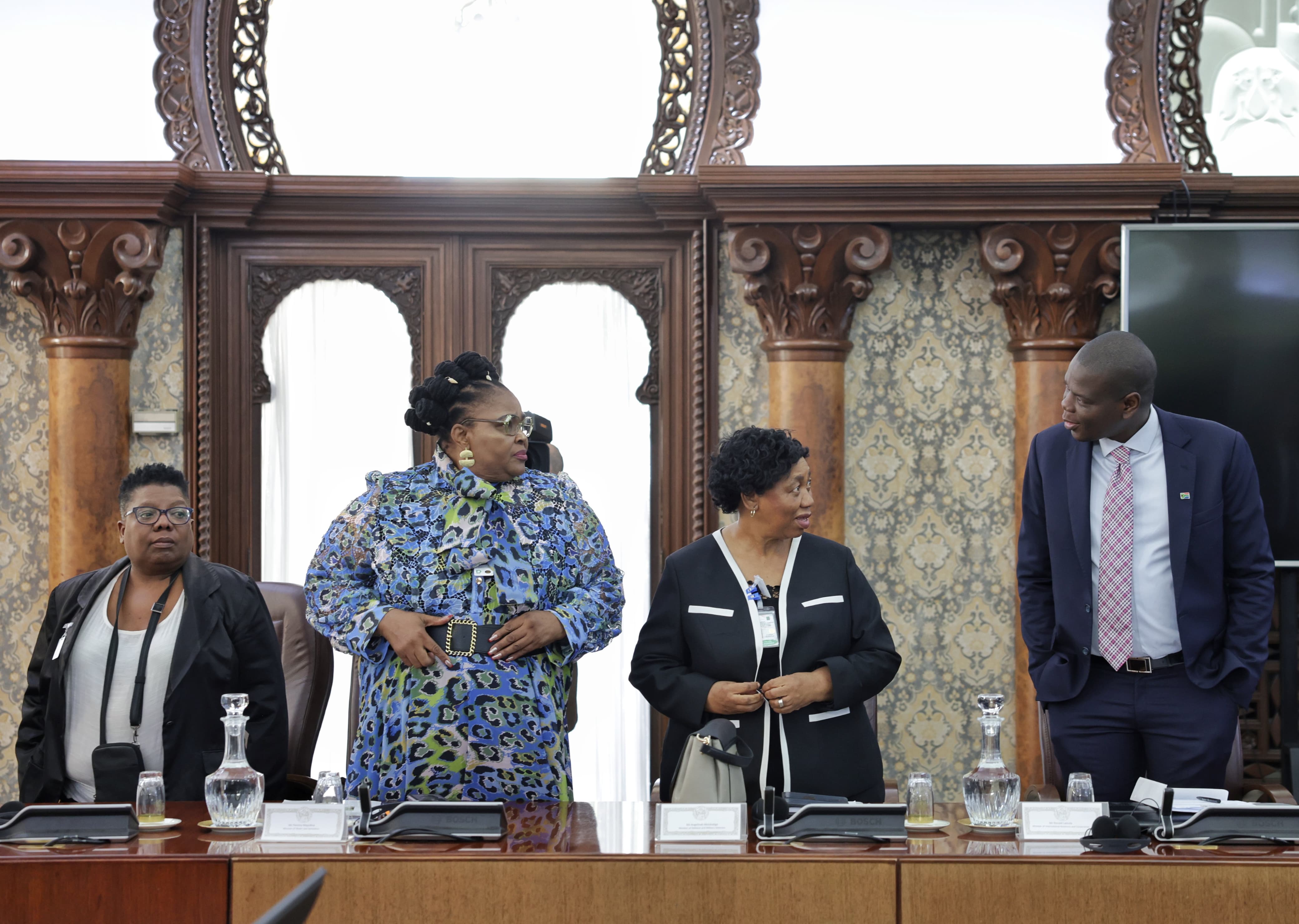
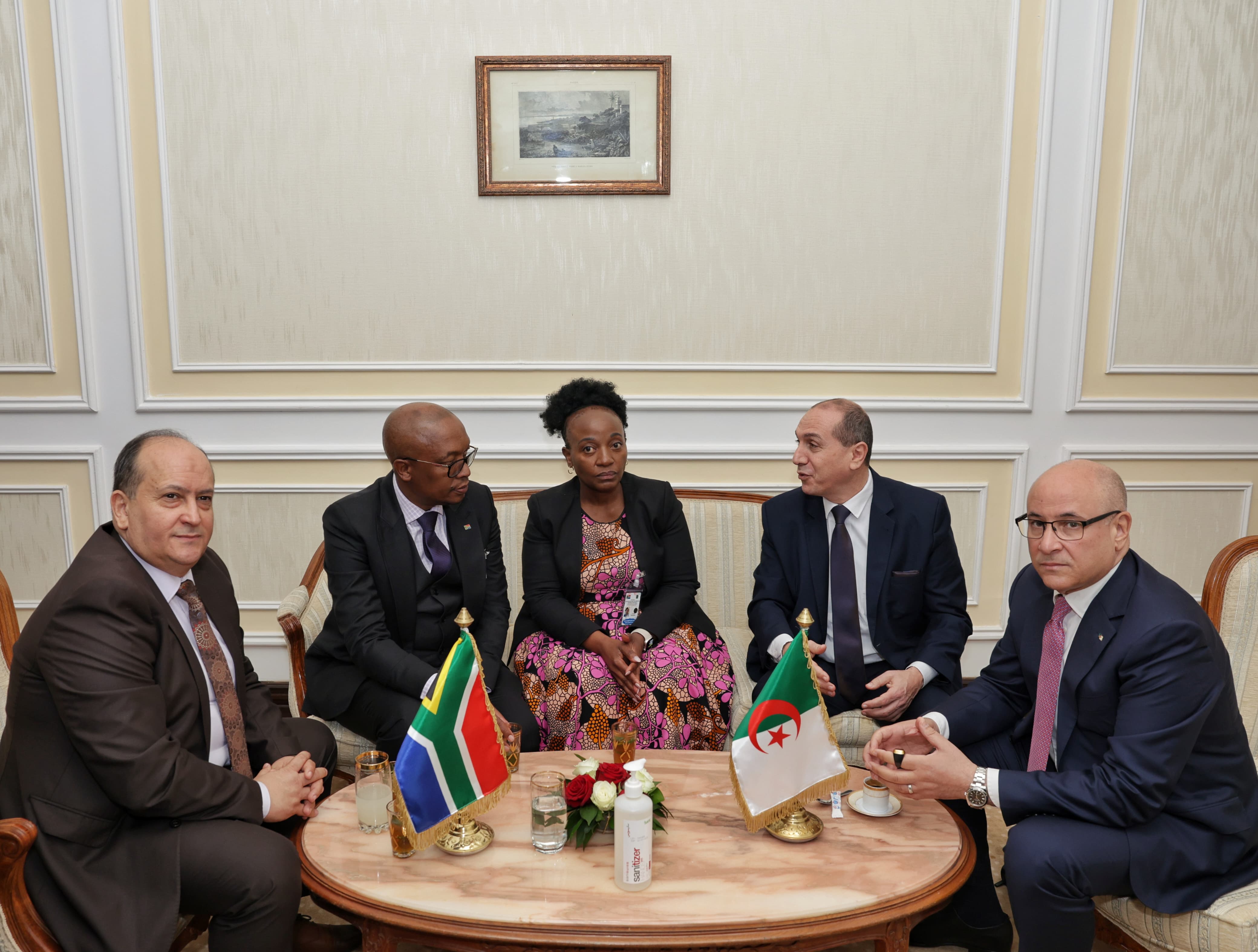
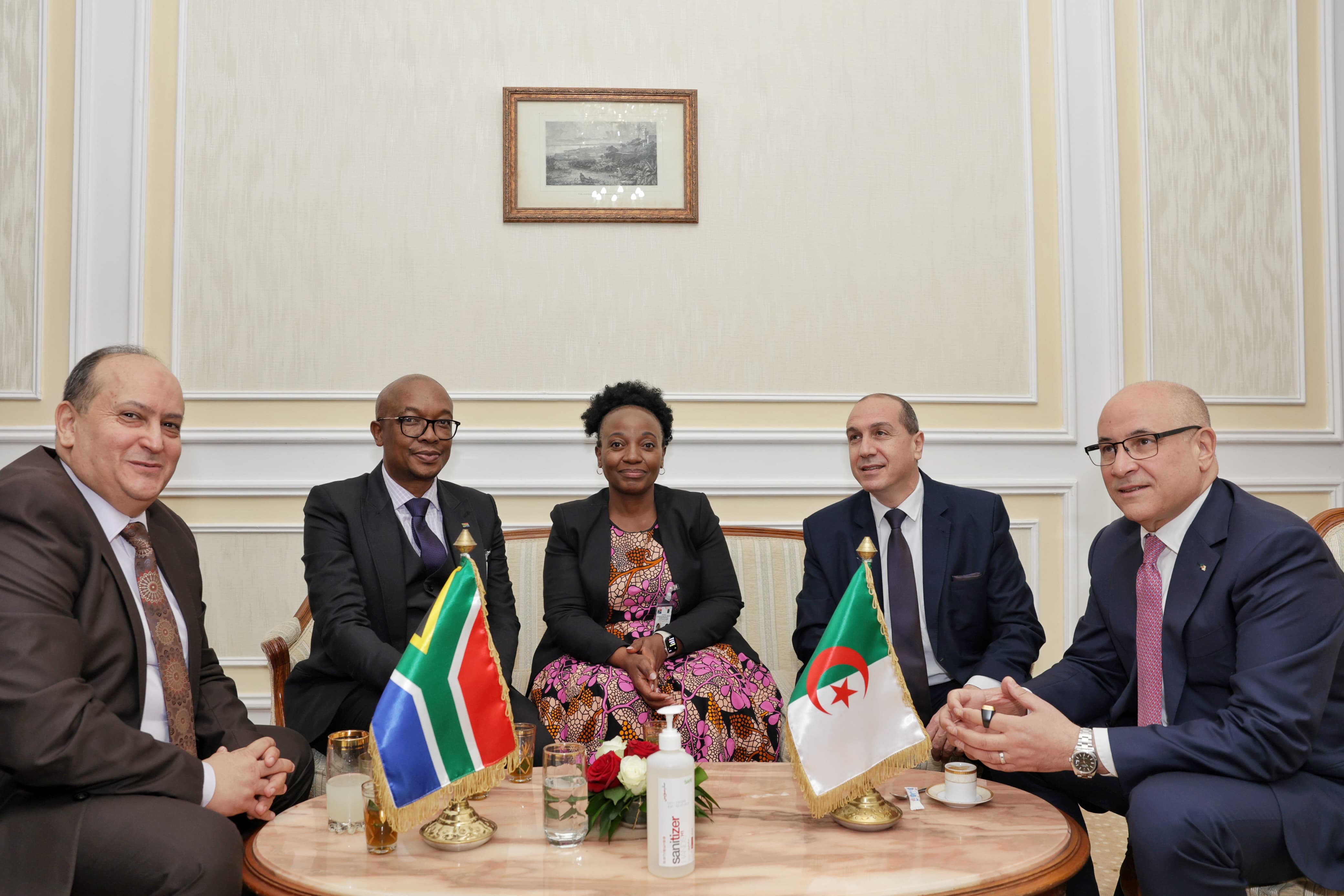
Bilateral relations between South Africa and Algeria have grown exponentially since the establishment of the Ministerial Joint Bi-National Commission of Cooperation in 1998.
This was elevated to a Bi-National Commission in 2000, signifying the strategic nature of the bilateral relations that exist between our two countries.
This Bi-National Commission covers a range of areas of cooperation.
These areas include investment and trade, agriculture, water resource management, and information technology.
The areas of cooperation also include tourism and people-to-people exchange.
This Bi-National Commission attests to the great potential for even further cooperation.
President Ramaphosa said: “Bilateral investment and trade between our two countries need to be expanded”.
South Africa imports mainly chemicals, mineral fuels, ceramic products, and machinery from Algeria.
South Africa’s top exports to Algeria include prepared foodstuffs, fresh produce, machinery, and base metals.
“We need to be harnessing the comparative advantages of South Africa and Algeria to deepen investment and trade,” said President Ramaphosa.
For example, Algeria is one of Africa’s top oil and natural gas producers.
South Africa, with its vast platinum reserves, is positioning itself to be at the forefront of the green hydrogen economy.
Opportunities exist to deepen bilateral trade and investment in agriculture and agro-processing, aviation, automotive, mining, and financial services, among others.
President Ramaphosa said the investment climate was ripe for cooperation on infrastructure development.
“We should prioritise our respective state-owned companies and businesses to support each other’s infrastructure programmes,” he said.
“We should not need to source materials, products, and expertise from outside the continent.
“We must take advantage of the opportunities presented by the African Continental Free Trade Area.”
In January this year, South Africa commenced preferential trade under the AfCFTA, (African Continental Free Trade Area).
“We look forward to more countries on the continent operating under the Agreement, including Algeria,” said President Ramaphosa.
“We are committed to work with Algeria in this regard.
“As we work to develop our countries and continent, we cannot be complacent about climate change.”
Extreme weather caused by climate change – whether in the form of floods, heatwaves, or severe drought – has profound social, economic and political implications.
Like Algeria, South Africa is already a water-stressed country.
The effects of climate change provide a compelling case to further explore cooperation in water resource management.
With the countries of the world having committed themselves to low-carbon, climate resilient development, opportunities exist to collaborate in the renewable and cleaner energy space.
“We look forward to the Business Forum that will take place on the sidelines of the Bi-National Commission as an important opportunity for South African and Algerian companies to connect and explore avenues for collaboration,” said President Ramaphosa.
“We meet at a time when the state of global peace, stability and security is extremely fragile.
“In many parts of the world, we are witnessing the rise of unilateralism, impunity, and disregard for international law, which runs contrary to the aspirations of the UN Charter.
“This is undermining the spirit of multilateralism that must be at the centre of global affairs.”
President Ramaphosa said South Africa was deeply concerned about the worsening situation in the Middle East.
Israel’s war on the people of Gaza continues unabated.
More than 43 000 Palestinians have been killed in Gaza in retaliatory attacks by Israel following the October 7 Hamas surprise raid in which some 1 100 people were slain and hundreds of others taken hostage.
“We repeat our call for a cessation of hostilities, for the remaining hostages to be freed, and for humanitarian aid to reach the Palestinian people,” the South Africa leader said.
“As we have consistently reiterated, there can be no peace without justice.
“The only lasting solution to this terrible conflict is for the Palestinian people’s right to statehood to be realised.
“It is our responsibility as the international community to support all efforts towards this objective.”
President Ramaphosa said South Africa remains equally concerned about Morocco’s continued occupation of Western Sahara.
“It is the right of the people of Western Sahara to determine their own destiny,” he said.
“The United Nations and the African Union must fast-track the process to resolve this matter in line with the provisions of the 1991 Ceasefire Agreement, UN resolutions, and the legal opinion of international and continental institutions,” said President Ramaphosa.
“As a country that won our freedom through dialogue and negotiation, we reiterate our commitment to the peaceful resolution of conflict and peacebuilding efforts in Africa, whether in the eastern Democratic Republic of the Congo, Libya, Sudan, or Mozambique.”
Beyond the tragic humanitarian toll, these conflicts threaten to derail the achievement of the African Union’s Agenda 2063 and, with it, peace and development for the continent.
“We reiterate our call for the institutions of global governance, particularly the UN Security Council, to be reformed and transformed so that they are more representative and reflect global realities,” said President Ramaphosa.
“‘As the Global South, we must remain united and speak with one voice.”
A few days ago, South Africa assumed the Presidency of the G20.
“We will use our Presidency to advance the African agenda and to champion the needs and interests of the Global South,” he said.
“We look forward to welcoming you to the first G20 Summit on African soil.”

In another engagement, President Ramaphosa was taken on a guided tour of the Mujahid Museum as part of his State Visit to Algeria.
Laid Rebigua, Minister of Moudjahidine and Right Holders, and R Belkroca, Director General of the Museum conducted the tour.
This museum, which sits directly beneath the Makam Echahid, collects, preserves, and displays objects and memories of the struggle against colonialism, which began with the French invasion of Algeria in 1830.
The museum also has items that focus on the struggle from the uprising in Sétif, Constantine, and Guelma in 1944 to Independence Day in July 1962.
After its independence, Algeria supported South Africa during the struggle against colonialism and apartheid.
President Ramaphosa is on a two-day state visit to Algeria at the invitation of President Tebboune.
*All pictures courtesy of GCIS