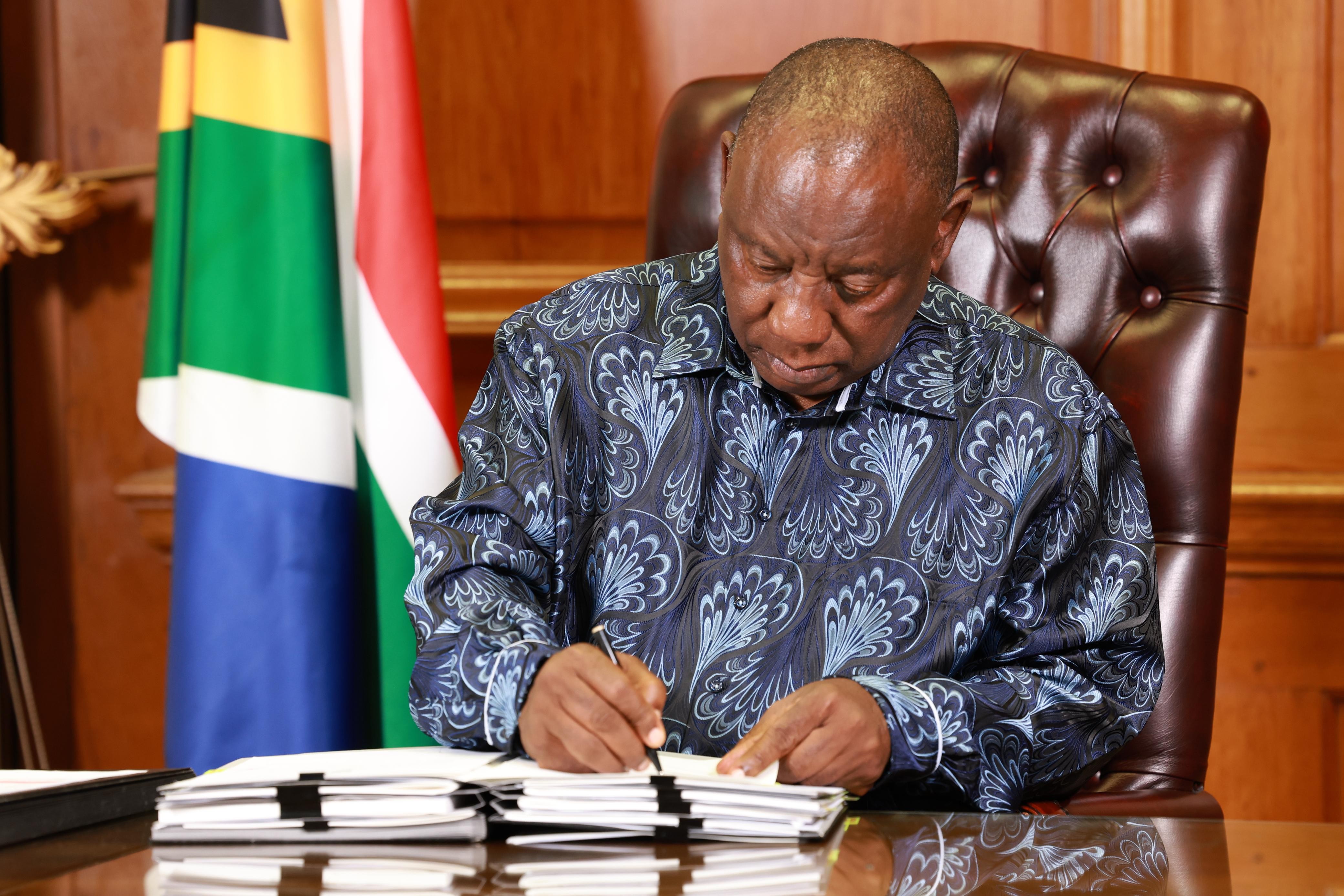
Pretoria – President Cyril Ramaphosa on Friday announced that those sections of the Basic Education Laws Amendment Act (BELA) that he had put on hold three months ago are now going to be implemented.
BELA was initially signed into law on 13 September 2024.
President Ramaphosa said: “At the time that I assented to the BELA Bill, I noted that a number of parties to the Government of National Unity and other key role players in our country had expressed their wish to further engage each other on sections of the bill that deal with issues of admission and language.
“I said that whilst I had assented to the Bill, in the spirit of cooperation and meaningful engagement, I would delay the implementation date of the BELA Act in totality by three months.
“This would give the parties time to deliberate on these issues and make proposals on how the divergent views may be accommodated.
“I also said should the parties not agree on an approach at the end of the three-month period, I would then direct the Minister and the Department to proceed with the implementation of the Act.”
RELATED: BELA: ‘Everyone Must Respect’ Agreement Reached At NEDLAC Urges Helen Zille – The Bulrushes
RELATED: BELA Bill: Basic Education Minister Siviwe Gwarube Stays Away From Signing Ceremony – The Bulrushes
President Ramaphosa said over the last three months, discussions have been held with a view of reaching a consensus on these outstanding clauses of the BELA Act.
Various formations outside of government have also made representations, both for and against the relevant sections.
“Last week, I received a report from the Government of National Unity ‘clearing house’ mechanism,” said President Ramaphosa.
The “clearing house” is the structure that brings together the parties to the Government of National Unity and other parties represented in Parliament to deal with contentious issues.
Thereafter, the outcome is reported to the leaders of the political parties represented in the Government of National Unity.
President Ramaphosa revealed that in their final report, the parties agreed that the Basic Education Laws Amendment Act should not be sent back to Parliament to make changes to the sections that were in contention.
“In their final report, the parties agreed that the Basic Education Laws Amendment Act should not be sent back to Parliament to make changes to the sections that were in contention,” said the President.
“The GNU clearing house participants agreed that the Act be fully implemented.
“This view was endorsed by the leaders of the parties to the GNU in a meeting I held with them today.”
The President said he has instructed the Minister of Basic Education to see to the full implementation of the BELA Act following the endorsement by leaders of the parties to the Government of National Unity.
Ramaphosa also explained that the Act was an important part of ongoing efforts to build an education system that is more effective and more equitable in line with the precepts of our Constitution.
“The BELA Act continues the work that has been done over the last 30 years to ensure that all children have equal access to quality education – from their early years and throughout their schooling,” he said.
“As a democratic country committed to building a new society, we have stated unequivocally that all children must get an education that prepares them to succeed in life, no matter what the circumstances of their birth might be, no matter where they live, no matter what language they speak.
“In implementing this Act we are all ultimately guided by the Constitution.”
President Ramaphosa said the Bill of Rights guarantees the right of every person to equality.
“It guarantees the right of every person to receive a basic education,” he said.
President Ramaphosa added: “Importantly, the Constitution says that every person has the right to receive education in the official language or languages of their choice where reasonably practicable.
“This is a right that applies equally to an English speaker as it does a Zulu speaker.
“It applies equally to someone who speaks Afrikaans as it does to someone who speaks Xitsonga, Sesotho, Sepedi, isiXhosa, Setswana, Tshivenda, isiNdebele or siSwati.
“And now, it also applies equally to someone who uses the South African Sign Language.”
President Ramaphosa said the Act enacts measures that strengthen the ability of schools to give effect to these Constitutional rights.
“In the application of this law, we must ensure that no language is diminished,” he said.
“Rather, we must work to ensure that all official languages are valued and promoted.”
*All images and video clips courtesy of GCIS