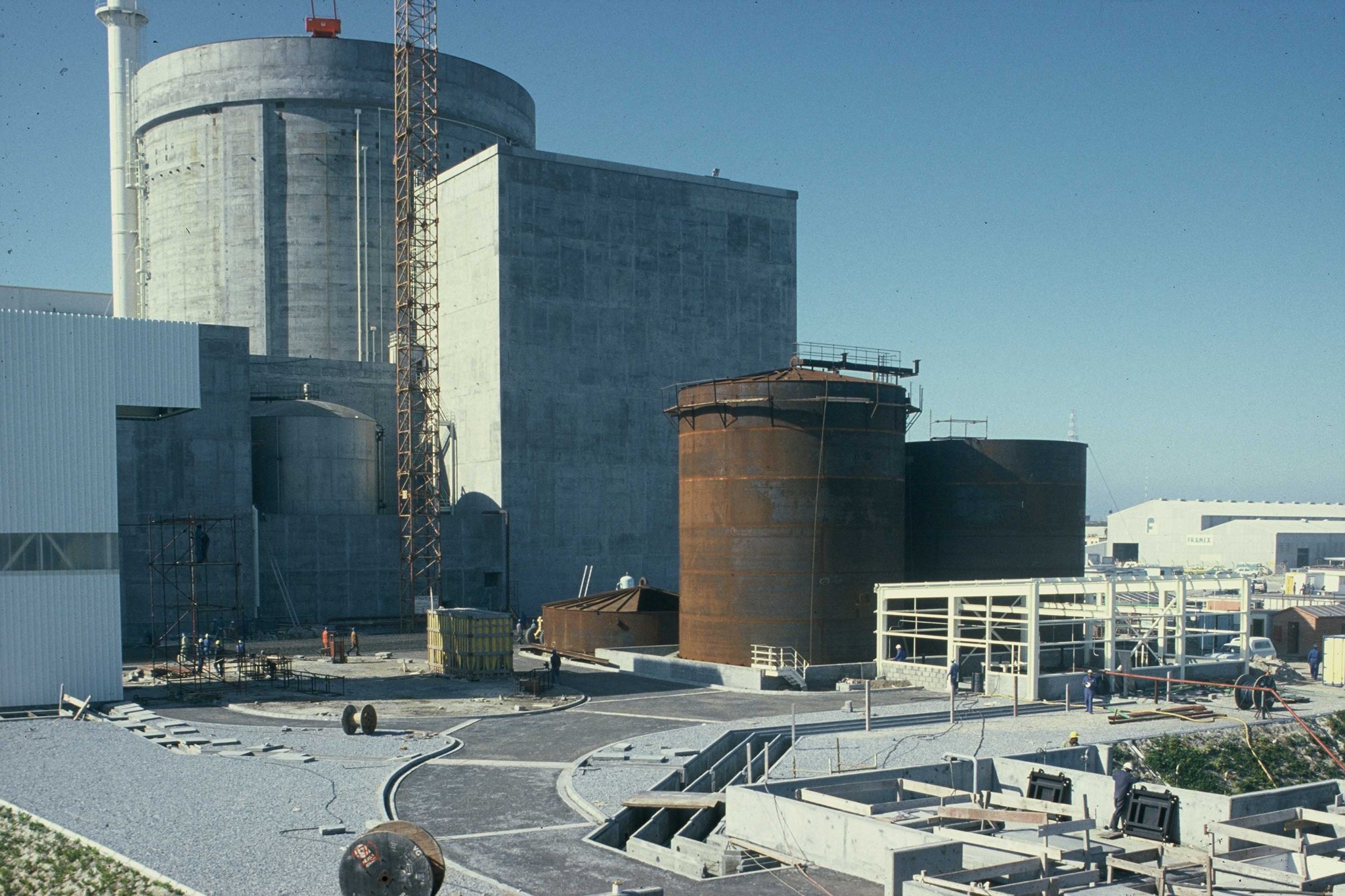
Cape Town – Eskom announced on New Year’s Eve that it successfully synchronised Unit 2 of the Koeberg Nuclear Power Station in Cape Town to the national grid.
Eskom said the significant milestone in the Generation Operational Recovery Plan and South Africa’s pursuit of a dependable, cost-effective, and environmentally sustainable energy supply was achieved on Monday, (30 December 2024).
“This achievement follows an extensive Long-Term Operation (LTO) programme designed to extend Unit 2’s operational lifespan by an additional 20 years,” Eskom said in a statement made available to The Bulrushes.
“The maintenance programme for Unit 2 included the replacement of three steam generators, comprehensive inspections, and refuelling activities to ensure the reactor’s continued safe and efficient performance.
“These enhancements align with Eskom’s broader strategy to secure the future of Koeberg’s reactors, which are critical to the country’s energy security.”
With a 930MW contribution, Unit 2 plays a significant role in Eskom’s goal to increase its capacity by 2 500MW by March 2025, explained the power utility.
The National Nuclear Regulator is anticipated to decide on the extension of Unit 2’s operational license in 2025.
This comes after the successful renewal of Unit 1’s license, which extends its operation until 2044.
Unit 1, contributing 930MW to the grid, has shown exceptional reliability since its return to service.
“Combined, Units 1 and 2 will supply 1 860MW – approximately 5% of South Africa’s total electricity – playing a vital role in reducing load-shedding and stabilising the grid,” the statement said.
Koeberg Nuclear Power Station, celebrating 40 years of safe and efficient operation in 2024, stands as a cornerstone of Eskom’s energy portfolio.
“The successful completion of Unit 1’s LTO programme in 2023 has set the stage for similar advancements with Unit 2, further solidifying Koeberg’s critical role in South Africa’s energy landscape,”‘ Eskom said.
“Unit 1 has consistently delivered high levels of performance, and Unit 2 is expected to match or exceed these achievements.”
The power utility said Koeberg’s enduring success underscores its significance in meeting South Africa’s energy needs and supporting its transition to a low-carbon economy.
“By forming strategic collaborations with international designers, suppliers, and industry leaders, Koeberg has established itself as a hub for nuclear innovation,” said the Group Executive for Generation, Bheki Nxumalo.
“These partnerships are anticipated to be crucial as South Africa explores advanced nuclear technologies, such as Small Modular Reactors (SMRs).
“This could position the country as a leader in cutting-edge nuclear solutions while continuing to build and maintain a skilled nuclear workforce.”
Nxumalo added: “As South Africa phases out some of the aging coal-fired power plants by 2030, nuclear energy is poised to provide a reliable and stable baseload supply.
“Unlike intermittent renewable sources, nuclear power ensures continuous electricity generation, meeting the needs of both residential and industrial users.
“Its ability to produce carbon-free energy also supports South Africa’s climate goals by reducing greenhouse gas emissions.”
Eskom said it anticipates Koeberg’s enhanced performance will be fully realised in FY26, with Unit 2’s record of 498 consecutive days of operation and a 93% energy availability factor serving as a benchmark for future reliability.
“These achievements demonstrate Koeberg’s potential to address South Africa’s energy challenges effectively,” Eskom said.