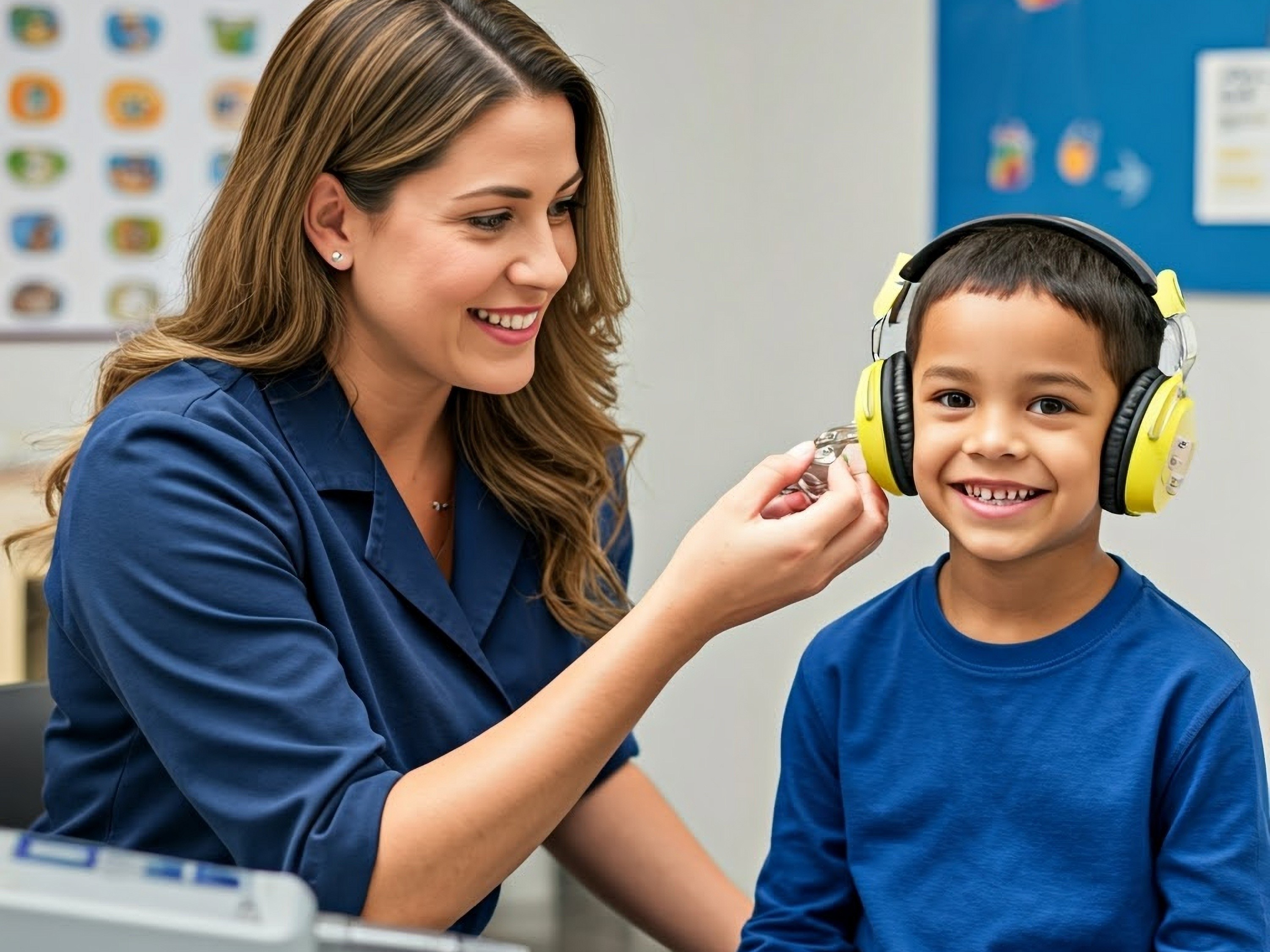
Johannesburg – In 2012 Johannesburg-based speech language therapist and audiologist Venisha Naran did a routine hearing screening for a Grade 1 learner at a private school in Johannesburg.
The referral came with a brief.
“They said they didn’t think there was anything wrong with her ears, but she had recently arrived from China and didn’t understand much English,” says Naran.
Naran screened the child.
Then she screened her again to check her findings. She sent the little girl home with a note requesting a meeting with her parents: It wasn’t the English that she was struggling with – she had hearing impairment in both ears.
Over the course of the learner’s school career, Naran fitted her with three sets of hearing aids.
Last year she passed matric in a mainstream school and is currently studying engineering.
“I think if it had not been picked up, they would have just always thought her learning issues were because of the second language when, in fact, she couldn’t hear,” explained Naran.
Screenings give children a future
Out of every thousand babies born, up to three will be born with hearing impairment, says Naran.
Other children may develop ear infections that can lead to temporary or permanent hearing loss if not picked up and treated.
The problem is young children often don’t even realise they have impaired hearing because they don’t know anything different.
“Most of the time, they just compensate for it,” Naran said.
She shares an example a little boy who couldn’t hear in one ear.
He would turn his head to listen and use the phone on one side only.
But he didn’t know why he was doing that, and his mom didn’t notice until his hearing impairment came to light during a screening.
“These kids often can’t tell you that they can’t hear,” said Naran, adding “and so they’re often seen as the child not listening or not following instructions or being oppositional. But it’s actually that they’re the child who can’t hear”.
Signs your child is struggling to hear
Poor hearing manifests in many ways, some of them unexpected:
- Delayed speech and language development
- Can’t follow instructions
- Poor reading ability
- Bad marks at school
- Being tired all the time
- Avoiding social situations
- Behavioural issues
- Turning their head to listen
- Frequent misunderstandings
- Asking you to repeat things
- Turning the volume up on the TV or tablet
- Failure to respond when they’re not facing you
- Ear pain – in the case of an infection
These signs on their own can’t diagnose hearing impairment, though, which is why screening is so important.
Naran believes hearing screening should be standard in schools, with an option for parents to opt out, rather than having to opt in.
“Many parents don’t opt in to hearing screenings due to barriers such as cost and lack of awareness,” said Dr. Liza Street, a paediatrician and cofounder of Ajuda, a digital storage vault for medical information.
“Financial constraints can make screenings inaccessible as parents often prioritise essential expenses such as food, housing and childcare, placing screenings lower on their list of immediate needs.
“Additionally, many parents may not be aware of the potential impact of undetected hearing issues on their child’s speech, learning and social development.”
Ajuda is working to address these issues through a school screening programme, which would involve not only the screening itself, but also secure digital storage of the results in a free Ajuda vault that the child can keep for their lifetime.
Importance of record keeping
“I think we need a better record system because currently I send the original results to the parents and all I have is a spreadsheet with the child’s summary – we don’t have those results if the parents lose them,” said Naran.
This becomes especially problematic when children have an abnormal screening result.
It might not be significant enough that the child needs treatment right away, but that initial test becomes a baseline, which could provide valuable information to healthcare providers many years into the future.
“Tracking changes over time, monitoring variations in results, seeing the impact of interventions as the child grows and understanding the development of your child are all essential to support efficient care long term,” said Taryn Uhlmann, cofounder of Ajuda and a vocal advocate of screenings for preventive healthcare.
Naran has seen this scenario play out more than once.
“With speech therapy, people have contacted me ten years later to ask for an assessment report because they can’t find it,” says Naran.
Through the two-pronged approach of promoting screenings in schools and providing secure storage for the results through the Ajuda vault, Uhlmann and Dr. Street aim to empower the next generation with a lifetime of valuable personal health information.
“Access to results that are securely stored and easily available means, immaterial of where your child finds themselves through their life, they always have crucial health information on hand and the care they receive will be comprehensive and holistic,” said Uhlmann.
To find out more about Ajuda or to create your own free Ajuda health vault, visit www.ajuda.co.za.