Johannesburg – Six outstanding South African women scientists have been recognised for their contributions to science at this years L’Oréal-UNESCO For Women in Science National Awards.
As part of this recognition, each woman received a generous grant in support of their PHD or postdoctoral studies.
This years recipients, Dr. Thilona Arumugam, Dr. René Booysen, Boitumelo Mabakachaba, Dr. Farzahna Mohamed, Dr. Asanda Mtintsilana, and Jessica Thibaud, join a long list of women scientists honoured by L’Oréal and UNESCO every year.
The award ceremony was held in Johannesburg on 3 November 2022.
The Foundation LOréal and UNESCO have worked together for more than 20 years to help empower more women scientists to achieve scientific excellence and participate equally in solving the great challenges facing humanity.
To date, they have awarded more than 100 laureates, five of whom have gone on to win Nobel Prizes.
L’Oréal South Africa Country Manager, Serge Sacre, said women scientists are leading ground-breaking research across the world, but despite their remarkable discoveries, they only represent 33,3 % of researchers globally*, and their work rarely gains the recognition it deserves.
Less than 4 % of Nobel Prizes for science have been awarded to women and they hold disproportionately few senior positions in science, worldwide, said Sacre.
In fact, many of the inventions the world takes for granted today can be attributed to the work done by women.
Just a few of their invaluable inventions include the worlds first computer algorithm, the electric refrigerator, bullet-proof fibre, the life raft, the circular saw, the medical syringe, wireless transmission technology and the worlds first word processor.
The LOréal-UNESCO For Women in Science international programme functions at multiple levels to reach women at all stages of their scientific careers and support them in overcoming the obstacles that too often prevent women from reaching the heights they are capable of achieving.
Through these awards, LOréal and UNESCO empower women scientists and inspire the next generation of young women to enter the field of science and collaborate to transform the world of science from within.
Sacre said the programme is underpinned by the understanding that the world needs science and science needs women.
Women have a vital role to play in science, which is why this programme is so significant. It encourages the vocations of girls in high school, supports women in research, and recognises excellence in a field where women are underrepresented, said Sacre.
We hope that others will join us in encouraging more women to fuel their determination to break through barriers, be courageous in fulfilling their purpose, and be bold in their efforts to become tomorrows leading scientists and innovators.
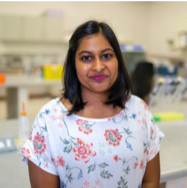
DR THILONA ARUMUGAM
RESEARCH PROJECT:
Decoding the role of DNA methylation in HIV pathogenesis.
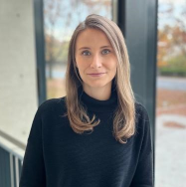
DR RENÉ BOOYSEN
RESEARCH PROJECT:
Innovative remote sensing for the exploration of critical raw materials.
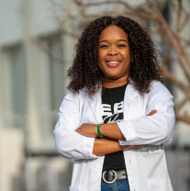
BOITUMELO MABAKACHABA
RESEARCH PROJECT:
Investigation and development of 1-dimension VO2 nano-sensor which exhibits high detection capabilities for hydrogen gas at ambient temperature.
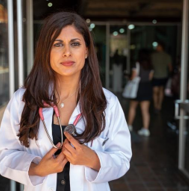
DR FARZAHNA MOHAMED
RESEARCH PROJECT:
Glucose and lipid metabolism in severe acute respiratory distress syndrome (SARS-CoV-2)
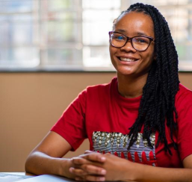
DR ASANDA MTINTSILANA
RESEARCH PROJECT:
Delineating the role of social vulnerability in the pathophysiology of non- communicable diseases (NCDs) and their prominent risk factors in middle-aged Black South African women.
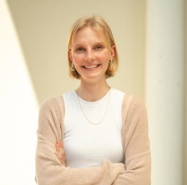
JESSICA THIBAUD
RESEARCH PROJECT:
Targeting Plasmodium falciparum cGMP- dependent Protein Kinase: Machine learning and Medicinal Chemistry Approaches.