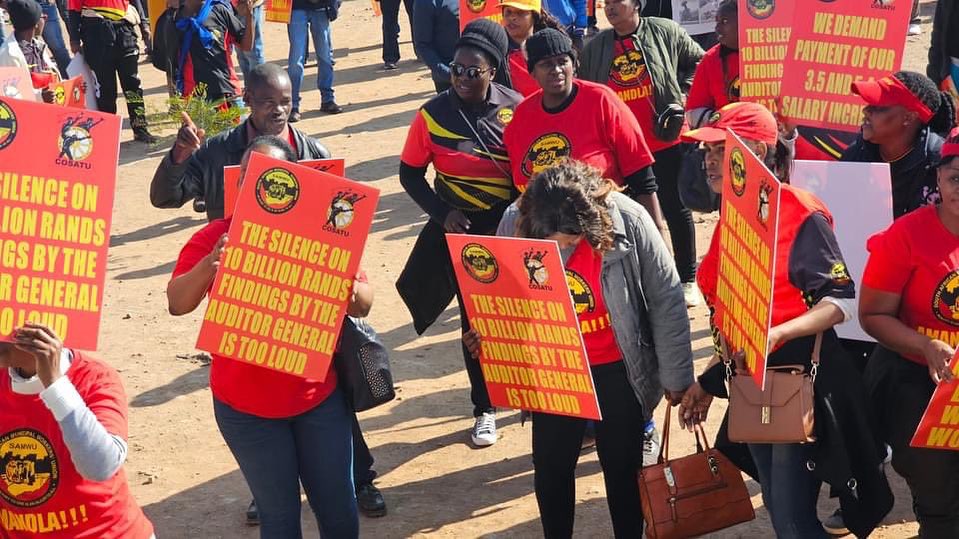
Johannesburg – The South African Municipal Workers Union (SAMWU) on Thursday accused the City of Tshwane of spending millions of rand to “deny workers their salary and wage increases”.
SAMWU said it was “disturbed by the outrageous amount of money the City keeps flushing down the drain in its attempt to deny workers their salary and wage increases as agreed in the South African Local Government Bargaining Council”.
SAMWU, whose members are on strike, said in just eight days, the City took the union to the Labour Court twice “with frivolous applications”.
The City alleged that SAMWU was in contempt of the rule nisi issued by the same court.
“On both occasions, the City was humiliated with their applications being dismissed,” said SAMWU.
“Although as a union, we should be rejoicing over the two victories in Court, we are, however, concerned that the City has spent over R3 million in legal fees.
“This is money that could have been used to service residents of Tshwane.”
Members of SAMWU have been on strike for weeks to press for wage hikes, but the City insists it has no money to do so.
The City says the strike is unlawful and has dismissed at least 100 employees involved in the labour action.
“For a City that is pleading poverty in the midst of workers demands for the full implementation of the salary and wage collective agreement, the City of Tshwane has proven to be a City with full pockets,” SAMWU said.
“It is unfortunate that the only people who are benefiting from this extravagant expenditure are Lawtons Attorneys who are continuing to milk the City while workers are subjected to hunger and starvation as they cannot catch up with the rising cost of living.
“The very same City which has publicly pleaded poverty has highlighted its debt to Eskom as one of the reasons why it cannot afford to pay workers salary increases.”
The union referred to the February budget speech in which the Minister of Finance announced that he will make available a R59 billion relief grant to help municipalities settle debts to Eskom.
“Knowing very well its financial muscle, the City of Tshwane opted not to apply for the Eskom relief grant,” said SAWMU.
“The City chose not to apply for this grant because it knew that it had enough money to service the Eskom debt.
“These are some of the reasons which have made it obvious to municipal workers in the City of Tshwane that their employer is able and capable of paying the 3.5% and 5.4% salary and wage increases.”
SAMWU said it was now focusing on the “frivolous” exemption application by the City.
“We are determined to oppose this application to ensure that our members and municipal workers get the salary increases due to them,” SAMWU said.