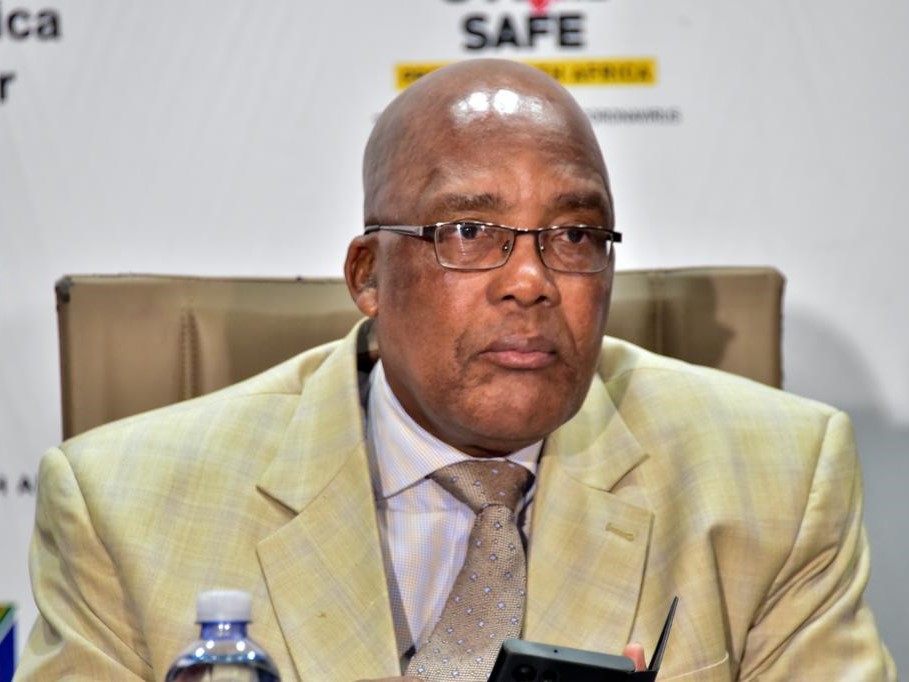
Pretoria – Home Affairs Minister Dr. Aaron Motsoaledi on Wednesday unveiled his plan to upgrade six of South Africa’s busiest Ports of Entry, which will see the creation of thousands of jobs.
“As you know in July 2022 we launched the Border Guards of the Border Management Authority,” said Minister Motsoaledi during a press conference to explain the request for proposals for the development of six of the busiest land Ports of Entry.
“We are here today to add another layer in the country’s efforts to make our borders safer, less porous, and more importantly, very efficient in facilitation and easing of trade as well as the legitimate movement of people.”
The six Ports of Entry earmarked for upgrades include:
- Beitbridge – Zimbabwe
- Lebombo – Mozambique
- Maseru Bridge Lesotho
- Ficksburg – Lesotho
- Kopfontein – Botswana
- Oshoek – Eswatini
Dr. Motsoaledi said the South African government was committed to putting the latest infrastructure and relevant technology in its effort to “modernise and upgrade our ports to be on par with the current global best practices on border management”.
The Department of Home Affairs said during construction, the project was expected to create about 38 000 jobs in areas around the six designated Ports of Entry.
Earlier this year in May, Minister Motsoaledi said Finance Minister Enoch Godongwana had approved his department’s request for a proposal to the market for the redesigning and redevelopment of the six Ports of Entry.
“To this end, the main objective is to make it easier for the law-abiding people and companies to easily enter and exit South Africa through our borders while the illicit movement of persons and goods is nipped in the bud pun intended,” said Minister Motsoaledi.
“It has taken a while for us to get to this point.
“I would like to commend my team consisting of officials from the Border Management Authority, the Department of Home Affairs, The Presidencys Infrastructure SA, National Treasury, SARS, DBSAs Infrastructure Fund, and the transactional advisors, Bowmans and Ernst & Young, for their hard work in getting us to this point.”
South Africa has 72 Ports of Entry of which 53 are land, 11 are international airports and eight are seaports.
All the Ports of Entry are now operated by the Border Management Authority.
Minister Motsoaledi said of the 53 land Ports of Entry, his department earmarked six of the largest and busiest, by traffic volume, for re-development in order to address the congestion.
Minister Motsoaledi said the outcome of the redevelopment of the six Ports of Entry will be used as a blueprint in the long term for all other South Africas land ports of entry.
“The primary intention is to ensure the realisation of regional economic integration in the SADC region while facilitating the realisation of the African Continental Free Trade Area,” said Minister Motsoaledi.
He said the re-developed ports of entry will result in:
- The efficient cross-border management of the movement of people, goods, and services.
- The improved administration of persons entering and leaving the Republic.
- Better regional economic integration; and enhanced support for the African Continental Free Trade Area.
- Improved revenue collection and addressing leakages caused by the illegal movement of goods and illicit financial flows.
- Protecting local industry from harmful imports and exports.
- Effective migration management including curbing illegal migration.
“In our Request for Proposals we are expecting the prospective partner companies to come install latest technologies such as gamma rays scanners such that each truck can drive through them,” said Minister Motsoaledi.
“Gamma Ray technology can pick up anything from illicit cigarettes, liquor, paper money, and human beings.
“Some ports in other jurisdictions are still using X-ray technology which we regard as outdated.”
The department said the six Ports of Entry projects will cover the full infrastructure development and the provision of the required services to ensure coherent and coordinated support of institutional functions.
In order to ensure that the ongoing operations at each of the designated Ports of Entry are not interrupted, construction will be undertaken in phases, the department said.
The project is being undertaken on a Public-Private Partnership (PPP) basis.
The minister said the procurement process is therefore subject to the procedures set out in Treasury Regulation 16 for initiating, procuring, and concluding PPP projects.