Pretoria – The Department of Health says there has been positive progress in preventing cervical cancer through various interventions, including vaccinations and expanded screening and testing services.
South Africa has one of the highest rates of cervical cancer among women and faces a significant burden, with an estimated 13 800 new cases annually.
According to the World Health Organization, Cervical cancer is the fourth most common cancer in women globally with around 660 000 new cases and around 350 000 deaths in 2022.
“In South Africa, cervical cancer is the second most common cause of cancer in women though, cervical cancer can be cured if diagnosed at an early stage and treated promptly,” the department said on Sunday, (17 November 2024).
The department made the remarks as South Africa joined the global community in marking four years of an international movement known as Cervical Cancer Elimination Day of Action.
This day has been commemorated annually on 17 November since 2020 when 194 countries including South Africa resolved to eliminate cancer.
Later WHO launched the Global strategy to eliminate cervical cancer.
The government has introduced several interventions to prevent cervical cancer among women, and these include the launch of the Human Papillomavirus (HPV) vaccination campaign in 2014.
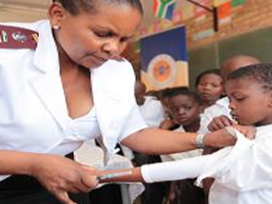
The HPV vaccination reduces the incidence of cancer of the cervix mainly targeting all girls in grade 5, aged 9 years and older in all public and special schools.
So far, between 85% and 89% of targeted girls received one or more doses.
Studies have shown that vaccination in late childhood/early adolescence is effective as strong immunity develops (before the onset of sexual activity).
Over this period more than 7,1 million doses have been administered, and more than 4 million girl learners protected.
It is estimated that approximately 85% of girls 9 – 15 years in public schools and approximately 75% of all girls 9 – 15 years in South Africa have been vaccinated and are protected from developing cervical cancer.
“The programme has since been extended to private schools effective from this year in order to ensure no girls child is left behind, with or without medical aid,” the department said.
“The success of the HPV vaccination programme in South Africa has been attributed to a high-level political commitment by ministries of health and basic education including civil society, parents, and School Governing Bodies, dedicated funding from the National Treasury.”
The department said this year’s commemoration was focusing on healthcare workers for commitment to the fight against cervical cancer which is encapsulated in the theme: “Elevating Frontline Health Workers: Transforming Global Commitments into Lifesaving Actions”.
The theme underscores the critical role that healthcare professionals play in enhancing awareness, screening, and treatment of cervical cancer.
Healthcare workers were pivotal in implementing cervical cancer screening programs and educating communities about prevention, the department said.
“Their knowledge and attitudes significantly influence screening uptake among women,” the department said.
Studies have shown that inadequate knowledge and misconceptions among HCWs can lead to suboptimal care for cervical cancer patients, highlighting the necessity for continuous education and training.
“It is for this reason that the Department of Health in collaboration with the World Health Organization, is rolling out capacity training for clinicians in provinces to improve their confidence in performing cervical cancer screening, diagnosis, and treatment procedures,” the department said.
At least 405 299 girl learners (88.6% of the target population) received HPV vaccination during the February/March 2024 round of HPV vaccination against cervical cancer.
“To date, 17 of the country’s 52 health districts have begun using HPV testing with more districts expected to start during the current financial year,” the department said.
“While the country is making progress with HPV vaccination, cervical screening and treatment are lagging behind.
“Thus, parents and caregivers are reminded to ensure that all eligible girls who missed HPV dose, should get catch-up doses offered in primary health facilities free of charge.”