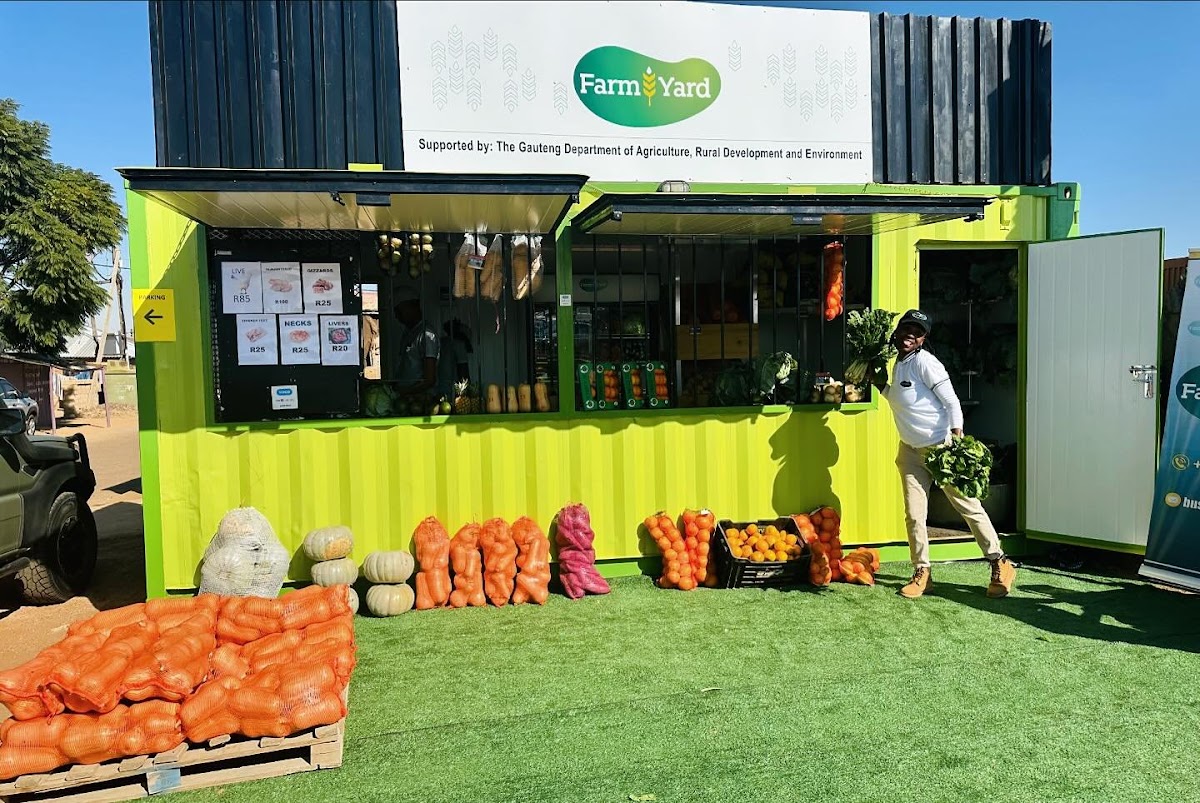
Johannesburg – The Gauteng Department of Agriculture, Rural Development & Environment (GDARDE) has launched a probe into the R36 million cost of the Farmyard “container-stores” project.
The R36 million was spent on 16 container-style fresh produce stores in townships, translating to a massive R1.75 million per container.
On Sunday, (17 November 2024), GDARDE announced in a statement: “As part of her executive oversight mandate, MEC for Agriculture and Rural Development, Vuyiswa Ramokgopa, has launched an internal investigation into the costing and mismanagement of the Farmyard ‘Container Stores’ project”.
The Farmyard project, intended to establish 16 container-style fresh produce stores in Gauteng townships, to support small-scale entrepreneurs and provide vital market access.
However, barely six months after launching, the GDARDE said the project has not delivered according to its stated deliverables.
“An initial payment of R36 million was allocated to establish the 16 containers – R1.75 million per container.”
The GDARDE said the figures, seemingly not in line with market rates for similar structures, prompted a reassessment of the costing model.
The department said MEC Ramokgopa has taken “immediate and decisive action” to suspend all further funding for this project.
She has submitted a formal deviation request to the National Department of Agriculture, which manages the conditional grant.
The GDARDE said an internal investigation had already commenced to determine:
• The true cost of the project
• Whether original plans and targets were met
• The operational status of the containers (through unannounced oversight visits)
As part of the probe, MEC Ramokgopa is expected to meet the beneficiaries next week to hear their concerns.
She is also scheduled to meet with the service providers.
“The department remains committed to supporting township entrepreneurs and to growing the township economy,” said the GDARDE.
“This must, however, be underpinned by the prudent and responsible use of public funds and sound governance practices.”