In a significant development for a return to a reasonable approach to trade in ivory and rhino horn products, the U.S. Second Court of Appeals has removed the limits on the domestic sale of ivory and rhino horn, declaring the current restrictions on display and advertising “unconstitutional.”
The Court invalidated a New York law that restricted ivory and rhino horn sales by antique dealers, arguing that it unfairly limited their right to communicate with buyers.
The result of the case is that ivory objects can go back on display, be advertised, and be legally sold in the state of New York.
Other states will find the ruling persuasive in terms of their own ivory laws.
American animal rights NGOs, including the Natural Resources Defense Council, the Center for Biological Diversity, the Humane Society of the United States and the Wildlife Conservation Society, had supported the New York law in the court challenge, claiming its intent was to protect and conserve wildlife.
These groups have the right to appeal the appellate court’s decision to the U.S. Supreme Court by February 11, 2025.
The appellate judges ruled that preventing dealers from communicating “crucially important” information to lawful buyers about the quality and authenticity of ivory goods constituted an “excessive burden” on constitutionally protected free speech.
Most observers view this decision as a victory for the reasonable use of ivory and rhino horn products in the United States.
“At the moment, the regulations enforcing the Endangered Species Act prohibit all African elephant ivory sales in interstate commerce (whether new or antique) with a few exceptions,” said Godfrey Harris, the managing director of the Los Angeles-based Ivory Education Institute.
“But by invalidating the New York state law, the appellate court’s decision calls into question all the rules governing ivory and rhino horn.”
Harris also noted: “Given the conservative tilt of the Supreme Court and the probability that Donald Trump’s newly named Cabinet-level appointees will view restrictions on free trade as oppressive, outdated and unnecessary, a more rational U.S. governmental approach to the conservation of wildlife – particularly in Africa – may be at hand.”
Asked about the implications for African countries that have repeatedly sought a return to international trade in ivory and rhino horn under the CITES (Convention on International Trade in Endangered Species of Wild Fauna and Flora) regulations, Harris, said, “I believe the appellate court’s decision is an important opportunity for one or more southern African countries to demonstrate that it can manage and prosper from sustainable conservation programmes for their own wildlife.
“I also think that such a demonstration of independence would show that Africa is not filled with ‘shithole’ countries, the term that President-elect Trump once used to describe African states.”
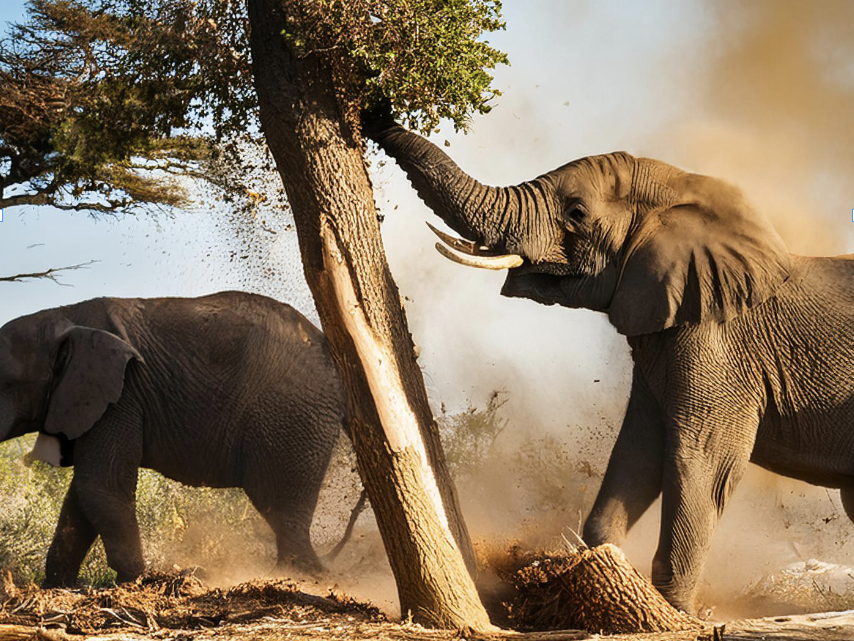
Harris noted that “southern Africa has an elephant population that is overrunning its habitats and wrecking the great national parks as these animals search for adequate supplies of water and food.”
“Southern Africa needs to defy the prevailing Western hands-off attitude toward the conservation of wildlife and adopt programmes and methods best suited to the needs of each country,” said Harris.
“Africa is where the human race began; it is time for a modern African political leader to demonstrate that caring for its wildlife is a domestic problem that can best be accomplished and funded with the sale of its own wildlife products in international trade.”
Harris said that the judicial decision in the U.S. should be carefully evaluated by other governments worldwide “to reconsider their bans on ivory trade as well.”
“Antique dealers, collectors, museum curators, artisans, art specialists and government leaders in the UK, France, Italy, Japan, China and elsewhere ought to urge the reopening of borders to accept ivory and rhino horn imports and exports from elephant over-populated southern Africa,” he said.
Elsewhere in international wildlife management politics, Harris remarked that the UN agency CITES (the Convention on International Trade in Endangered Species of Wild Fauna and Flora) has no control over U.S. domestic ivory and rhino horn sales or those of any other country.
Its role is limited to regulating international trade in endangered wildlife and their products.
Unfortunately, added Harris, “CITES and the animal rights organisations often forget that its portfolio is limited to those species that are on a trajectory to extinction.”
Harris also notes that CITES is a weak agency, primarily because its annual budget is funded by voluntary contributions, not through the UN.
“The animal rights organisations supply CITES with the funds it requires or urge their national governments to appropriate what is needed,” he said.
Harris noted that as a result, it is the animal rights organisations that have achieved controlling influence over international wildlife policy.
“In short, if changes are to be made in how conservation is done in Africa, NOW is the time to challenge the animal rights groups on how to do it rationally,” said Harris.
“Which African leader is ready to become the new Nelson Mandela for meeting Africa’s urgent need to legally and sustainably take charge of its wildlife wealth?
“Which African leader is ready to use stockpiled ivory to pay for classroom construction and end the unacceptable sight of children learning under trees?”
Harris said that there are billions of dollars lying dormant in the ivory and rhino horn stockpiles of African countries.
“It’s time for one of the southern African presidents to step forward, use those funds in transparent transactions, and lead the way to sustainable conservation programmes so desperately needed to conserve Africa’s enormously valuable wildlife,” said Harris.
*The writer of this article is Emmanuel Koro, a Johannesburg-based independent international award-winning environmental journalist who writes extensively on environmental and developmental issues in Africa. The views expressed by Emmanuel Koro, are not necessarily those of The Bulrushes