Are you aware of some staggering statistics concerning our food supply?
According to the Shoprite 2024 survey, the South African Food Security Index is at its lowest point in more than a decade.
The survey established that in 2023, 45.3% of South African households weren’t sure when their next meal would come, what it might contain, and how much there would be of it.
Are you among those 28.2 million people facing this situation?
If not, you should also know that South Africa is not alone.
Some thirty-five million Americans – 10% of their population – suffer from food insecurity as well.
A lot of them are children.
Yet, AI research estimates that 30% to 40% of the food supply now available in the U.S. is wasted – uneaten or spoiled before it is consumed.
That’s $161 billion worth of food.
What might be done with that kind of money if it were available for other public needs such as conservation or urban development?
Globally, the same deep dive into current food statistics suggests that one-third of all the food produced for human consumption is wasted each year.
That’s approximately $1 trillion per year mostly frittered away through inattention and laziness. It is an appalling statistic.
Yet, we have all been taught not to waste food for a variety of good reasons.
The golden reason among them is that we shouldn’t waste food so as not to exhaust Mother Nature and plunge the world into a food supply crisis.
Worldwide, including in southern Africa, campaigns against food wastage are ongoing – calling for a change of attitude not to waste food and finish all the food that is served to us.
Interestingly, the solution to less food wastage might not only lie in a change of attitude.
It might have a lot to do with how we prepare our food.
The U.S. National Institutes of Health studies indicate that about 77% of people say that taste is the key ingredient to enjoying whatever they are served.
Put another way, most cooks know instinctively that if it tastes good – that a dish has the right balance of salty or savoury, sweet or sour – they will eat it and ask for more in the process.
Yet, an amateur cook recently noted that there are no specific tools to enhance a cook’s ability to go about the delicate art of tasting and considering what might be added to whatever is already being stirred, mixed, or blended.
All that’s available are bulky wooden paddles, spongy plastic scrappers, or oversized metal spoons.
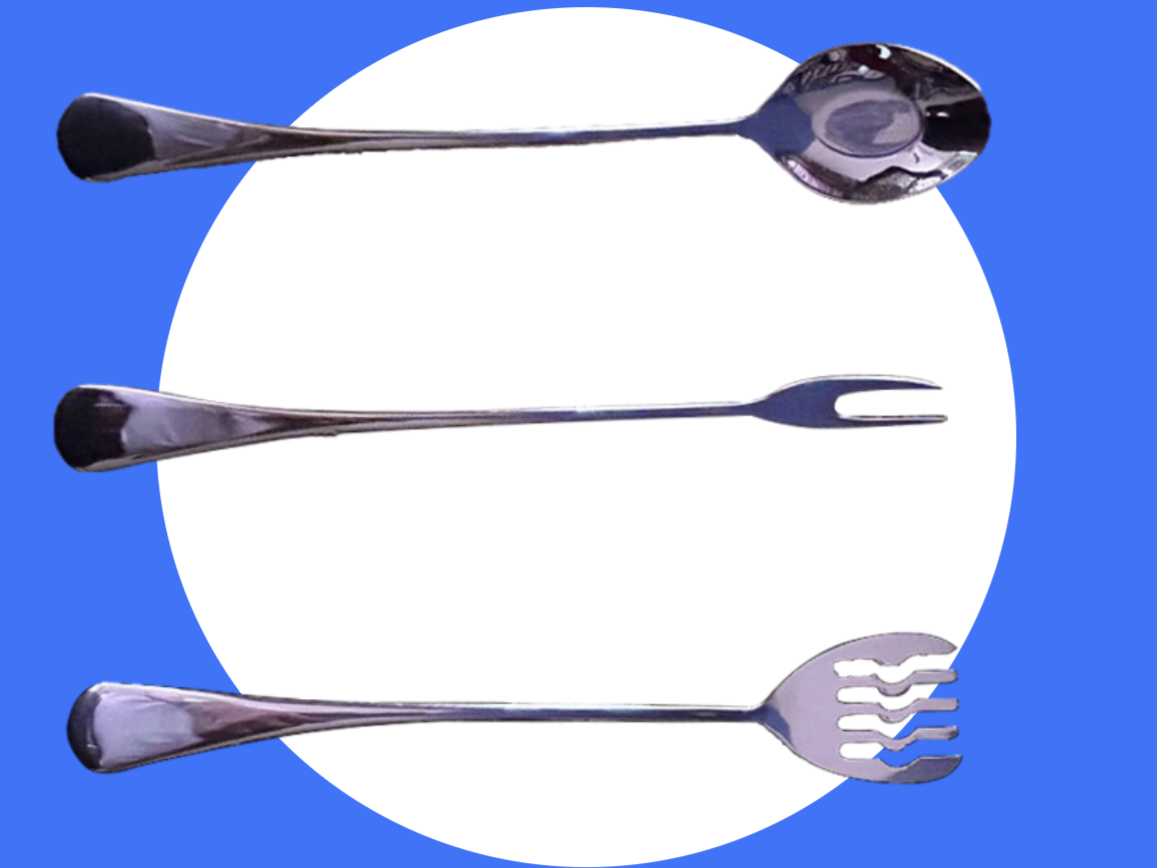
He felt challenged to do something to make tools obtainable that help cooks sip, stir, slice and sample the foods being prepared.
He thought that if the food could be made to taste better less of it would be thrown away or get partially eaten and then trashed.
Fortunately, someone has just invented some specific tools for food tasting.
They make sure that even when you prepare larger meals that can’t be finished, you will resist throwing the food away. Instead, you will store it for your next mealtime.
Multi-talented Los Angeles-based public policy consultant Godfrey Harris designed and developed a breath-of-fresh-air set of utensils in 2024 called TOOLS FOR TASTING.
The Harris food-tasting tools seem certain to contribute to less wastage of food because different and appropriate tools are now available to get meals consumed rather than chucked away.
Seeing is believing.
You can view the new food-tasting tools on this website: https://toolsfortasting.com/.
So how did a government specialist, academic, and environmentalist end up coming up with such a useful development?
“The three implements in Tools for Tasting emerged when I realised how often I was switching utensils to be able to stir, slice and sip something I was cooking safely and conveniently,” said Harris in an interview this month.
“When I couldn’t find anything anywhere that improved on what I was using, I approached an engineer in Scotland to work with me in creating the shapes, angles, weight and feel that I thought would allow me to sample cooking food conveniently, efficiently, and safely.
“I was looking forward to saving my tongue from being burned, my fingers from being scorched, and my face from being wrinkled by the hot foods I was dealing with.
“After the designer had prototypes made to test, I thought others might enjoy having these useful and handsome implements available in their kitchens as well.
“We had a test supply made in China. Early sales have been pleasing while initial reaction has been universally favourable.”
Harris hopes that this start might grow into sufficient acceptance to make the tools a key element in helping to arrest the cycle of waste and destruction of the planet itself.
He noted that when we throw away food – because we don’t like the taste of what we have been served – we create an artificial demand to grow more food, leading to more energy use at the production, harvesting and packaging stages, increasing our contribution to carbon emissions, and no doubt climate change.
Perhaps Harris’s food-tasting tools can contribute to less wastage of food and help us reduce climate change this festive season as home kitchens, popular restaurants, and elegant hotels become centres of attention, globally, to the need to do a better job of making tastier meals.
*About the Writer: Emmanuel Koro is a Johannesburg-based independent international award-winning environmental journalist who writes extensively on environmental and developmental issues in Africa.
*The views expressed by the author of this article, Emmanuel Koro, are not necessarily those of The Bulrushes