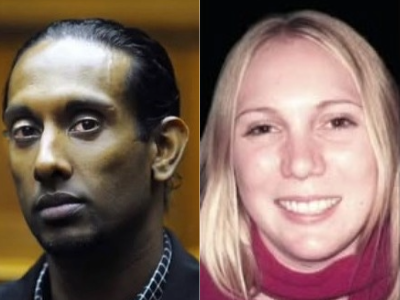
Johannesburg – The Department of Correctional Services has again rejected the release on parole of Donovan Stanley Moodley, who is serving a life sentence for the 2004 murder of university student Leigh Mathews.
The department on Friday, 19 December 2025, of Correctional Services announced that the parole profile of Moodley had been considered and turned down.
“After careful consideration of all relevant reports and submissions, the National Council for Correctional Services (NCCS) recommended to the Minister of Correctional Services, Dr. Pieter Groenewald, that parole placement not be granted at this stage,” the department said in a statement made available to The Bulrushes.
In July 2004, 21‑year‑old university student Matthews was kidnapped by Moodley, who demanded ransom from her family.
Despite receiving the ransom, Moodley murdered Leigh.
Moodley was later convicted of kidnapping, extortion, and murder, and sentenced in 2005 by the South Gauteng High Court to life imprisonment for murder, plus additional years for kidnapping and extortion.
He was 36 years old when he was sentenced.
Moodley has made several attempts to be freed, but his parole bids have been repeatedly denied.
The parents of the murdered student, Rob and Sharon Matthews, have strongly opposed Moodley’s parole.
They argue that he has not taken accountability, shows no remorse, and that releasing him would deny their family closure.
The department said Moodley, who was convicted of several crimes, including murder, kidnapping, and extortion, would be afforded a “further parole profile following additional interventions”.
The Minister concurred with this recommendation.
“In accordance with this decision, parole placement has not been granted,” the department said.
The offender’s profile will be resubmitted after a period of 24 months for reconsideration by the NCCS and, thereafter, by the Minister.
The department said that during this period, Moodley will be required to undergo several structured correctional programmes, psychotherapy sessions, and assessments by independent, non-treating specialists.
“These assessments will determine the offender’s risk profile and measure progress in rehabilitation,” the department said.
Minister Groenewald reiterated that parole consideration was not solely dependent on the completion of programmes or the serving of the minimum required period of incarceration.