Moscow – Rosatom has announced the launch of the ninth annual Atoms Empowering Africa video contest.
The initiative offers young people across Africa an opportunity to share their views on how nuclear technologies can be used to address existing challenges.
This year’s competition focuses on cooperation within the BRICS Nuclear Platform.
“The BRICS Nuclear Platform is designed to create new opportunities for collaboration in the peaceful uses of nuclear technologies,” explained Elsie Pule, Head Coordinator of the BRICS Nuclear Platform on Thursday, 26 March 2026.
“By linking this year’s Atoms Empowering Africa contest to the Platform, we hope to encourage young Africans to explore how international cooperation can help address real challenges in their countries.
“Their ideas and perspectives are an important part of building a more innovative and inclusive global nuclear community.”
Participants are invited to explain how such a platform could support sustainable development in their countries by submitting a short video on one of five topics:
- The Role of Nuclear Energy in the Future of BRICS Countries,
- How Nuclear Technologies Improve People’s Lives (focusing on non-power applications of nuclear technologies),
- Youth and the BRICS Nuclear Platform,
- Cities and Regions of the BRICS Nuclear Platform, and
- The BRICS Nuclear Platform: Vision for 2030.
The contest is open to Africans aged 18 to 35.
“Across many African countries today, the role of modern nuclear technologies in long-term development is actively being discussed – from ensuring reliable energy supply to introducing advanced solutions in healthcare and agriculture,” noted CEO of Rosatom Central and Southern Africa Ryan Collyer.
“The Atoms Empowering Africa contest helps engage a new generation – students, entrepreneurs, and young professionals from across the continent – in this conversation.
“This year, participants are also invited to explore the potential of cooperation within the BRICS Nuclear Platform.”
Submissions will be accepted until 1 May 2026.
A jury will then evaluate the entries based on several criteria, including originality of the idea, clarity of presentation, and the relevance of the proposed solution to the specific region.
A maximum of one winner per country will be selected – either an individual or a group of two.
“I would encourage young people to take part in the Atoms Empowering Africa contest,” said Sebopela Joseph Katlego Oupa, one of last year’s winners, from South Africa.
“It’s an interesting competition – applicants need to do some research on how nuclear technologies can be used in Africa.
“It’s a wide range of applications: you can get clean energy, create medicine, use scientific advances in food and agriculture.
“All these applications can be used to solve problems in Africa.”
Detailed information on participation rules and submission requirements will be available on the Rosatom Africa website.
Last year, the contest received 50 submissions.
The 13 selected winners represented six countries: South Africa, Egypt, Kenya, the Democratic Republic of the Congo, Burundi, and Namibia.
Background
The Atoms Empowering Africa contest has been held since 2017.
Its goal is to engage young professionals from across the African continent in dialogue about the peaceful uses of nuclear technologies.
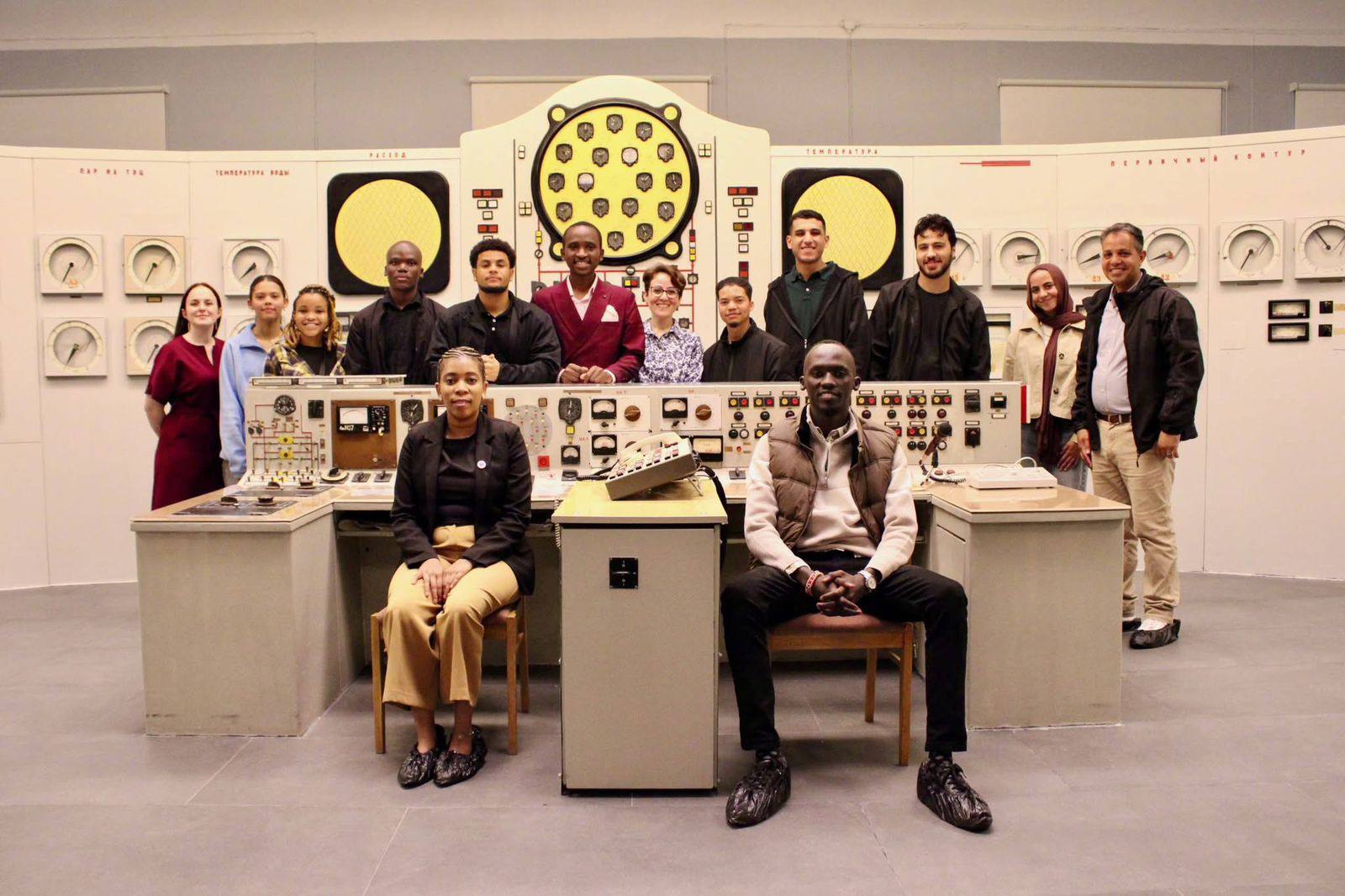
In 2025, the winners travelled to Russia, where they visited the Rosatom Technical Academy in Obninsk, the Obninsk Nuclear Power Plant (now operating as a memorial and research complex), Atom Museum at VDNH, as well as the Kremlin and Red Square as part of the cultural itinerary of the trip.
The International World Atomic Week forum has been held annually since 2009. It brings together leaders of major nuclear industry companies, as well as representatives of government institutions, international and public organisations.
In 2025, the forum marked the 80th anniversary of Russia’s nuclear industry and was held from September 25 to 28 at VDNH in Moscow.
The BRICS Nuclear Platform was established to strengthen cooperation at the corporate level.
Its main focus is promoting nuclear energy as a low-carbon power source.
Throughout 2026, expert events organised under the Platform’s auspices will take place at major industry venues.