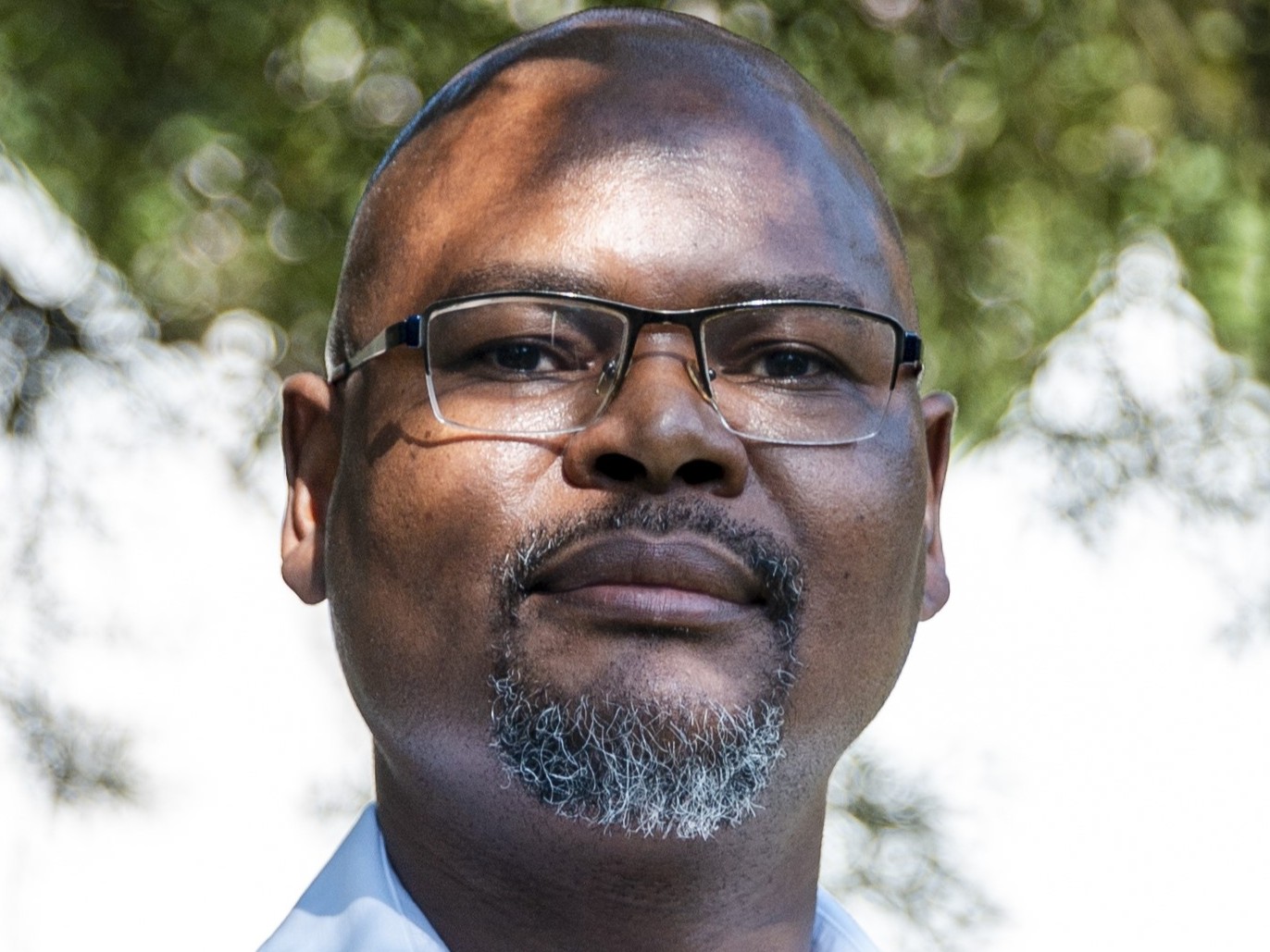
Mpumelelo Mkhabela is not given to cheap political theatre.
He is usually a level-headed analyst, with the rare gift of making his point without sounding as if he is auditioning for higher office, unlike some who confuse television panels with Cabinet interviews.
So, when Mpumelelo Mkhabela writes in News24 on 27 May under the headline, “‘Super president’ in the shadows: Why Mbeki can’t – and won’t – let go”, one must take the provocation seriously, even while disagreeing with its central anxiety.
The headline is deliberately loaded.
It invites us to see former President Thabo Mbeki’s continued public engagement not as civic duty, intellectual labour, or elder statesmanship, but as an inability to release the levers of power.
That framing deserves scrutiny, precisely because it mistakes intervention for interference and memory for ambition.
Mkhabela’s theory, because that is what it is, is that former president Thabo Mbeki still carries the air of a man who cannot leave the stage. In one sense, he is right.
Mbeki has not disappeared into the retirement village of Political Siberia. He writes. He speaks. He convenes. He warns. He rebukes.
He asks questions. Worse still, for those allergic to original thought, he reads.
But here is the difficulty.
Mbeki may appear to give off the air of a “super president”, not because he governs from the shadows, but because South Africans keep looking for the lost grammar of statecraft seriousness.
Mbeki does not haunt us. We are haunted by what followed him.
We remember a president who thought deeply about the state, Africa, development, sovereignty, and institutions.
We remember a head of government who believed that public power was a duty, not a buffet.
We remember a leader who could speak about roads, factories, farms, universities, pension funds, and the state in one breath without sounding as though he had discovered public policy five minutes before the cameras arrived.
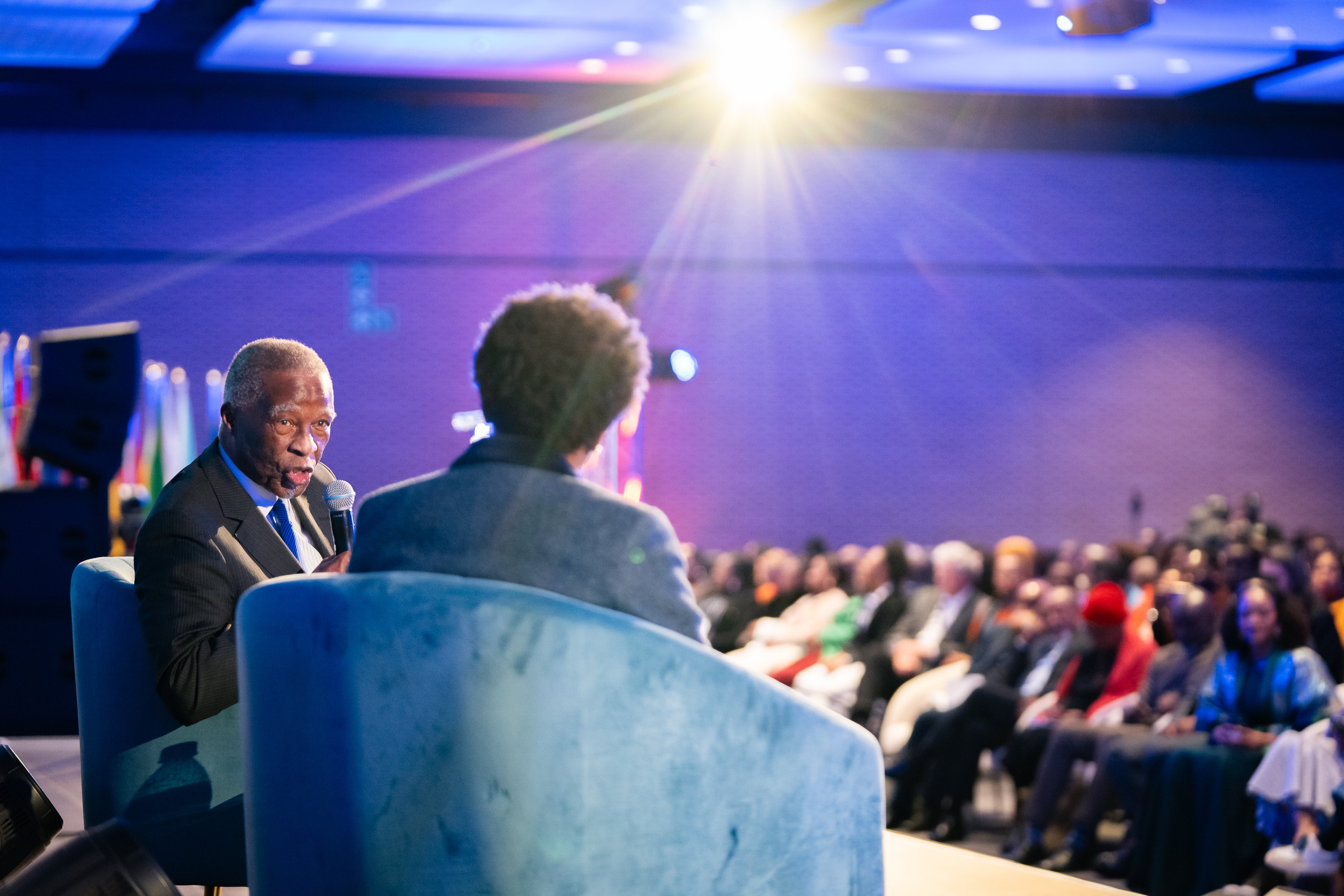
At the recent Thabo Mbeki Foundation Africa Day programme in Cape Town, Mbeki reminded us of what we miss: a presidency that treated unemployment as a central domestic challenge, not as an excuse for scapegoating.
Speaking to learners at Milnerton High School, he said that, during his years in the Presidency, “never, never a single day” was unemployment explained by undocumented foreigners.
Instead, he recalled a period in which “South Africa was going up and up and up”, when “new jobs were added”, unemployment was falling, poverty levels were going down, and social grants could be expanded because, as he put it, “we were generating the money,” and, if I may, it was used for public good, not self-accumulation.
That is not a shadow presidency. That is policy memory.
The point is not that Mbeki was perfect.
He made mistakes, as all leaders do. But he was not prone to using public power for self-glorification or personal gain.
His presidency did not revolve around the theatre of multiple wives or an expensive presidential compound.
Nor did his public life become trapped in the symbolism of US dollars hidden in a sofa.
That is why the current longing for Mbeki cannot be dismissed as nostalgia alone. It is also a measure of national political decay.
Under Mbeki, South Africa did not become a paradise.
But it had a government that seemed to understand the relationship between economic growth, public finance, state capacity, and improving people’s lives.
The numbers explain part of the ache.
The National Treasury said in 2007 that, since 2004, the government had raised average annual economic growth to 5%, compared with 3.3% between 1999 and 2004.
It also said employment had risen by about 2.7% a year since 2001, faster than at any point in the previous two decades, while the proportion of people living below an indicative poverty line fell from 52.1% in 1999 to 43.2% in 2006.
The 2008 Medium Term Budget Policy Statement put the case even more sharply: the economy had grown by an average of 5% a year for the previous six years, investment had increased from about 15% of gross domestic product to more than 22%, unemployment had declined from about 29.3% in 2003 to 23%, and nearly two million net jobs had been created.
His aloofness, too, became a convenient political caricature, even though his electoral performance complicated that claim.
In 1999, under Mbeki’s leadership as African National Congress (ANC) president, the party won 10,601,330 votes and 66.35% of the national vote, giving the ANC its first democratic two-thirds mandate.
In 2004, he improved on that result, taking the ANC to 69.69%, its strongest democratic performance. Mandela’s ANC, beloved and historic as it was, won 62.65% in 1994.
That does not make Mbeki a saint. It does, however, make the lazy version of the aloofness argument harder to sustain.
South Africans may not always have warmed to his manner, but millions trusted his stewardship.
The contrast with the present is brutal. In 2024, the ANC fell to 40.18% of the national vote, won 159 seats in the National Assembly and lost the outright majority it had held since 1994.
President Cyril Ramaphosa’s years have delivered economic growth averaging about 0.6% per year from 2018 to 2024, based on World Bank annual GDP growth data.
By comparison, the “Sovereign Leader’s” nine wasted years under former president Jacob Zuma still produced average annual growth of about 1.7%.
Today, the official unemployment rate stands at 32.7% in the first quarter of 2026. Stats SA reported that employment fell by 345 000 while the number of unemployed people increased by 301 000 to 8.1 million.
Among young people, the numbers are worse still: 60.9% for those aged 15 to 24, and 40.6% for those aged 25 to 34.
So yes, we remember economic growth with dangerous glee.
We remember unemployment figures one could pronounce without choking.
We remember a state that, for all its imperfections, appeared to know that the poor needed more than slogans and that development required institutions, money, implementation, and accountability.
This is why we cannot let go.
The ANC that once spoke of the African Renaissance now spends too much time doing coalition arithmetic.
South Africa once carried a voice in world affairs that seemed to matter beyond its own border posts.
We remember Pretoria speaking in the language of NEPAD, peace diplomacy, continental institutions, and global reform.
The irony is that Mkhabela may be describing the wrong attachment. It is not Mbeki who cannot let go.
It is we who cannot let go of the idea that South Africa once had leaders who treated the country, the continent, and the world as serious arenas of political thought and action.
Mkhabela is right to warn against any retired leader(s) hovering over institutions that must be led by those elected to lead.
No democracy needs a government of ghosts.
But neither should a nation mistake wise counsel for conspiracy, memory for manipulation, or intellectual engagement for a coup by seminar.
Mbeki’s interventions irritate because they embarrass the present mandarins and Pirates of Polokwane.
He recalls a time when the Presidency was expected to think, not merely manage factions or to convene panels; and when foreign policy carried strategy, not just press statements; and when economic growth figures did not require smelling salts before pronunciation.
So perhaps the headline should be adjusted.
Not: why Mbeki can’t and won’t let go.
Rather, why those who still love South Africa and still care about Africa can’t and won’t let go of what Mbeki and his generation represent.
*Bhekisisa Mncube is an author and columnist who won the national 2024 Standard Bank Sikuvile Journalism Award for columns/editorials and the same category at the regional 2020 Vodacom Journalist of the Year Awards. However, the views he expresses in this column are not necessarily those of The Bulrushes