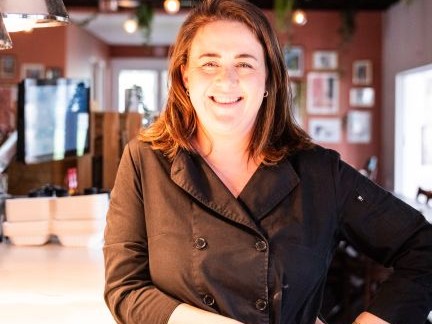
Durban – Award-winning chef, restaurateur and culinary school owner Kayla-Ann Osborn says the current pressure on South Africa’s restaurant industry is not an abstract economic issue.
As the owner of two KwaZulu-Natal, South Coast restaurants and a culinary school, she says she has personally felt the squeeze of rising costs, quieter trading periods and more cautious customer spending over the past seven months.
Headline inflation is at its highest level in almost two years; South Africans are feeling the ongoing pressure of rising prices.
On 22 July 2026, Statistics SA announced a rise in annual inflation from 4.5% in May 2026 to 5.0% in June – its highest level since June 2024.
“In the restaurant industry, breakeven doesn’t drop significantly when it’s quiet,” adds Osborn.
“It’s not as proportional as other businesses, so when turnover drops, the pressure is real.”
Although food and non-alcoholic beverage inflation eased from 1.6% in May to 1.9% in June, transport, fuel, electricity, housing and service costs continue to squeeze disposable income.
At the same time, catering services and restaurant services rose to 5.7% year-on-year.
This leaves restaurants having to manage the trade-offs between more cost-conscious customers and rising input and service costs.
For Osborn, surviving the current climate is not about one quick fix, but about making practical, disciplined decisions across the business, including, smarter trading and menu costs, waste reduction and in-house production, budgeting and use of local suppliers, and staff training and guest experiences.
Smarter trading and menu costing
The first shift, said Osborn, is for restaurants to become more strategic about when they trade, what they offer and how each menu item contributes to the bottom line.
Trading longer may seem like a good way to increase turnover, but if quiet trading days cost more in overheads than they generate in sales, operators need to rethink their model.
“It can be more financially beneficial to increase covers by 15% on a Friday night than to run at 80% occupancy with an ineffectively costed special on a Tuesday,” explained Osborn.
For some restaurants, survival may depend on tighter menus and better-costed dishes.
Farm-to-table cooking is not only about provenance, says Osborn.
By focusing on seasonal local produce and using the whole constituent, also known as from “nose-to-tail cooking” to “root-to-vegetable cooking”, restaurants can build menus that are more sustainable, distinctive and cost-conscious.
Waste reduction and in-house production
For Osborn, this way of thinking reaches beyond sourcing products to what restaurants can produce themselves.
In-house production and home-grown ingredients, from handmade pasta to mushrooms grown in her own garden, can help reduce reliance on bought-in products, lower overheads and give a restaurant’s menu a more distinctive identity.
Instead of cutting corners, she believes restaurants can uphold their level of quality by taking ownership of certain ingredients and elements that make their food stand out from other establishments.
Budgeting and use of local suppliers
Beyond the kitchen, Osborn believes that owners also need to look at their scope for growth.
In a tough trading environment, budgeting becomes an essential tool for survival rather than being considered a back office function.
Osborn also advises restaurateurs to keep money aside for future growth and investment and taking a medium- to long-term approach to decision making.
Where restaurants can be burdened with the cost of imported goods and ingredients, Osborn is an advocate for local skills development and job creation.
She believes South Africa has the opportunity to grow more artisanal expertise such as cheese making and baking speciality breads.
Training and guest experiences
This is also where Osborn’s hands-on, industry-based culinary school becomes part of the broader solution.
Through training that takes place in her own restaurants, students are exposed to the pace, standards and pressures of the industry while developing practical food skills that can lead to employment or entrepreneurship.
The final piece is the guest experience.
When customers are dining out less often, every interaction needs to justify the spend.
“Well-trained and well-presented staff come across as in control and can guide the experience,” said Osborn.
“This gives guests the assurance of a good experience and also creates a sense of trust, allowing for open communication on recommendations, possible opportunities for upselling, and feedback.”
For Osborn, the message to restaurateurs is clear: “Vasbyt” — but do so with intention.
In a tougher economy, the restaurants that endure will be those that trade smarter, waste less, train better, support local producers and create the kind of value that keeps customers coming back.
By looking at her own business from this perspective, Osborn believes that the restaurant industry can turn a trying time into a business opportunity.