Unraveling the tapestry of instability requires looking into the complex dynamics of the Sahel crisis and the military struggles in Ukraine, writes Kevin Mofokeng, a developmental writer and digital PR strategist based in Gaborone, Botswana.
Russia’s relentless pursuit of power in the Global South remains unwavering.
In the past year, the Kremlin has intensified its focus on the troubled Sahel region in Africa, spanning from Senegal to the Red Sea.
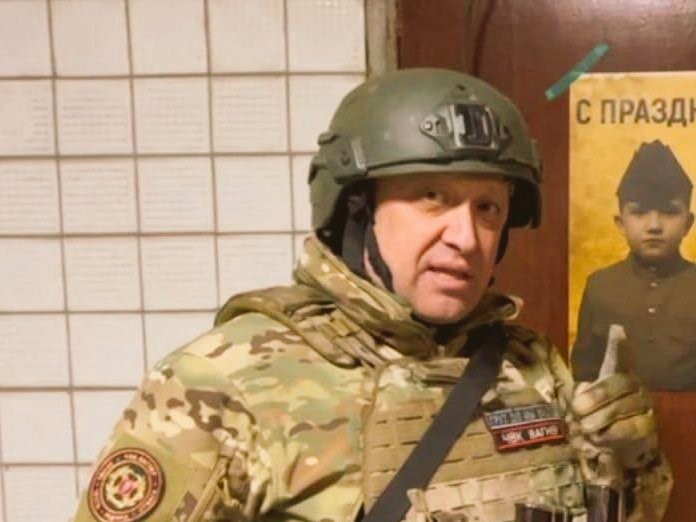
Through the notorious Wagner mercenary group, Moscow is methodically embedding itself in countries like Mali and Burkina Faso, capitalising on Western policy missteps, mounting anti-European sentiment, and the longstanding failures of international and local actors to tackle the underlying causes of regional instability.
While the exploits of Moscow’s proxies in Africa have captured significant attention, it is important to note that Russia’s influence across the continent is neither extensive nor profound.
Nevertheless, as violence continues to ravage the Sahel, the growing presence of Moscow has raised concerns in Washington.
Yet, the Joe Biden administration finds itself with limited practical options to counteract this encroachment.
Why is the Sahel unstable?
The Sahel, a region teeming with natural wealth, finds itself ensnared in a web of political volatility, armed uprisings – particularly in Mali and Niger – and a lamentable legacy of misgovernance.
Since attaining independence in the 1960s, the nations within this region have grappled with the arduous task of building viable states and cohesive nations.
Inherited institutions and redrawn boundaries have posed formidable challenges to effective governance.
At the heart of this turmoil lie Islamist insurgency groups, which exert control over vast swathes of land and wage a relentless battle against both governmental forces and local communities for control over precious resources.
Tragically, innocent civilians find themselves caught in the crossfire, bearing the brunt of a conflict not of their making.
Despite long standing international and regional efforts to counter these insurgents, their influence continues to spread like a wildfire across the region.
Conventional counter-terrorism strategies have proven woefully inadequate in stemming the tide of violence.
The complexity of the Sahel’s instability demands a nuanced understanding of its multifaceted dynamics.
It necessitates moving beyond surface-level analysis and delving into the intricate layers that contribute to this precarious state of affairs.
Political, economic, historical, and socio-cultural factors intertwine, forming a tapestry that must be unraveled if lasting solutions are to be found.
To address the root causes of instability, a comprehensive approach is indispensable. Mere military might cannot serve as a panacea for the deep-seated challenges that plague the Sahel.
Efforts must encompass a holistic reevaluation of governance structures, promotion of inclusive and accountable leadership, bolstering economic development and social welfare, and fostering a climate of trust between governments and their citizens.
In this convoluted landscape, the Sahel cries out for sustained international support, collaboration, and an unwavering commitment to address the underlying grievances that fuel the violence.
A myopic focus on short-term gains and traditional counter-terrorism methods will only perpetuate the cycle of instability.
It is high time for a concerted effort to break free from this vicious cycle and usher in an era of enduring peace, prosperity, and stability in the Sahel. TAmidst this chaos, a burgeoning humanitarian catastrophe looms large.
In January 2023, the chief of the UN Office for West Africa and the Sahel issued a grave warning, underscoring how armed conflicts have intensified human suffering and compelled millions to flee their homes.
Alarming statistics paint a grim picture: an estimated 2.7 million individuals displaced, and 1.6 million children affected by malnutrition.
The region, already grappling with the ravages of climate change and the scourge of war, now bears the added burden of Russia’s belligerence in Ukraine, further exacerbating food insecurity and imperiling local agriculture.
Since 2020, a series of military coups has further plunged the region into turmoil, with Burkina Faso and Mali enduring two coups each, while Chad and neighboring Guinea have also witnessed their fair share of upheaval.
Despite the existence of regional and international mechanisms, such as the UN Multidimensional Integrated Stabilization Mission in Mali (MINUSMA) and the Economic Community of West African States (ECOWAS), instability continues to spread unabated.
MINUSMA, restricted by its narrow mandate, primarily focuses on supporting the implementation of a peace and reconciliation agreement in Mali, as well as safeguarding UN officials operating within the country.
Meanwhile, ECOWAS champions regional integration and democratization, endeavors that seem incongruous amidst the conflicts engulfing multiple nations.
While the organisation has made attempts to mediate internal political crises and lend support to peacekeeping operations, these efforts have largely proven futile in the face of mounting challenges.
The plight of the Sahel demands urgent attention and robust action. The magnitude of suffering and the sheer scale of displacement necessitate a comprehensive and coordinated response from the international community.
Superficial and fragmented interventions are ill-suited to confront the deep-rooted crises afflicting the region.
A recalibration of strategies, coupled with unwavering resolve, is imperative to bring about meaningful change and alleviate the hardships faced by the resilient people of the Sahel.
In 2013, France, the Sahel’s former colonial power, employed a conventional anti-terrorism strategy when it launched Operation Serval in Mali.
Initially hailed as a triumph, the subsequent Operation Barkhane, initiated in 2014, undertook a much broader mandate for the entire Sahel region.
At its zenith, the Barkhane mission consisted of around 5 100 troops, a force woefully inadequate to stem the tide of jihadist influence and garner sustained support from regional governments and the public.
Particularly in parts of Burkina Faso and Mali, the collapse of essential services, including healthcare and education, has plunged the populace into dire straits.
The year 2022 witnessed some of the bloodiest clashes in recent memory.
As the relentless onslaught of insurgent violence exacts a heavy toll on local communities, their suffering intensifies, and with it, a natural surge of anger directed at France.
How have relations declined between the west and Mali and Burina Faso?
Relations between the West and Mali, as well as Burkina Faso, have plummeted in recent times due to the escalating political instability that has spawned repressive regimes, straining the bonds between these Sahelian nations and their international and regional partners.
The once amicable ties between Paris and Bamako, for instance, experienced a sharp deterioration following successive military coups in Mali in 2020 and 2021.
The deep-seated resentment among locals towards France’s brutal colonial legacy has only exacerbated these tensions.
Frustrated by a decade of failed counter-terrorism and stabilization efforts, France decided to withdraw its forces from Mali in August 2022.
Meanwhile, Burkina Faso finds itself embroiled in a vortex of violence, with the government’s control limited to a mere 60 percent of the nation’s territory, while the specter of violence looms large.
Similar to Mali, back-to-back coups in 2022 have plunged the country into a downward spiral in its relations with France.
Anti-French sentiment has firmly taken root, with protests against Paris becoming a common sight in Ouagadougou.
The new military leadership even called for the withdrawal of the French ambassador in December 2022, followed by a demand from the Burkinabe government the following month for the complete withdrawal of French forces from the country.
Relations between the United States and both nations have also soured significantly. In the aftermath of the coups, the Biden administration suspended Mali and Burkina Faso’s free trade privileges with U.S. markets.
Moreover, grave human rights violations prompted legislation that prohibits the provision of U.S.A. military assistance or training to countries of concern.
While U.S.A. officials have expressed concern about the presence of the notorious Wagner Group in the Sahel, the administration appears to lack both the inclination and ability to offer alternative security assistance.
ECOWAS, too, has faced the brunt of protests in both Mali and Burkina Faso, partly fueled by the respective governments.
The organisation imposed sanctions on Mali in early 2022, although they were subsequently lifted after the military regime committed to a twenty-four-month timeline for the restoration of civilian rule.
ECOWAS is currently grappling with the challenge of facilitating a similar transition in Burkina Faso but has encountered significant obstacles in its path.
The future of MINUSMA in Mali hangs in the balance, plagued by uncertainty and mounting challenges.
Tragically, the mission has already witnessed the loss of at least 180 peacekeepers in the line of duty over the past nine years.
With armed groups, including extremist organizations, local military forces, and the notorious Wagner Group, obstructing MINUSMA’s operational capacity and freedom of movement, the mission’s ability to safeguard UN personnel, its fundamental mandate, is severely compromised.
The international community finds itself in a frustrating conundrum, seemingly incapacitated in its efforts to tackle the escalating violence.
How has Russia gotten involved?
Russia has slowly but steadily established its foothold in various African countries, although its overall investment of time and resources in the continent remains relatively modest.
Nonetheless, Russia’s involvement carries significant implications, generating positive publicity that undermines Western efforts to isolate Moscow.
Admittedly, Russia’s track record in Africa is a mixed bag, with greater success observed in internationally marginalized and deeply troubled Sahelian states, while encountering difficulties in making headway in several African democracies.
Nevertheless, Moscow has adeptly capitalized on governance deficiencies, instability, and security vacuums across the African continent.
An illustrative example of Russia’s strategic maneuvering can be seen in its involvement with the Central African Republic (CAR).
In 2017, Russia brokered an exemption to the UN Security Council’s arms embargo on CAR, swiftly dispatching weapons and military trainers from the infamous Wagner Group.
Prior to Russia’s intervention, CAR had long been under the strong political and military influence of France, a relationship that, despite decades of French involvement, failed to significantly improve stability, security, and economic development in Bangui.
Seizing the opportunity presented by France’s decision to withdraw its forces from CAR in 2017, Russia capitalized on the lingering presence of active armed groups and their control over significant portions of territory.
The arrival of Wagner proved to be an opportune move for Russia, exploiting the shortcomings of France and creating a favorable context for a new security intermediary.
Presently, Wagner stands as the Kremlin’s most prominent proxy in CAR, providing security to the government, bolstering Russian political and diplomatic influence, and securing access to lucrative mining assets.
Despite Russia’s increased presence, large-scale violence persists in CAR, and vulnerable civilians continue to endure dire humanitarian conditions.
Moscow is now leveraging a similar alignment of opportunities in the Sahel region.
It has embraced the military regimes in both Mali and Burkina Faso, extending security assistance, diplomatic support, and engaging in information operations.
Following Mali’s second military coup, Russian military advisors arrived in late 2021, while the Wagner Group, primarily acting as Moscow’s proxy, deployed a contingent of around four hundred mercenaries to combat jihadist groups.
In mid-2022, Russia facilitated arms shipments to Mali. However, the security situation in Mali continues to deteriorate, with the insurgency spreading unabated.
Officially, the Malian government does not acknowledge Wagner’s presence within the country.
Nonetheless, mounting evidence of Russian mercenary activities and atrocities leaves no doubt that Wagner, or a similar Russian group, is actively operating in Mali.
In spring 2022, Wagner, alongside local military forces, conducted an anti-terror operation that tragically claimed the lives of approximately four hundred civilians.
Since Wagner’s arrival, civilian casualties in Mali have disproportionately increased, aligning with the well-documented patterns of violence perpetrated by the group against local populations in CAR, Libya, Syria, and Ukraine.
U.S.A. officials have voiced deep concerns about the intentions of the Wagner Group, fearing that it aims to replicate its proven modus operandi in Burkina Faso.
Over the past five months, anti-French sentiments have surged, while pro-Russian sentiments have gained traction.
With France withdrawing its remaining troops from Burkina Faso by late February 2023, the country is confronted with a critical choice.
Will Ouagadougou forge a privileged alliance with Russia, with the Wagner Group as a central component of Russian activities?
Undoubtedly, the mercenary group is banking on this prospect, actively seeking new opportunities and incentives to promote its services.
Presently, the full extent of Russian activities in Burkina Faso remains shrouded in uncertainty, but the president of Ghana has already sounded the alarm over the presence of Wagner forces operating within the country.
Furthermore, African, European, and U.S.A. officials have issued warnings regarding the expanding reach of the Wagner Group into Chad.
Situated at a strategically pivotal position in the heart of the Sahel, Chad shares relatively porous borders with the Central African Republic, Libya, and Sudan-regions where Russian mercenaries are also actively involved.
Allegedly, Wagner has provided both material and operational support to local rebel groups in their efforts to destabilise and potentially overthrow the government of Chad’s interim president, Mahamat Idriss Déby Itno.
The recent expression of concern by U.S.A. Deputy Ambassador to the United Nations, Richard M. Mills, sheds light on the detrimental impact of Russian mercenary activities in the Sahel.
Mills rightly emphasizes that these activities only exacerbate human suffering in the region, failing to address the root causes of instability, such as poor governance, institutional breakdown, prolonged displacement, and the proliferation of armed groups.
Instead, he advocates for a greater international focus on tackling the Sahel’s escalating humanitarian catastrophe, addressing governance deficiencies, and preventing the further spread of instability to neighboring countries or other regions within the Sahel.
However, it is evident that neighboring African nations and Western powers have yet to fully commit the necessary political, economic, and military resources to effectively counter Russia’s growing influence in the region.
*The writer of this article is Kevin Mofokeng, a developmental writer and digital PR strategist based in Gaborone, Botswana. The views expressed by Kevin Mofokeng are not necessarily those of The Bulrushes